



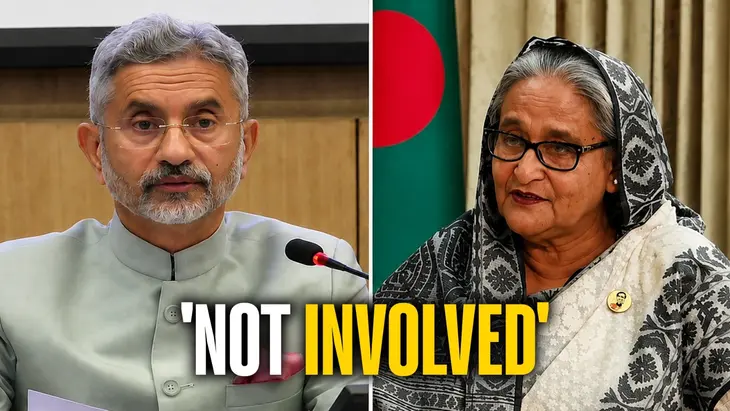
Former Bangladesh Prime Minister Sheikh Hasina returned to the political spotlight on August 5 through a virtual address from New Delhi, coinciding with the second anniversary of the 2024 student-led uprising that forced her from office. The event immediately attracted attention in both India and Bangladesh, leading to fresh diplomatic discussions between the two neighbouring countries.
Ahead of the event, the Government of India clarified that it had no role in organising Sheikh Hasina’s speech. The Ministry of External Affairs stated that the programme was arranged by a private organisation and did not represent the views or position of the Indian government. This clarification came after Bangladesh sought an explanation regarding Hasina’s participation in the event.
Sheikh Hasina has been living in India since leaving Bangladesh in August 2024 after months of nationwide protests against her government. The demonstrations, initially sparked by opposition to a public-sector job quota system, eventually developed into a broader movement demanding political change. Her resignation marked the end of more than 15 years of continuous rule in Bangladesh.
The anniversary of the 2024 uprising remains a politically sensitive occasion in Bangladesh. While supporters of the movement see it as a victory for democracy and public participation, Hasina’s supporters argue that her government played a major role in Bangladesh’s economic development and infrastructure growth. These contrasting views continue to shape political debates within the country.
Bangladesh expressed concern that allowing the former prime minister to deliver a political address from Indian soil could affect the improving relationship between the two nations. India, however, maintained that the programme was not government-sponsored and should not be viewed as an official political event.
The development highlights the delicate nature of India–Bangladesh relations. Both countries share close economic, cultural and security ties, making diplomatic balance essential. Any event involving a prominent political figure such as Sheikh Hasina is closely watched by both governments and the international community.
As Bangladesh continues to navigate its political transition, Sheikh Hasina’s appearance has once again placed her at the centre of regional discussions. Whether the event will have a lasting impact on bilateral relations or domestic politics remains uncertain. However, it has clearly demonstrated that her influence on Bangladesh’s political landscape continues even while she remains outside the country.
The developments of August 5 underline how historical events, political leadership and diplomacy remain deeply interconnected in South Asia. Observers will continue to watch how both governments manage the situation in the coming weeks while maintaining stability and cooperation in the region.

