


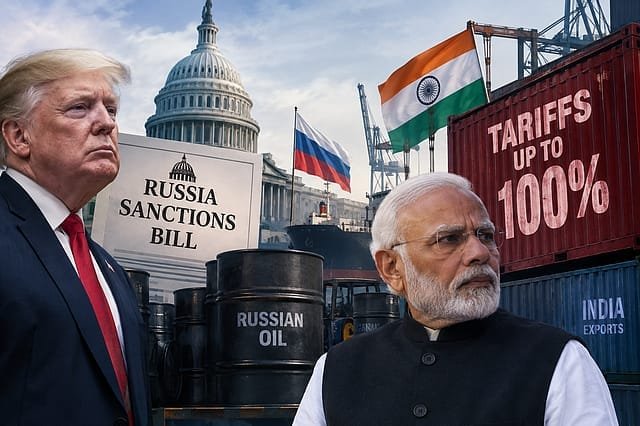
Pabitra Banerjee: The United States House of Representatives has passed the sweeping Lindsey O. Graham Sanctioning Russia and Iran Act of 2026, clearing a major legislative hurdle and sending the measure toward the executive branch. The bill introduces stringent measures against Moscow’s energy and financial sectors while granting the US President the authority to impose punitive tariffs of up to 100% on major foreign buyers of Russian oil and gas, directly impacting key Asian importers like India and China.
Passed with a 262–159 vote, the legislation targets Russia’s banking network, state officials, and its maritime fleet used to bypass existing Western restrictions. Crucially, the bill’s tariff provisions authorize the administration to penalize top buyers of Russian hydrocarbons. Because India remains one of the largest consumers of discounted Russian crude to secure its domestic industrial and domestic energy demands, the legislation creates a potential trade friction point between Washington and New Delhi. However, policy experts note that the bill does not automatically enforce an immediate 100% tariff; rather, it equips the US leadership with discretionary leverage to use trade penalties against countries sustaining Moscow’s wartime energy revenues.
Responding sharply to the development, New Delhi has maintained a firm and pragmatic stance. The Ministry of External Affairs asserted that the nation is fully committed to safeguarding its energy security and ensuring a steady, affordable supply to meet the demands of its 1.4 billion citizens. Reaffirming its long-standing strategic and economic autonomy, New Delhi emphasized that it will take all necessary diplomatic and commercial measures to protect its national interests amidst shifting global trade pressures, while maintaining dialogue with international partners.

US House Passes Russia Sanctions Bill: 100% Tariff Threat Looms for India and Major Energy Buyers
Congressional approval of the Lindsey Graham Act authorizes the US President to penalize top importers of Russian oil with steep tariffs, testing New Delhi's strategic autonomy.


Keep Reading
Add A Comment
Subscribe to Updates
Get the latest creative news from FooBar about art, design and business.
© 2026 Copyright @ Newscope.