



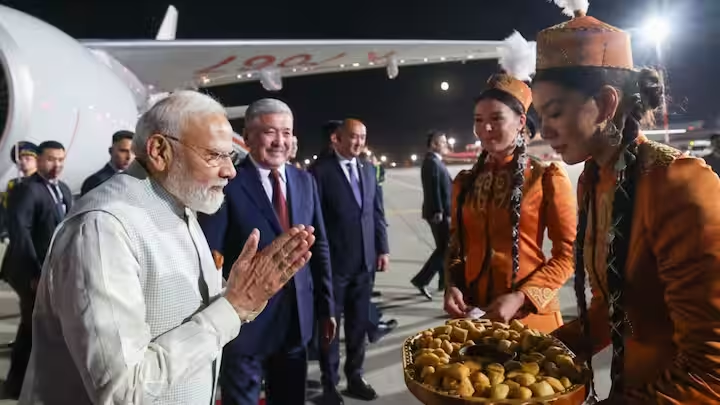
Prime Minister Narendra Modi arrived in Bishkek, Kyrgyzstan, on August 30 ahead of the 26th Shanghai Cooperation Organisation (SCO) Summit, which is being held from August 31 to September 1. The visit is part of Modi’s four-day tour of Uzbekistan and Kyrgyzstan aimed at strengthening India’s strategic engagement with Central Asia and expanding cooperation with countries in the region.
The SCO summit is expected to bring together leaders of major regional powers, including China, Russia, India and Iran. The meeting comes at a time of heightened geopolitical tensions, making discussions on regional security, terrorism, connectivity and economic cooperation particularly significant.
Ahead of the summit, Modi said India would work with SCO members to promote a region free from terrorism, separatism and extremism. He described India as an “active and constructive” member of the grouping and highlighted security, connectivity and cooperation as important priorities for New Delhi.
Terrorism is expected to remain one of India’s key concerns at the summit. New Delhi has consistently called for stronger international action against terrorism and terror financing. India is also expected to underline the importance of preventing extremist networks and ensuring that regional cooperation does not become a platform for supporting terrorism.
Connectivity is another major area of interest for India. Better transport, trade and digital links between India and Central Asia could open new economic opportunities. However, geopolitical tensions and difficult geographical routes have remained challenges to improving direct connectivity between the two regions.
Modi is also scheduled to hold bilateral meetings on the sidelines of the summit. A meeting with Russian President Vladimir Putin is particularly significant, coming shortly after External Affairs Minister S. Jaishankar’s visit to Moscow. The two sides are expected to discuss bilateral ties and broader international developments.
Modi’s engagement with China will also attract considerable attention. Chinese President Xi Jinping is attending the summit, alongside Putin. While the SCO provides a platform for both countries to cooperate on regional issues, India-China relations continue to carry strategic sensitivities.
On August 31, Modi also met Iranian President Masoud Pezeshkian on the sidelines of the summit. The discussion highlighted India’s continued diplomatic engagement with Iran, with Modi reiterating India’s support for efforts aimed at achieving lasting peace in the region.
The SCO, established in 2001, has grown into an important regional grouping covering security, economic cooperation and political dialogue. For India, participation provides an opportunity to engage simultaneously with Russia, China, Central Asian states and other regional partners.
Modi’s presence at the Bishkek summit therefore carries significance beyond the SCO itself. Through a combination of multilateral participation and bilateral diplomacy, India is seeking to strengthen its position in Central Asia while maintaining independent relations with competing global powers.
As the summit progresses, India is expected to focus on practical cooperation, regional stability and the fight against terrorism, while using the gathering to advance its broader diplomatic and economic interests.

