



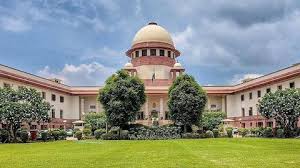
New Delhi, May 23: The Supreme Court of India has raised significant questions regarding the
continuation of reservation benefits for the “creamy layer” within backward classes, sparking
fresh debate across the country on the future of India’s quota system.A bench comprising
Justice B.V. Nagarathna and Justice Ujjal Bhuyan, while hearing petitions related to reservation
policies, observed that families who have already achieved social and economic advancement
through reservations may no longer require the same benefits. During the hearing, the court
questioned whether children of highly placed government officers, including IAS officers, should
continue receiving reservation advantages.Justice Nagarathna remarked that if both parents are
senior civil servants, it becomes necessary to examine whether reservation benefits should still
apply to their children. The court noted that the objective of reservation is to uplift genuinely
disadvantaged communities and ensure equal opportunities.
The “creamy layer” concept currently applies mainly to Other Backward Classes (OBCs). Under existing rules, individuals from families earning above a specified income limit or holding high government positions are excluded from reservation benefits. However, the debate has intensified over whether similar rules should also apply to Scheduled Castes (SCs) and Scheduled Tribes (STs).
Supporters of creamy layer exclusion argue that reservation benefits are repeatedly enjoyed by
economically advanced families, preventing poorer members of backward communities from
receiving opportunities. On the other hand, several social groups and activists maintain that
caste-based discrimination continues regardless of economic status, especially for SC and ST
communities. The issue has gained further attention following the Supreme Court’s recent
observations in cases related to sub-classification within SC/ST reservations. Legal experts
believe the ongoing hearings could have a major impact on India’s reservation framework in
education and government employment. The Supreme Court has sought responses from the
Centre and other concerned parties. No final verdict has been delivered yet, but the matter is
expected to play a crucial role in shaping future reservation policies in the country.

