



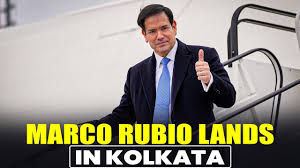
In a move laden with historical and symbolic weight, US Secretary of State Marco Rubio arrived at Netaji Subhash Chandra Bose International Airport early Saturday morning, marking the start of a high-stakes four-day diplomatic tour of India. Rubio is the first American Secretary of State to visit the eastern metropolis since 2012, signaling a renewed focus on regional engagement under the current administration.
A Symbolic First Stop
Immediately following his arrival, Rubio proceeded to Mother House, the headquarters of the Missionaries of Charity. Accompanied by US Ambassador Sergio Gor, the Secretary paid tribute to the legacy of Mother Teresa, a gesture viewed by analysts as an effort to emphasize “shared values” and humanitarian ties. He also visited the Nirmala Sishu Bhawan orphanage before touring the iconic Victoria Memorial, where security had been significantly heightened.
Energy and Strategy on the Table
While the Kolkata leg was rich in symbolism, the broader mission is centered on pragmatic geopolitical interests. Speaking briefly before departing for New Delhi, Rubio highlighted India as a “great partner,” specifically pointing toward expanding energy cooperation.
“We want to be a bigger part of India’s energy portfolio,” Rubio stated, noting the urgency of stabilizing supply chains amidst ongoing volatility in West Asia.
The Road to the Quad
The Secretary’s itinerary is packed with high-level engagements:
New Delhi: A scheduled meeting with Prime Minister Narendra Modi to discuss defense, technology, and bilateral trade.
Cultural Diplomacy: Stops in Agra and Jaipur to visit historic landmarks.
The Quad Summit: The visit culminates on May 26 with the Quad Foreign Ministers’ Meeting, where Rubio will join counterparts from India, Australia, and Japan to reinforce the “Free and Open Indo-Pacific” vision.
With bilateral trade currently exceeding $220 billion and a target of $500 billion by 2030, Rubio’s visit serves as a critical pivot point in the US-India strategic partnership, navigating a complex landscape of trade tariffs and shifting global alliances.