



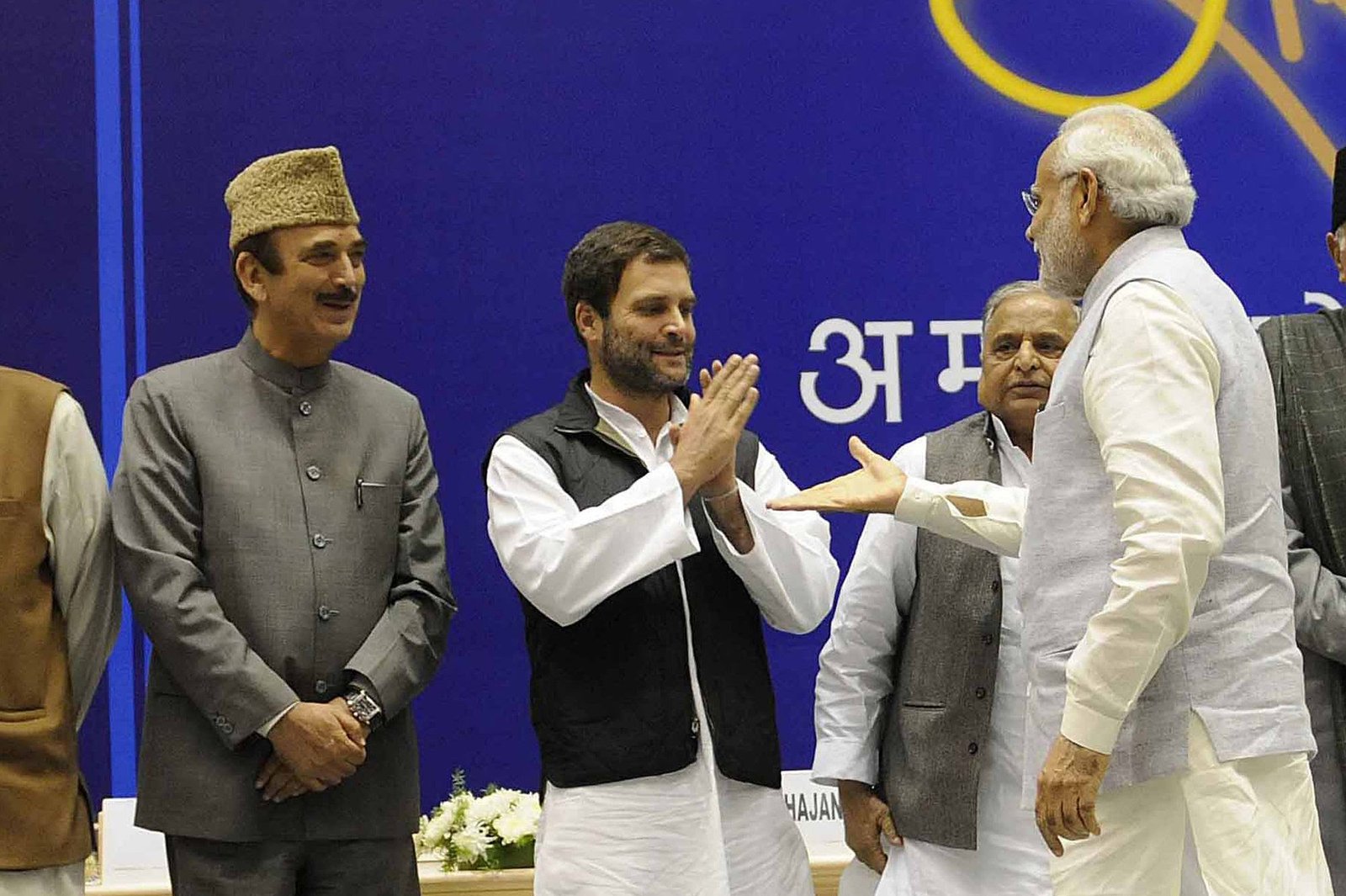
New Delhi, November 13, 2026: Leader of the Opposition in the Lok Sabha Rahul Gandhi on Friday leveled a fresh political charge against Prime Minister Narendra Modi, alleging that his mobile phone is being tapped by the Prime Minister and claiming that the device contains documentary proof substantiating his allegations against the government.
Speaking during an interactive ‘Ask Me’ session on Instagram—and reiterating his remarks in posts on social media platform X—the Congress MP from Raebareli doubled down on his demand for a direct, one-on-one public debate with Prime Minister Modi, asserting that such an exchange would resolve questions over who is working against national interests.
The Core Allegations and Public Debate Challenge
According to statements shared by Gandhi and the Indian National Congress on Friday, the Congress leader maintained that he has opted for an open public forum because his interventions inside Parliament have been restricted.
- Phone-Tapping Claim: Holding up his mobile device during the video interaction, Gandhi stated that the evidence backing his charges against the Prime Minister resides on his phone, adding that the Prime Minister is aware of those details because “he taps my phone.” No technical or forensic evidence was presented during the session to substantiate the latest claim.
- Terms for a One-on-One Debate: Explaining why he was pressing for an external debate rather than relying solely on parliamentary proceedings, Gandhi alleged that his microphone was switched off in the House and that he was prevented from speaking on key subjects—citing farm laws, electoral integrity (“vote chori”), the Special Intensive Revision (SIR) of electoral rolls, border tensions with China, former Army Chief General M.M. Naravane’s memoir, and international controversies.
- Proposed Format: Gandhi proposed a direct question-and-answer format across a table rather than scripted speeches, adding that he would have no objection if RSS chief Mohan Bhagwat or industrialist Gautam Adani moderated the session, or if the Prime Minister utilized a teleprompter. He further claimed that the Prime Minister’s recent reluctance to attack him directly signaled political pressure.
BJP Dismisses Charges as ‘Baseless’; Opposition Voices Weigh In
The Bharatiya Janata Party (BJP) swiftly rejected the phone-tapping accusation and the public debate challenge, characterizing Gandhi’s remarks as an attempt to sidestep established parliamentary procedures:
- BJP Rebuttal: Responding to the surveillance allegation, Kerala BJP president Rajeev Chandrasekhar dismissed the claim outright, stating that “nobody is interested in tapping his phone” and advising the Congress leader to “get his head examined.” Senior BJP leaders, including Union Home Minister Amit Shah, have maintained that the Leader of the Opposition should bring his arguments and evidence onto the floor of the Lok Sabha rather than taking political theatrics outside the House.
- Opposition Reactions: Samajwadi Party president Akhilesh Yadav backed Gandhi’s call for accountability, while political strategist Prashant Kishor—commenting on the broader debate around state surveillance—stated that phone tapping remains a reality in Indian politics, referencing his own past inclusion in the 2021 Pegasus spyware leak reports.
Background: Past Surveillance Controversies
This is not the first time Rahul Gandhi has alleged state-sponsored surveillance of his communications. In 2021, an international media consortium reporting on the Pegasus Project listed two mobile numbers used by Gandhi among potential targets selected by government clients of Israeli surveillance firm NSO Group. In 2023, Gandhi publicly claimed that Pegasus spyware had been installed on his phone and alleged that intelligence officers had informally cautioned him to be careful during calls. The Union government has consistently denied any unauthorized surveillance or illegal interception of citizens’ devices.

