



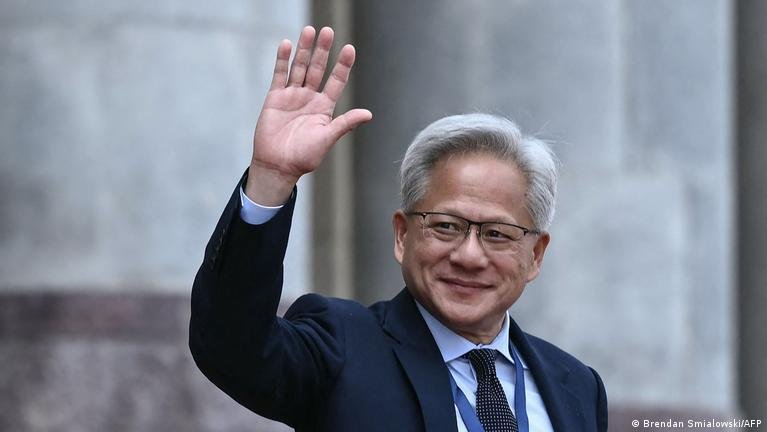
Santa Clara, November 12, 2026: In a seismic shockwave across the global artificial intelligence and semiconductor industries, Nvidia co-founder and longtime chief executive Jensen Huang resigned on Thursday, effective immediately, following mounting scrutiny over two extramarital affairs—including one involving a Chinese businesswoman suspected by U.S. authorities of espionage.
Nvidia’s Board of Directors announced that Executive Vice President and Chief Financial Officer Colette Kress has been appointed as Interim CEO while continuing to serve as CFO, as the company initiates a formal search for a permanent successor. Huang, 63, who co-founded Nvidia in 1993 and steered it into a multi-trillion-dollar AI powerhouse, will also step down from the company’s board of directors.
Market Shock: Nvidia Shares Plunge 13%, Valuation Drops Below $4 Trillion
News of Huang’s sudden departure triggered an immediate sell-off on Wall Street, sending ripples through global technology markets:
- Sharp Stock Slump: Nvidia shares plunged roughly 13% in Thursday morning trading, sliding to around $150.98.
- Valuation Hit: The sell-off dragged Nvidia’s market capitalization below the $4 trillion mark for the first time since July 2025, wiping out nearly $888 billion in market value over the course of the week.
- Board Restructuring: Alongside Kress’s interim appointment, Nvidia named longtime board member and former Synopsys CEO Harvey C. Jones as the company’s first-ever Chair of the Board.
The Escalating Scandal: Espionage Scrutiny and Workplace Allegations
Huang’s exit came after a rapid sequence of revelations over the past two weeks turned a personal controversy into an acute corporate governance and national security crisis:
- Alleged Chinese Intelligence Links: Pressure began mounting following reports that U.S. intelligence agencies and the FBI were investigating Huang’s relationship with Alice Huang (Huang Le), a Chinese businesswoman and former executive at Singapore-based data center operator Megaspeed. U.S. officials have scrutinized whether she acted as an intelligence operative for Beijing and whether her business network was used to bypass U.S. export controls on restricted Nvidia AI chips.
- Second Affair with Direct Subordinate: The tipping point arrived late Wednesday after The New York Times reported that Jensen Huang had also been involved in a relationship with Kimberly Powell, Nvidia’s Vice President of Healthcare, who reported directly to him—raising severe conflict-of-interest and workplace policy questions.
- Emergency Board Intervention: Following the second disclosure, Nvidia’s board convened an emergency session and retained prominent law firm Wachtell, Lipton, Rosen & Katz to lead an external probe, culminating in Huang’s resignation on Thursday. Meanwhile, three senior U.S. House committee chairmen have formally requested a briefing regarding potential national security implications.
Nvidia Vows Continuity Ahead of Q3 Earnings
In its official statement, Nvidia’s board paid tribute to Huang’s 33-year tenure, noting that his contributions to accelerated computing and the company were “profound” and “immeasurable,” while emphasizing operational stability:
“The board has full confidence in Colette and the leadership team, and we expect the company’s operations, customer commitments and product roadmap to continue without interruption,” the board stated.
Stepping into the interim helm, Colette Kress reiterated her commitment to building on Nvidia’s foundation and maintaining execution across its global customer and developer ecosystem. Huang remains one of Nvidia’s largest individual shareholders, holding an estimated 3.61% stake in the chipmaker, which is scheduled to report its third-quarter fiscal 2027 financial results on Tuesday, November 17.

