



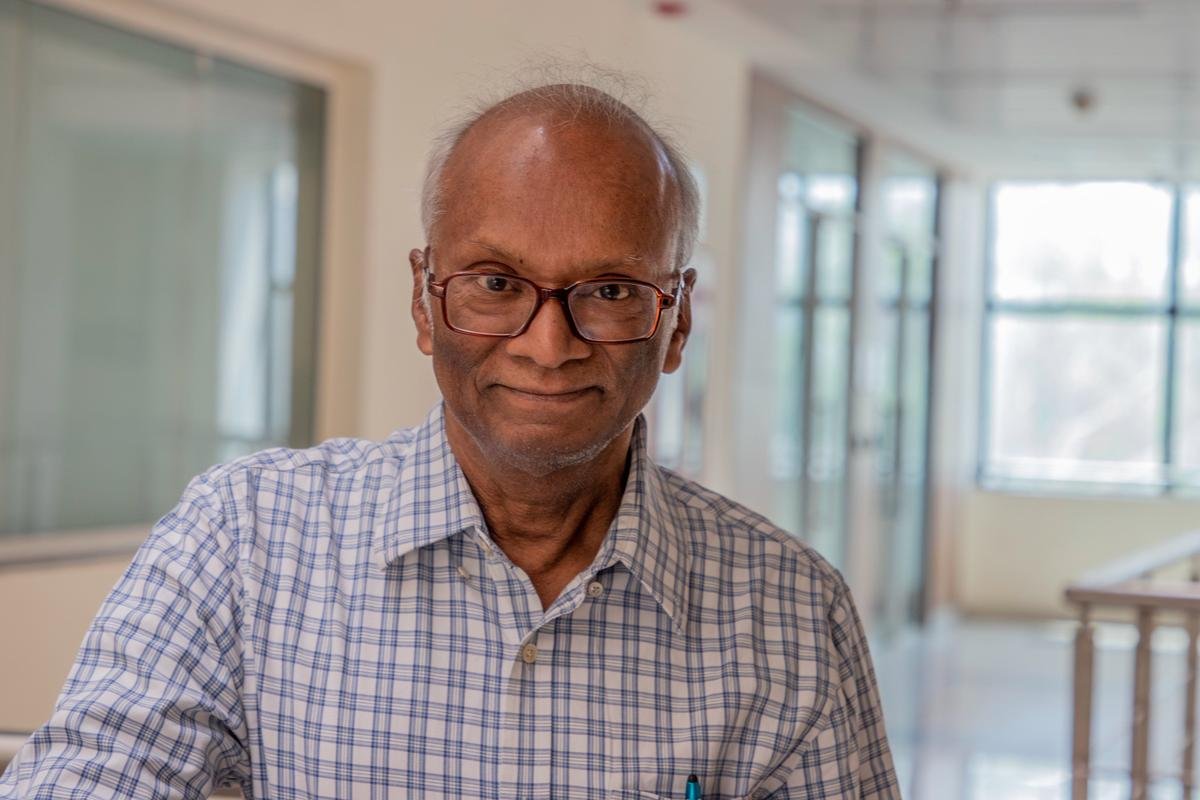
Indian theoretical physicist Professor Deepak Dhar has created history by becoming the first Indian to receive the prestigious Boltzmann Medal, one of the highest international honours in the field of statistical physics. The award recognises his outstanding contributions to understanding complex physical systems and statistical mechanics.
The Boltzmann Medal is awarded once every three years by the Commission on Statistical Physics of the International Union of Pure and Applied Physics (IUPAP). Named after Austrian physicist Ludwig Boltzmann, the medal honours scientists who have made significant contributions to statistical physics. Dhar shared the 2022 medal with American physicist John J. Hopfield of Princeton University.
Dhar is particularly known for his pioneering work on self-organised criticality, percolation, fractals, disordered systems and statistical mechanics. His research has helped scientists understand how complex systems can develop organised patterns even without external control. His work on mathematical models of such systems has been influential in the development of modern statistical physics.
Born in Pratapgarh, Uttar Pradesh, in 1951, Dhar completed his Bachelor of Science from the University of Allahabad in 1970 and obtained his master’s degree in Physics from IIT Kanpur in 1972. He later moved to the United States for his doctoral studies at the California Institute of Technology (Caltech). During his time there, he also had the opportunity to work as a teaching assistant to renowned physicist Richard Feynman.
After completing his PhD, Dhar returned to India in 1978 and joined the Tata Institute of Fundamental Research (TIFR) in Mumbai. He spent several decades working in theoretical physics and later became associated with the Indian Institute of Science Education and Research (IISER), Pune, and the International Centre for Theoretical Sciences (ICTS).
The Boltzmann Medal is only one of several major honours received by Dhar. He has also been awarded the Shanti SwarupBhatnagar Prize, the INSA S.N. Bose Medal and the TWAS Prize. In 2023, he was conferred the Padma Bhushan, one of India’s highest civilian honours.
Dhar’s achievement is significant not only for his individual career but also for Indian science. His success demonstrates that groundbreaking theoretical research can emerge from Indian institutions and contribute to global scientific knowledge.
Despite receiving international recognition, Dhar has maintained a humble attitude towards awards. He has said that scientists do not conduct research simply to win medals, but recognition is always encouraging. His career reflects the importance of curiosity, persistence and the pursuit of knowledge.
The Boltzmann Medal therefore represents more than a personal achievement for Deepak Dhar. It marks a proud moment for Indian science and highlights the country’s contribution to the global understanding of some of the most complex problems in physics.

