



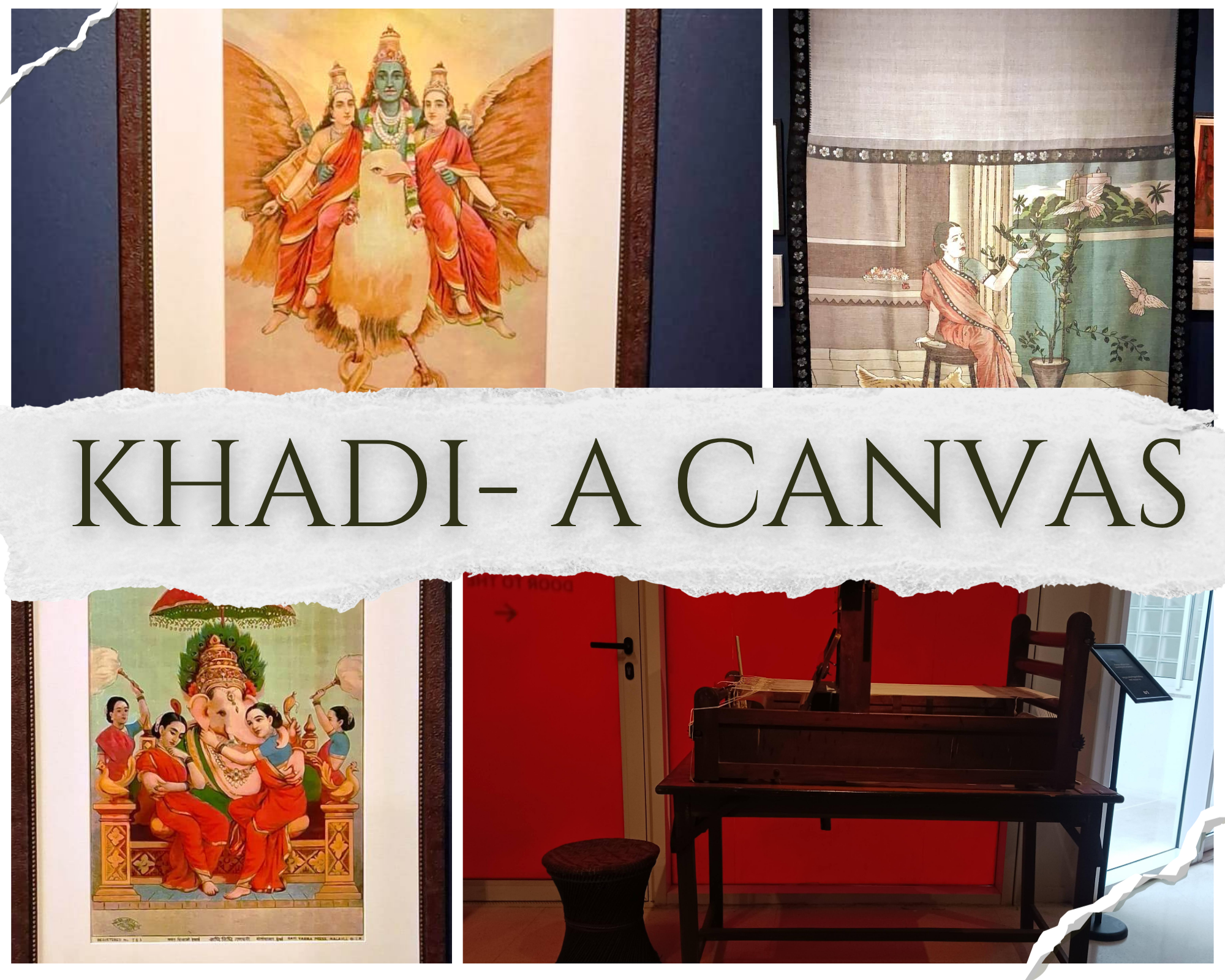
Halford E. Luccock once quoted “No one can whistle a symphony. It takes a whole orchestra to play it” One was reminded of glancing at the specter of a collective creation, Khadi-a Canvas that opened its door to Kolkata audiences on 13th February, 2026.
The show curated by Lavina Baldota and presented by TRI Art and Culture in association with the Abheraj Baldota Foundation and Gaurang Shah, textile artist, turned khadi –once held as a fabric that voiced self-reliance and resistance into a medium of artistic translation. Soaking inspiration from the iconic works of Raja Ravi Varma, the visual imagery became tactile and history was retold through hand and thread.
At the first sight, there is a feeling of being dislodged –the sari so richly embedded in human psyche as attire is hung as objet d’arts, each rivaling with the other in craftsmanship, vibrancy of shades and the charm of underlying story. Here the sari becomes an item no longer a piece to be worn but to be read , deciphered and becoming intimate in a new avatar. This deliberate shift from fabric to surface nudges the audience to pause and look as one would a framed painting. Yet there is the lingering trace of an old familiarity and form that is subdued yet present, that suggests touch, and movement.
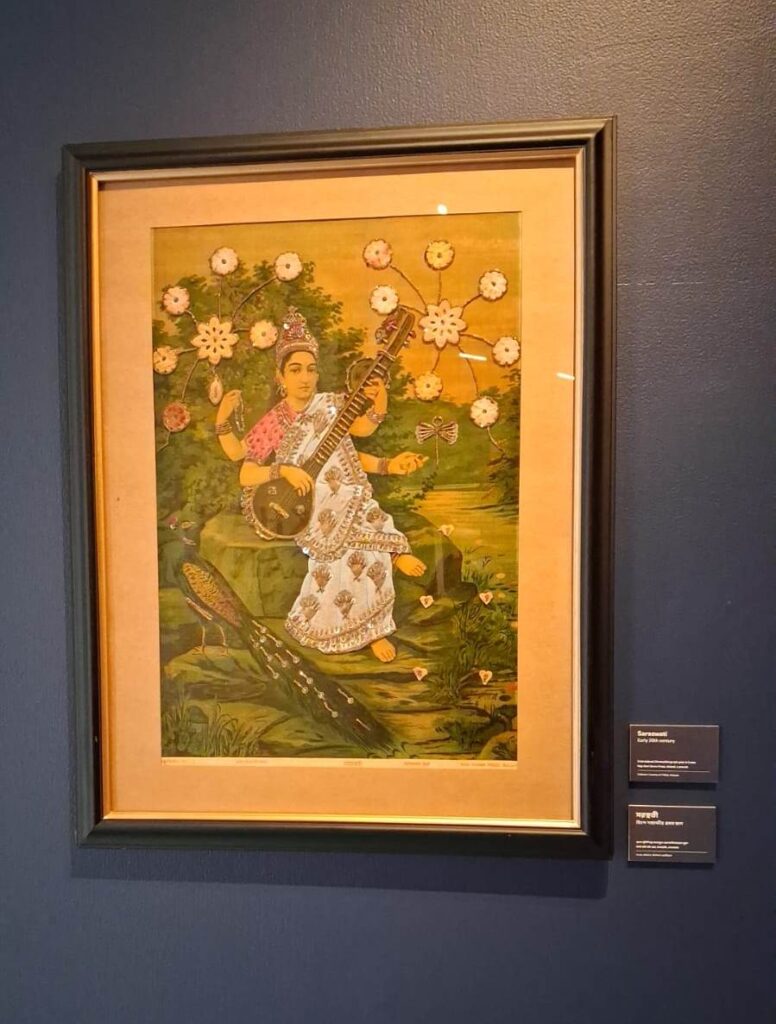
Roving the two floors eighteen hand woven khadi sarees in combination of 600 elegant natural hues becomes moving canvases with each pallu carrying essences of myth, allegory, memory, divinity taking gentle liberties with stretching of the original works for spatial aesthetics. Original chromolithographic prints of the Raja Ravi Varma press, tools of the weaving production including a chakra and a table top weaving loom are placed revealing the technical background beneath the mass reproductions.
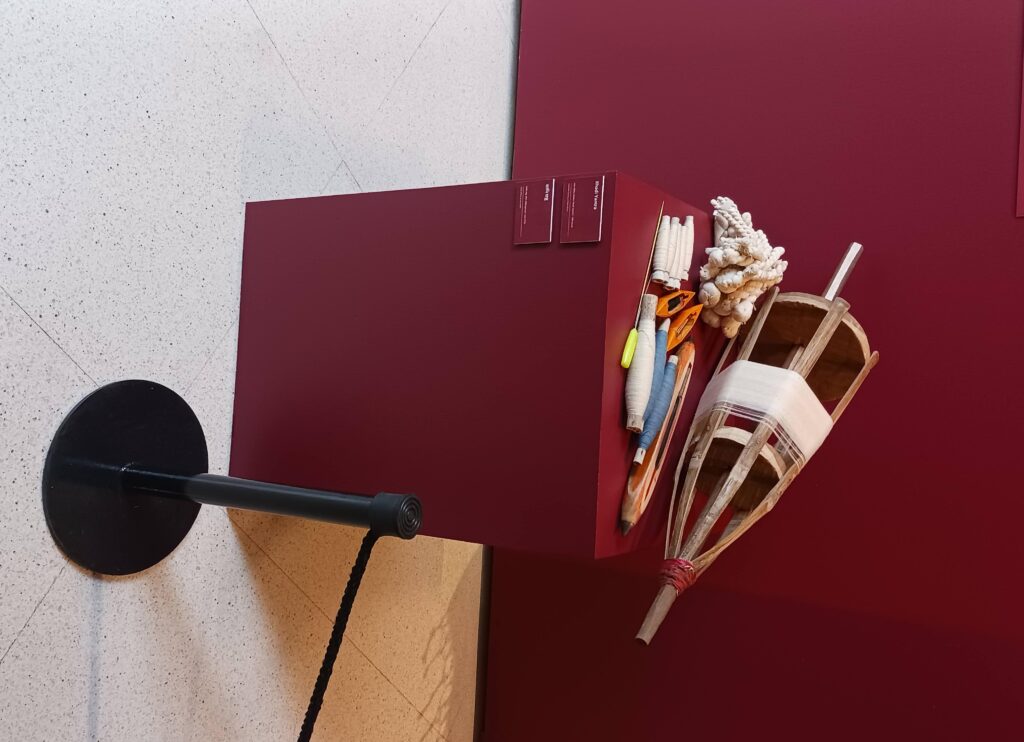
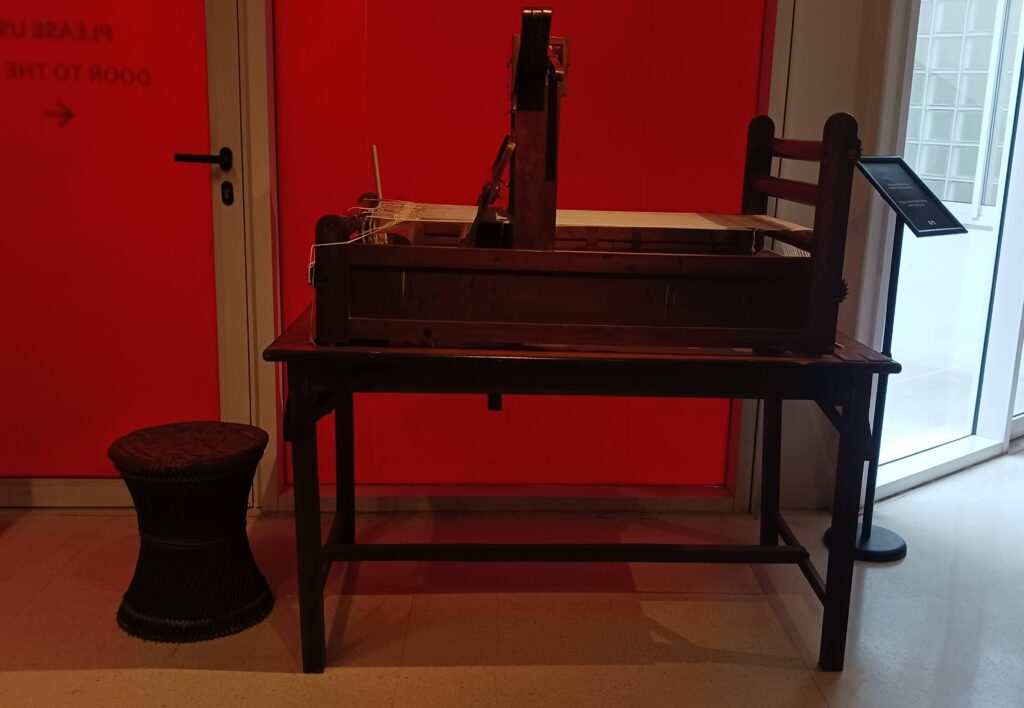
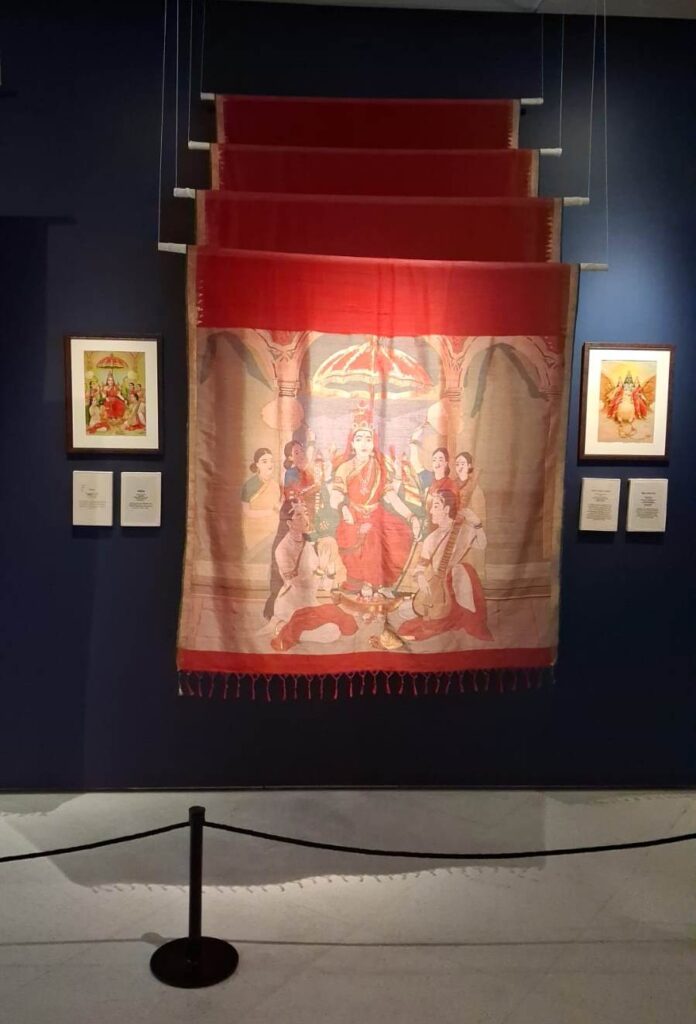
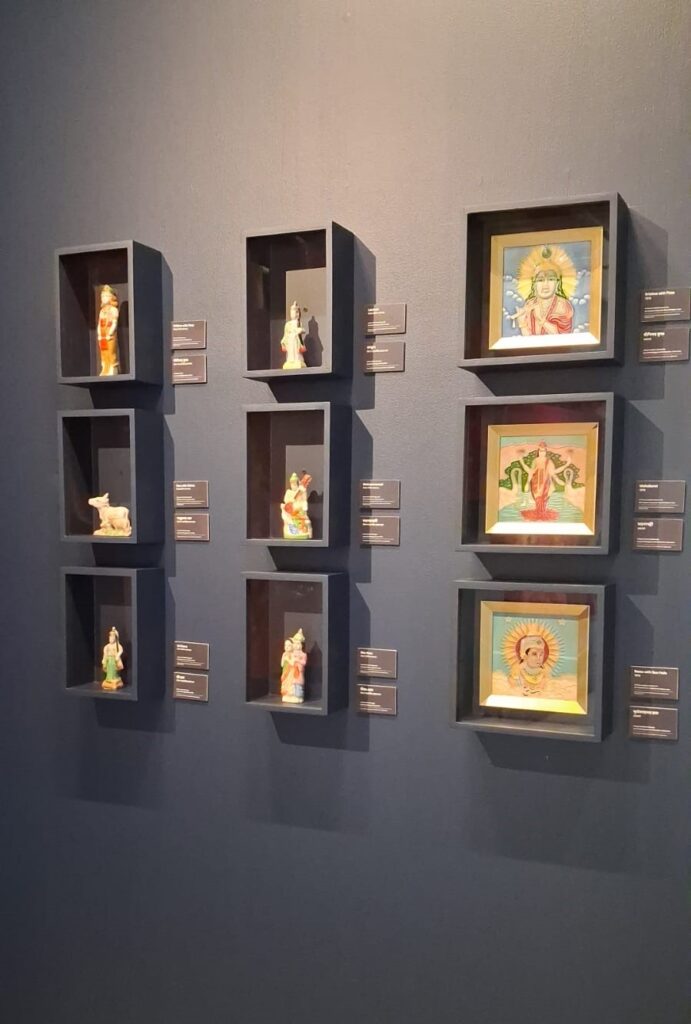
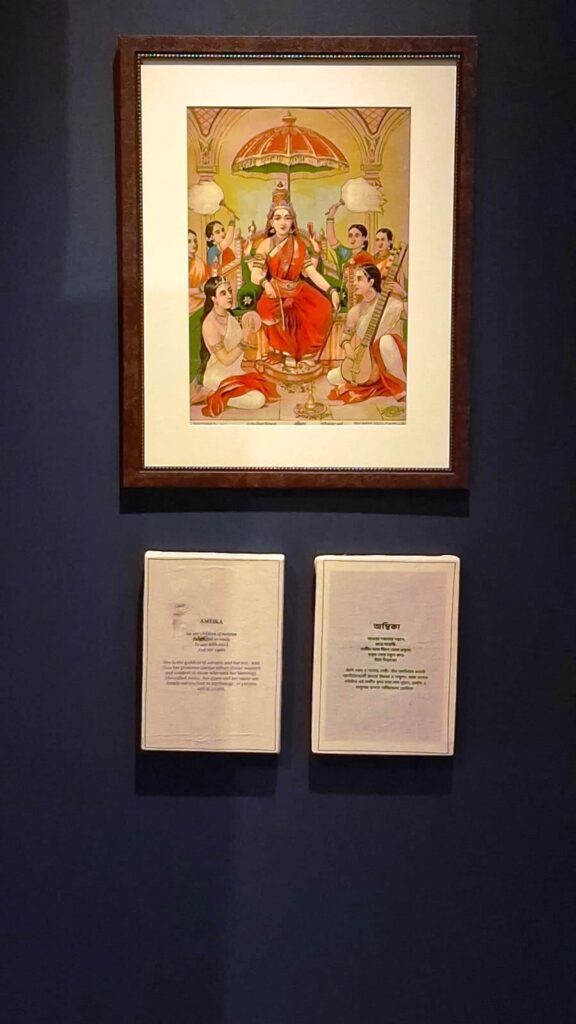
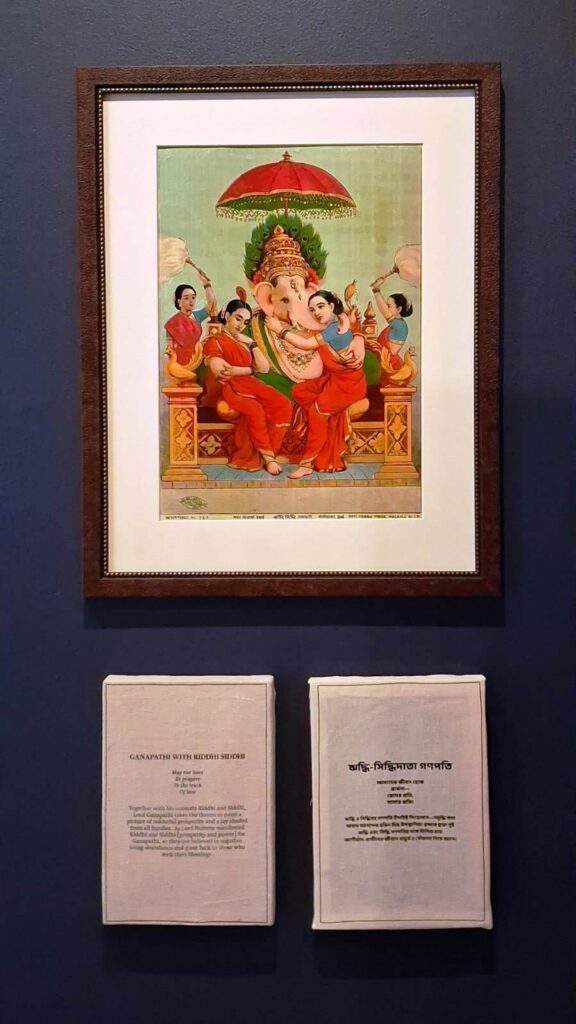
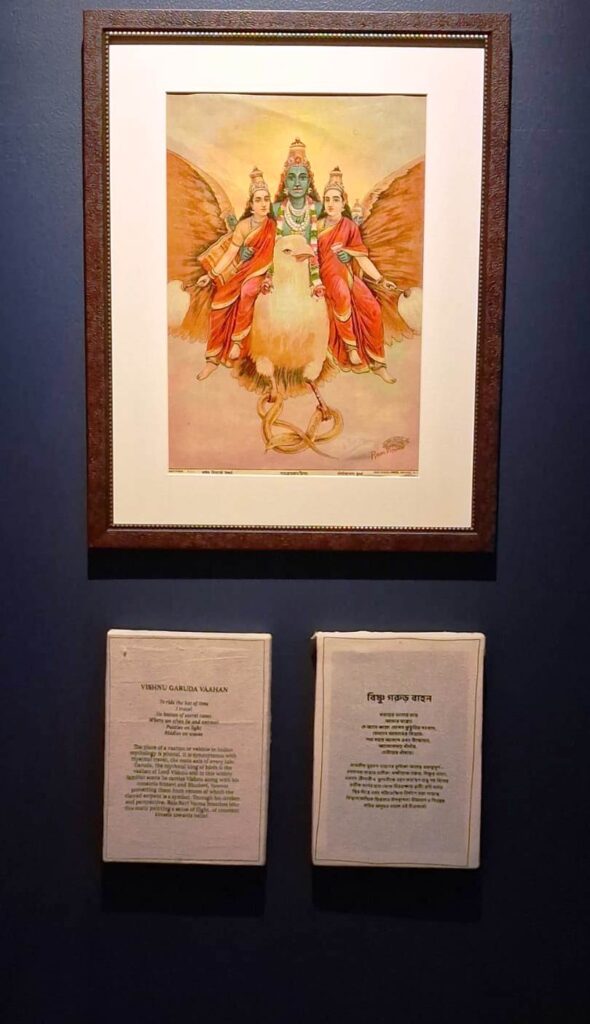
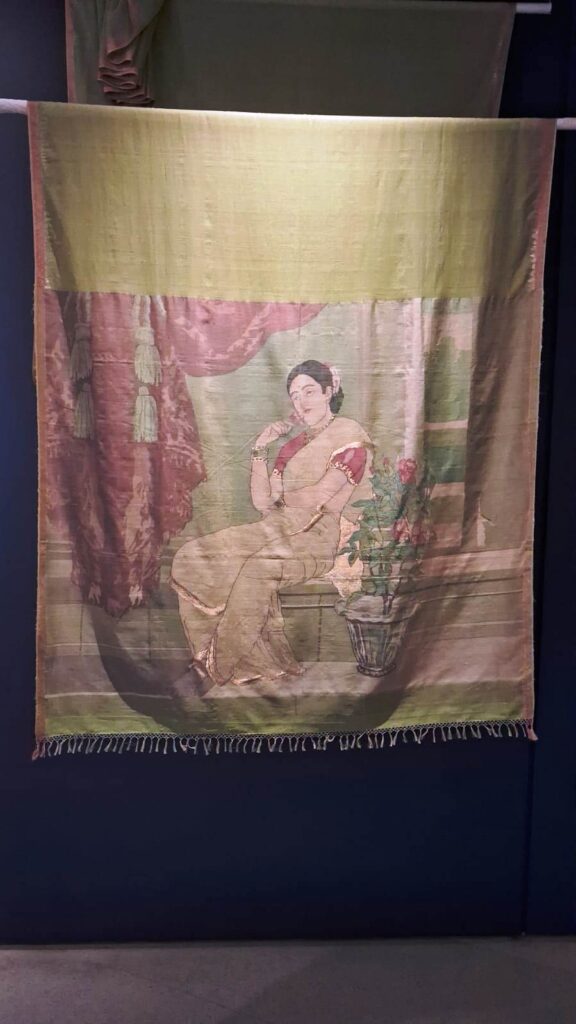
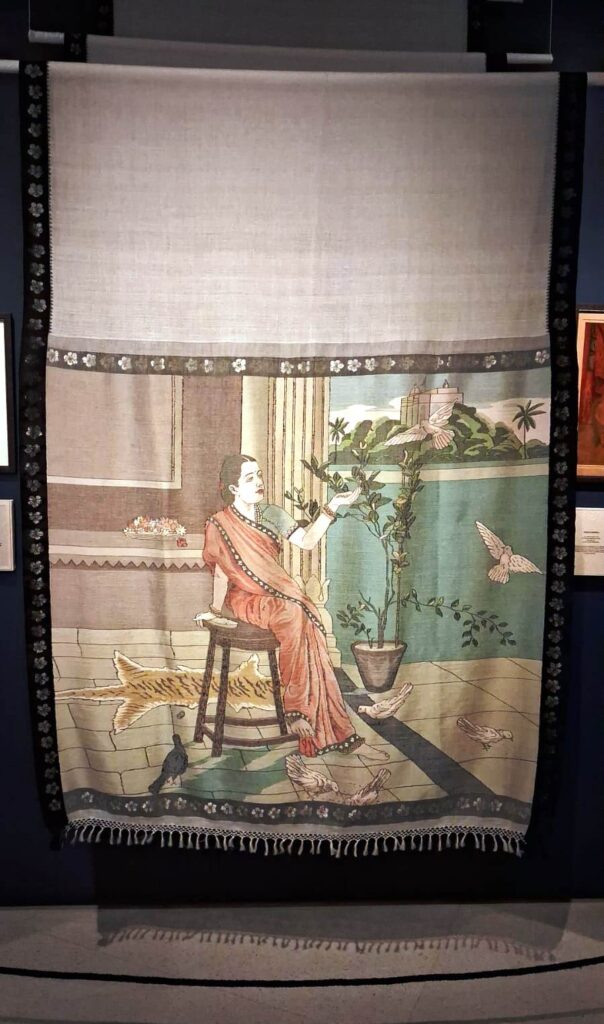
The unusual luminescence and tapestry-like effect brings one closer to the craft and art and one learns that the chromolithography technique to achieve the desired depth and permanence required eight to ten colour layers. All the shades used are neatly displayed with a shade card effect and rare lithographic stones depicting Lord Murugan, Ram and Sita and Shiva and Parvathi stand as value additions to the thoughtful and laborious assemblage which manifests like a labour of love. Each sari stands out in its own glory and dilutes the lines separating art and craft with the gentle and masterly use of threads creating unusual shadow effects of shadow on face and body . From an art historical point of view some of the works that bear a striking similarity with works from south east Asia specially Thailand and Vietnam depicted in the impressive headgear and facial expressions open questions on arts silent travel transcending geographical lines.
The show was made possible by the tireless efforts of 40 tribal women of Srikakulam who were trained under textile artist Gaurang Shah on the finer intricacies of hand woven techniques of the timeless appeal of Jamdani. Using silk yarns in the weaves, all the dyes used were specially developed by Junaid Khan, a master craftsman, extracted from vegetable and plant sources.
Those familiar with Raja Ravi Varma style would find delightful novelty in his art adaption through various representations on display from delicate porcelain Ningyo dolls from Japan, German porcelain figurines, Art nouveau Majolica ceramic styles , emphasizing his global appeal and cultural reach.
Two striking works of embroidered chromolithographs embellished with cloth, golden thread, sequins served to transform the visage of popular mass produced prints into a richer and intimate item of domestic veneration.
By patience and refined dexterousness of artisans, the show unconsciously unravels the magical trail of reinterpretation of reproduction, where art is no longer a visual experience. By creating a dialogue of newness yet crafting a new language with homegrown handspun methods an interesting ethical, ecological and echo of indigenous strength seems to sing from each strand making material consciousness a very poignant and pertinent point attuned to the ecologically sensitive nature of contemporary public sensitivity.
One leaves the show feeling nostalgic, sensitized and riddled with contemplations surrounding how tradition is being re-authored, how art can become intimate and not distant and how cloth is a place where memory, material and embodiment can converge in a musical symphony.
The show continues at TRI Art and Culture till the 26th of April.

