


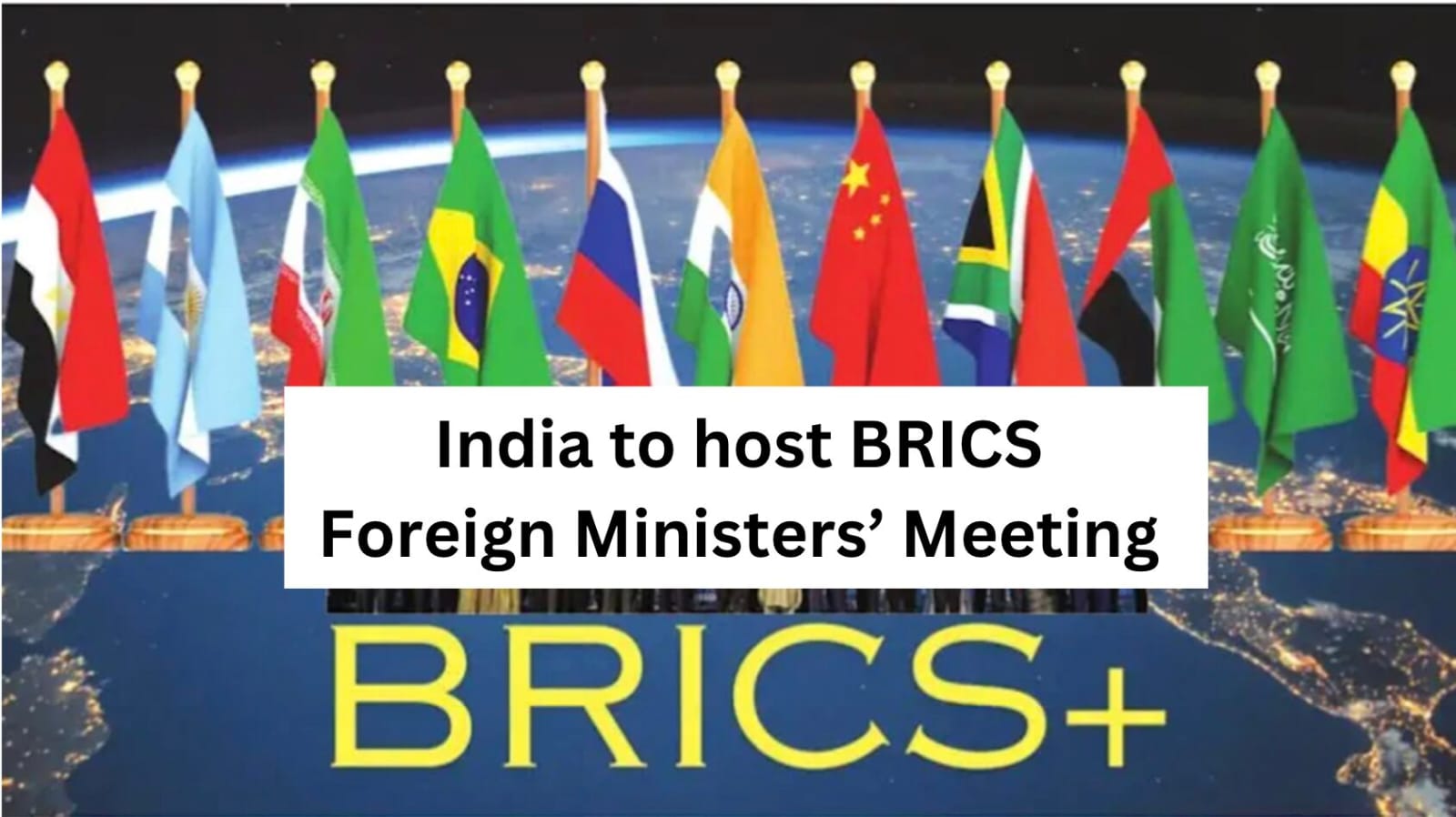
In a definitive signal of the shifting global order, India is set to host the pivotal BRICS Foreign Ministers’ Meeting on May 14–15, 2026. Chaired by External Affairs Minister Dr. S. Jaishankar, the high-level summit at Bharat Mandapam serves as the cornerstone of India’s 2026 chairship, bringing together a newly expanded bloc that now represents nearly half the world’s population.
A “Humanity First” Agenda
The meeting, themed “BRICS@20: Building for Resilience, Innovation, Cooperation, and Sustainability,” marks two decades of the grouping’s evolution from an economic concept to a geopolitical heavyweight. Unlike the traditional Western-centric frameworks, India’s leadership is emphasizing a “humanity-first” approach, focusing on:
Global Governance Reform: Addressing the stagnation of the UN Security Council and international financial institutions.
Economic Resilience: Strengthening intra-BRICS trade amidst fluctuating Western markets.
Conflict De-escalation: Critical deliberations are expected regarding the ongoing West Asia crisis, with delegates seeking a “pacific resolution” to regional tensions.
Diplomatic High Stakes
The summit arrives at a delicate moment. Tensions between certain member states—notably the UAE and Iran—over regional stability will test India’s ability to build consensus. Russian Foreign Minister Sergei Lavrov is among the heavyweights expected to land in the capital, alongside South African Minister Ronald Lamola, who has already arrived, signaling the bloc’s commitment to “equitable global architecture.”
The visiting dignitaries are also scheduled to call on Prime Minister Narendra Modi, underscoring the strategic weight India is placing on this engagement.
Looking Ahead
As New Delhi prepares for the full Leaders’ Summit later this year, these two days of “principled engagement” will dictate whether the expanded BRICS can move beyond rhetoric to become a functional alternative to the G7. For India, it is a masterclass in strategic autonomy—balancing its role as a bridge between the West and the Global South.