



There has been a sharp fall in technology stocks after US midterm election. There is a political dimension to it.
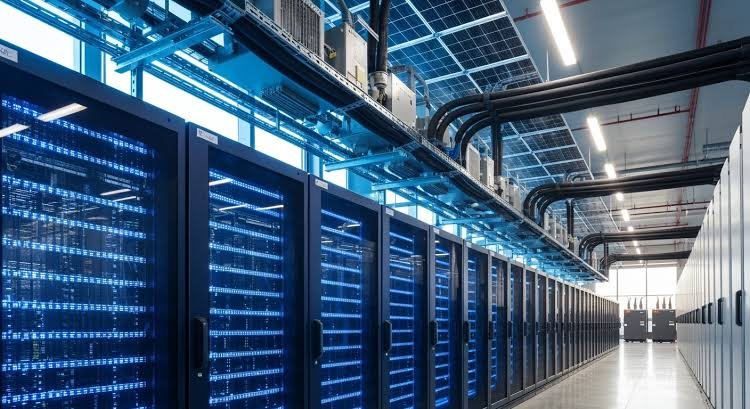
Democratic victories have strengthened the opposition to expansion of data centres, an infrastructure on which AI depends. Proposals to restrict construction including a moratorium promised by Texas-governor elect Gina Hinojosa, have unsettled investors already questioning the sustainability of the industry’s standing.
The question is no longer whether AI will transform the global economy. It is being asked whether the enormous investments anticipating that transformation can generate adequate returns.
Opposition to data centres is not necessarily opposition to AI. These facilities consume enormous quantities of electricity and water, occupy extensive land and place additional demands on local power networks.
Communities are asking why they should bear the environmental and economic costs while the principal benefits go to the technology coporations. Rising electricity bills and pressure on public resources can turn a national technological priority into a local political liability.
Washington faces a difficult choice. Both parties want the United States to retain its technogical advantage over China. Yet that ambition cannot be pursued without regard for communities expected to accomodate the infrastructure.
Other factors have to be taken into consideration. Environmental clearances, power constraints and local restrictions could slow construction without a federal prohibition on AI development.
The market’s restriction also reflect anxiety. It stems from the apprehension that political resistance could dusrupt the investment schedule on which the technology companies ambitious growth projections depend.
For investors, political uncertainty compounds a more fundamental problem. Companies have committed extraordinary sums to chips, computing facilities and energy infrastructure.
This has been done on the assumption that future demand will justify present expenditure. Yet commercial returns remain uncertain.
Nvidia, Macron, AMD and other semiconductor companies have benefitted from expectations of sustained expansion. Their valuations become vulnerable when investors question whether demand can keep pace with investment.
The consequence extends beyond Wall Street. South Korea’s Samsung and SK Hynix, Taiwan’s TSMC and Japanese equipment suppliers are deeply integrated into the global AI supply chain. A substantial reduction in American infrastructure spending could transmit financial and industrial shocks across Asia and Europe.
Countries seeking data centre investment may suddenly come across an unforeseen issue. For they can stumble upon the fact that reliable electricity, water and regulatory certainty matter as much as technological ambition.
The US midterm election results have exposed a larger truth. Technological progress cannot be measured merely by capital invested or infrastructure built.
AI companies must demonstrate their expansion creates economic values. To achieve this end, they must respect the communities and resources on which it depends.
AI revolution is not a bubble destined to burst. But indefinite investment expansion sans public resistance or commercial accountability is difficult to sustain.
One cannot look away from market correction. But it must not be confused with the disappearance of a transformative technology.
The industry’s next test is not simply how much it can build. It has to justify the cost

