



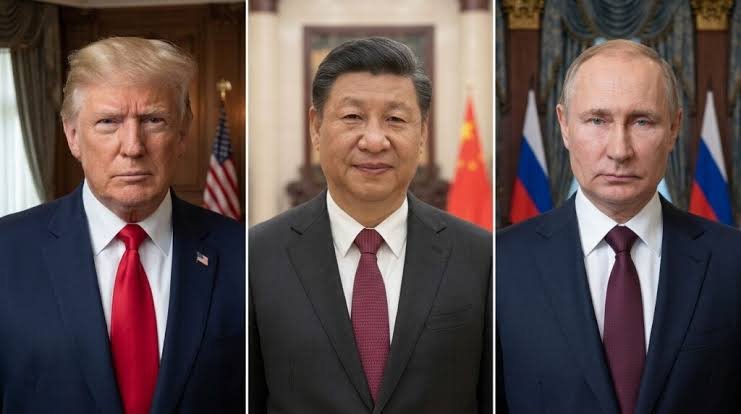
Shenzhen, November 18, 2026: The leaders of the world’s three foremost nuclear and geopolitical powers—Chinese President Xi Jinping, Russian President Vladimir Putin, and U.S. President Donald Trump—converged in the southern Chinese technology hub of Shenzhen on Wednesday, setting the stage for an unprecedented trilateral summit on Thursday on the sidelines of the Asia-Pacific Economic Cooperation (APEC) forum.
The high-stakes diplomatic choreography began with a rare protocol gesture as Xi personally greeted Trump on the red carpet upon his arrival at the Shenzhen airport. Ahead of the APEC welcome banquet on Wednesday evening, Xi and Putin held bilateral talks to reaffirm their strategic partnership before all three leaders briefly exchanged handshakes, signaling the start of Thursday’s tightly watched three-way engagement—which Kremlin officials indicated is scheduled to last under 60 minutes.
Competing Agendas: Ukraine, Iran, Nuclear Arms, and AI
While China’s Foreign Ministry has framed the summit around “safeguarding world peace and promoting strategic stability in major-power relations”, each leader enters Thursday’s closed-door session with sharply distinct strategic objectives:
- Washington’s Focus on Arms Control and Regional Wars: President Trump, arriving in China following Republican losses in the U.S. midterm elections and domestic scrutiny over the Nvidia espionage controversy, has stated he intends to press for trilateral nuclear arms reduction talks alongside discussions on the Russia-Ukraine war, the conflict involving Iran, bilateral trade, and artificial intelligence. Trump also floated the possibility of a separate encounter with North Korean leader Kim Jong Un during the trip.
- Moscow’s Push for Diplomatic Parity: For President Putin, sharing a formal summit table with Washington and Beijing offers a major diplomatic breakthrough out of Western isolation. Russian officials and commentators have drawn parallels to the 1945 Yalta Conference, seeking leverage to shape settlement terms on Ukraine.
- Beijing’s Balancing Act: Hosting the gathering in Shenzhen—a showcase of China’s manufacturing and technological prowess—underscores Xi Jinping’s role as a central global mediator. However, analysts note Beijing remains reluctant to enter formal trilateral nuclear disarmament negotiations and is cautious about being tied too closely to Moscow’s war in Ukraine while seeking relief on U.S. tariffs and AI chip export restrictions.
Allies Watch Warily as Expectations Remain Measured
The prospect of Washington, Beijing, and Moscow conferring directly has triggered unease across several European and Indo-Pacific capitals, where officials fear major powers could negotiate arrangements affecting smaller nations without their participation. Meanwhile, regional dynamics at APEC remained visibly tense, underscored by a brief, wordless greeting between Xi and Japanese Prime Minister Sanae Takaichi amid ongoing friction over Taiwan.
Despite the historic optics of the gathering, senior U.S. officials have sought to temper expectations of formal treaties or joint communiqués, emphasizing that Thursday’s summit serves primarily as an exploratory channel to manage escalating global flashpoints.

