



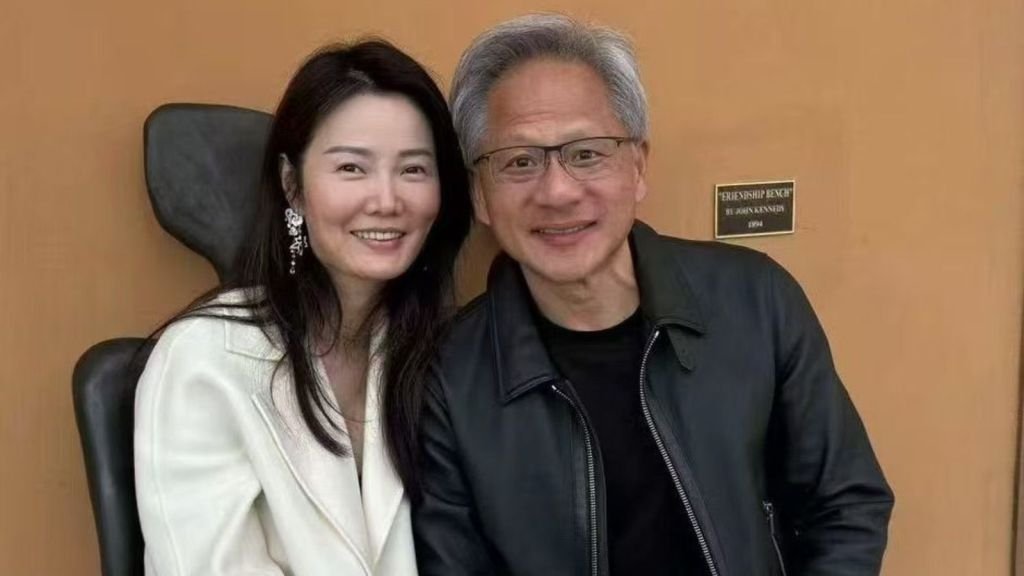
California, November 10, 2026: Nvidia Chief Executive Officer Jensen Huang has issued an apology to his family and employees after acknowledging an extramarital affair, amid reports that U.S. intelligence agencies and the FBI are scrutinizing whether his former partner was an operative working on behalf of Chinese intelligence.
The scandal centers on Alice Huang (also known as Huang Le), a Chinese businesswoman and former executive at Megaspeed International, a Singapore-based data center operator and major commercial customer of Nvidia. While Jensen Huang admitted to being unfaithful in an internal message to staff, American officials have noted that there is no indication the tech chief was knowingly involved in any espionage operation.
Nvidia’s board of directors has launched an independent inquiry led by outside counsel, stating that the company has found no evidence suggesting trade secrets or national security parameters were compromised.
A Personal Confession to Employees
Over the weekend, Jensen Huang sent a candid memo to Nvidia employees taking responsibility for his personal conduct:
“I was unfaithful to my wife. My actions hurt her and our children. There is no excuse for what I did. I am deeply sorry,” Huang wrote. “I take full responsibility for what I did and the hurt I caused, and I accept the criticism that comes with it.”
Huang added that he fully supports the company’s internal review and pledged complete cooperation, reiterating his commitment to both Nvidia and American national security. The company confirmed that Huang will continue to lead the semiconductor giant as chief executive while the inquiry proceeds.
The U.S. Intelligence Scrutiny: Export Controls and AI Policy
According to reports by The New York Times, The Washington Post, and the Financial Times, U.S. intelligence agencies compiled a classified assessment examining the relationship between the Nvidia chief and Alice Huang.
Investigators have focused primarily on two national security dimensions:
- Semiconductor Export Restrictions: Megaspeed, where Alice Huang served as a senior executive, had reportedly purchased billions of dollars worth of Nvidia processing units. The firm had come under regulatory scrutiny over suspicions regarding whether high-performance graphics processing units (GPUs) were being channeled into mainland China in circumvention of U.S. export controls.
- Access to Policy Discussions: Analysts noted concerns over whether proximity to Huang could have offered foreign intelligence insights into commercial roadmaps or Washington’s policy discussions concerning artificial intelligence trade regulations.
U.S. President Donald Trump addressed the matter publicly on Monday, confirming that federal investigators are examining the situation while defending Huang’s integrity. “I asked him that question, ‘Did you have any idea that she was a spy?’ He said, ‘I had no idea,’ and I really believe him,” Trump said during a White House briefing, describing Huang as an honorable executive.
China Dismisses Allegations as ‘Fabricated’
Both Megaspeed and the Chinese government have pushed back against the espionage claims:
- Beijing’s Response: China’s Ministry of Foreign Affairs described the allegations as unsubstantiated smears. State media, including the Global Times, accused U.S. outlets of manufacturing an “anti-China script” designed to complicate bilateral tech engagement.
- Corporate Position: Megaspeed had previously rejected reports alleging illicit transfers of restricted hardware, asserting that its business complies with relevant international regulations.
As Nvidia’s independent board members examine the timeline and nature of interactions between the company and Megaspeed, Wall Street has kept a close eye on the fallout, with market watchers monitoring whether the controversy will influence broader export control policies governing advanced artificial intelligence chips.

