



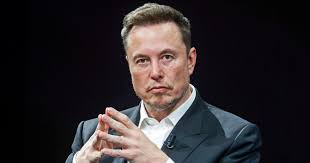
Technology tycoon Elon Musk has officially cemented his place in economic history by becoming the world’s first-ever paper trillionaire. The unprecedented wealth milestone was triggered by the highly anticipated initial public offering (IPO) of his aerospace giant, SpaceX, which made its record-breaking debut on the Nasdaq on June 12, 2026. Going public under the ticker symbol SPCX, the company raised a staggering $75 billion by selling roughly 556 million shares priced at $135 each, effectively eclipsing Saudi Aramco’s 2019 debut to become the largest IPO in stock market history. Demand for the rocket and satellite company was so fierce that shares surged over 20 percent on the first day of trading, closing at $160.95 and pushing SpaceX’s total market valuation beyond the $2.1 trillion mark.
The financial windfall from the market debut completely reshaped the global wealth charts, leaving Musk in a financial league entirely of his own. Musk holds a massive 42 percent economic stake in SpaceX alongside 350 million stock options, a portfolio that overnight jumped to an estimated valuation of over $800 billion. When combined with his $280 billion holding in electric vehicle manufacturer Tesla and his other high-tech ventures, Musk’s total net worth skyrocketed to a historic $1.14 trillion. To put this staggering accumulation of capital into perspective, Musk’s personal fortune is now more than three times larger than that of the world’s second-richest person, Google co-founder Larry Page, and commands a value equivalent to roughly one-fourth of India’s entire Gross Domestic Product (GDP).
While economic justice groups like Oxfam have heavily criticized the milestone as a representation of a “new Gilded Age” of extreme wealth inequality, Wall Street has largely embraced the surge as a reflection of the “Elon premium”—the unique premium investors place on his disruptive corporate vision. SpaceX pitched a massive $28.5 trillion addressable market during its roadshow, driven by future moonshot projects like the skyscraper-sized reusable Starship rocket, a network of orbital AI data centers, and the ultimate goal of establishing a self-sustaining colony on Mars. Though future market downturns could technically dip his paper wealth back below the twelve-figure threshold, the successful public launch of his aerospace empire ensures that Musk’s financial footprint remains unmatched by any individual in modern history.

