



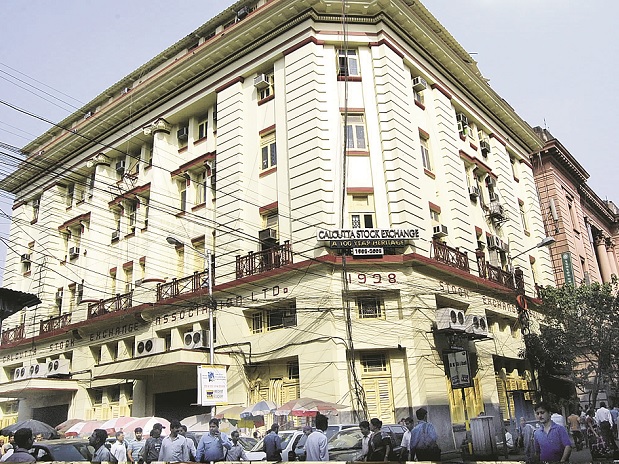
The Forgotten Powerhouse of Dalal Street East
Before Mumbai became synonymous with Indian finance, before Sensex and Nifty became household names, there was Calcutta. And at the heart of it stood the Calcutta Stock Exchange, or CSE.
Founded in 1908, CSE was Asia’s second-oldest stock exchange and for nearly 80 years, it was the financial pulse of Eastern India. From jute and tea to engineering and chemicals, every major industrial house in the East listed here. Martin Burn, Andrew Yule, Dunlop, and ITC cut their teeth on Dalhousie Square, just a stone’s throw from the trading ring.
At its peak in the 1980s and early 1990s, CSE had over 3,000 listed companies and a daily turnover that routinely crossed Rs 200 crore — massive for that era. It was the go-to platform for SMEs, regional conglomerates, and the Bengali Marwari business community that built India’s pre-liberalization industry. Traders would gather at 7 Lyons Range, shouting orders in a cacophony that rivaled Bombay’s Dalal Street.
Then came liberalization, dematerialization, and the internet. And Calcutta blinked.
Why Revival Matters Now, and What’s Being Done
Reviving CSE is not nostalgia. It’s an economic imperative for Eastern India. The region accounts for 22% of India’s population but less than 12% of listed companies and IPO fundraising. MSMEs in West Bengal, Odisha, Jharkhand, and the Northeast struggle for growth capital because NSE and BSE are geographically and psychologically distant. A functional regional exchange can close that gap, channeling local savings into local enterprises and reducing dependence on Mumbai-centric capital.
Recognizing this, several initiatives are now underway to bring CSE back to life. In 2024, the West Bengal government and CSE management signed an MoU with NSE Data & Analytics to upgrade CSE’s technology stack to a cloud-native, API-first platform. SEBI has granted in-principle approval for CSE to operate as a dedicated SME exchange under its “Regional Capital Market Development” framework.
The exchange has also launched “CSE RISE”, a pipeline program with SIDBI and the Confederation of Indian Industry to onboard 300 MSMEs for IPO readiness over the next 36 months. On the governance side, CSE inducted independent directors from fintech and academia and reduced broker dominance on its board. A new digital-first investor education drive, “Bengal Invests”, has reached 40 Tier-2 and Tier-3 towns in the East since January 2026.
These steps signal a shift from preservation to reinvention. The goal is clear: make CSE the go-to platform for Eastern India’s next generation of companies.
How the Glory Faded
The fall was not sudden, but it was comprehensive.
- Technology Gap: When BSE and NSE went fully electronic in the mid-1990s, CSE lagged. Its transition to BOLT was slow and patchy. By the time it caught up, liquidity had migrated. Brokers and investors followed volume, and volume was in Mumbai.
- Regulatory Crackdown: The 1990s and 2000s saw multiple instances of settlement defaults and broker frauds at CSE. SEBI’s response was strict surveillance and eventual suspension of trading in 2013 for lack of liquidity. Though trading resumed in 2014, the damage to trust was done.
- Migration of Listings: Companies that once swore by CSE began shifting their primary listing to NSE and BSE for better visibility and liquidity. Today, fewer than 100 companies trade actively on CSE, and most are penny stocks.
- Economic Shift: Bengal’s industrial decline meant fewer new companies to list. Without fresh IPOs and with no derivatives or F&O segment, CSE became a platform without a purpose.
From a peak of Rs 1.2 lakh crore market cap in the early 2000s, CSE’s active market cap today is under Rs 15,000 crore. The trading floor at Lyons Range is silent. The legacy is intact. The business isn’t.
A 5-Point Revival Plan for CSE 2.0
Revival won’t come from reopening the old trading floor. It needs a new business model. Here’s how it can be scaled beyond the current initiatives:
1. Double Down on SME & Regional Champions
CSE RISE is a good start, but it needs scale.
- Target 500 active SME listings by 2029, with sponsored research and anchor investor programs for each sector cluster.
- Introduce tax incentives for investors in CSE-listed SMEs, similar to the UK’s Enterprise Investment Scheme.
- Create sector-specific indices for jute, tea, steel downstream, and logistics to attract thematic funds.
2. Go Fully Digital and API-First
CSE must leapfrog legacy systems.
- Complete migration to the new NSE Data & Analytics platform by Q1 2027 and open APIs for fintech brokers like Zerodha, Groww, and regional players.
- Launch a mobile-first app in Bengali, Hindi, Odia, and English with micro-SIP and fractional share features.
- Use UPI Autopay for IPO applications to reduce friction for first-time investors.
3. Create a Commodity & Carbon Credit Segment
Bengal and the East are strong in jute, tea, rice, and renewable energy. CSE can own this niche.
- Launch a spot and forward market for agricultural and plantation commodities in partnership with NCDEX.
- Build India’s first regional voluntary carbon credit exchange, linked to forestry and small hydro projects in the East.
- This gives CSE a unique product line that NSE and BSE don’t focus on, attracting ESG and impact capital.
4. Attract Strategic Investors and Deepen Governance
CSE needs patient capital and credibility.
- Invite a strategic investor — a foreign exchange, a fintech player, or a consortium of Eastern industrial houses — to take a 25% stake.
- Establish a market-making scheme for SME stocks to improve liquidity.
- Work with SEBI to create a lighter-touch compliance regime for SMEs, without compromising investor protection.
5. Build a Financial Literacy and Startup Corridor
No exchange survives without a pipeline.
- Partner with IIM Calcutta, IIT Kharagpur, and IIEST Shibpur to create a “List on CSE” incubator.
- Expand “Bengal Invests” to 100 towns and integrate it with school and college curricula.
- Use the brand of “Bengal’s own exchange” to build emotional and financial ownership among the diaspora in the Gulf, UK, and US.
What Success Looks Like in 2030
If executed well, CSE 2.0 can look very different in 5 years:
- 500 active SMEs listed, with combined market cap of Rs 75,000 crore.
- Daily turnover of Rs 800-1,000 crore, driven by SME and commodity trades.
- 20+ IPOs per year, with 60% from West Bengal, Odisha, Assam, and Jharkhand.
- A vibrant retail investor base of 15 lakh accounts, mostly first-time investors from the East.
It won’t replace NSE. It shouldn’t. It should complement it by serving the 90% of Indian companies that are too small for Mumbai but too big for private equity.
The Bigger Picture for Eastern India
Eastern India’s economic story has been one of potential delayed. The region has ports, minerals, agriculture, and a skilled workforce, but lacks a local capital formation engine. Right now, a promising MSME in Ranchi or Siliguri has to pitch to a VC in Bengaluru or list on NSE Emerge at high cost and low visibility.
A revived CSE changes that. It keeps capital local, creates price discovery for regional businesses, and gives retail investors in the East a direct stake in their own economic growth. It also aligns with India’s broader goal of financial decentralization. GIFT City is for global capital. CSE can be for regional capital — the SME and mid-market layer that Mumbai doesn’t serve well.
The ripple effects matter. More listed companies mean better governance, more formalization, and more jobs. It means a 25-year-old entrepreneur in Asansol doesn’t have to relocate to Bengaluru to raise Series A. It means a tea garden in North Bengal can raise equity to mechanize and export.
Conclusion: Ring the Bell Again
India’s capital markets are too Mumbai-centric. For a $5 trillion economy, we need multiple engines. London has AIM. Germany has Deutsche Börse’s SME segment. China has Shenzhen and STAR Market.
Calcutta has the history, the talent pool, and the untapped businesses. What it needs is execution on the revival plan already set in motion, and sustained support from state government, SEBI, and industry.
The old trading floor at 7 Lyons Range may never ring with shouts again. But the idea behind it — a marketplace for Eastern India’s ambition — can be reborn, digital and decentralized.
Calcutta built the first modern Indian companies. With CSE RISE, tech upgrades, and a clear SME focus, it can build the next wave too.
The bell can ring again. It just needs everyone to pull the rope together.

