



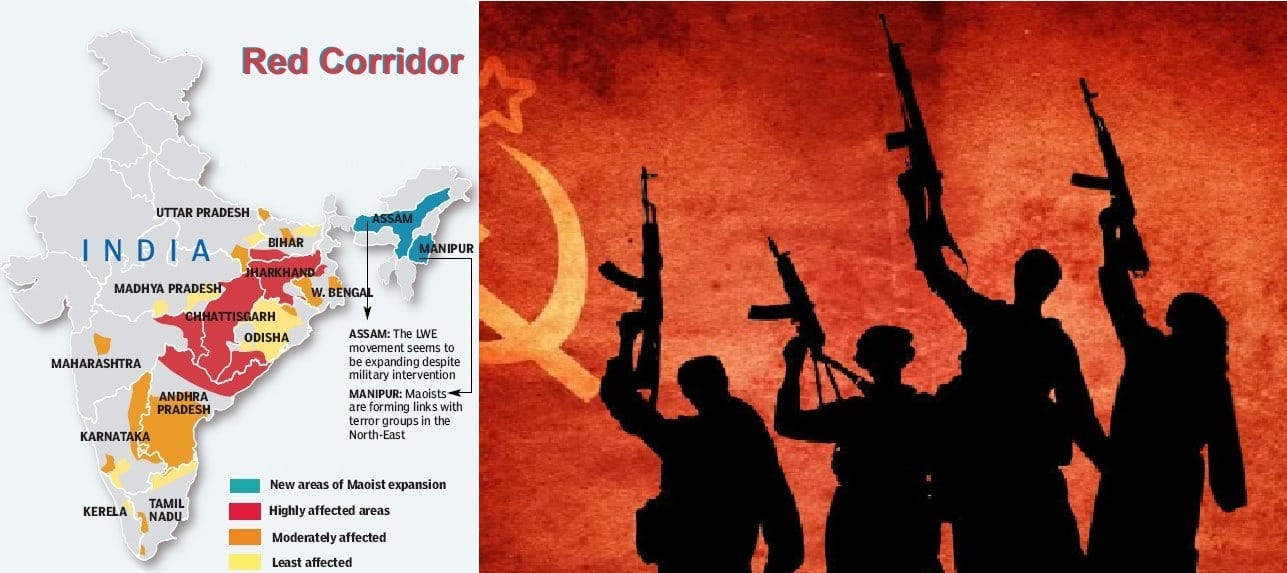
The Red Corridor took root in areas marked by multiple state abdications and political failures. It’s fallout was the long stretch on which Maoist insurrection cast a shadow for almost six decades.
It emerged from the agarian unrest in Naxalbari, West Bengal. Thereafter, the movement spread to parts of Andhra Pradesh, Telengana, Bihar, Jharkhand and Odisha.
But the country appears to be a decisive end to insurgency. Union home minister Amit Shah has said that Red Corridor has dwindled to two districts.
But after arrests, encounters and surrenders have resulted in insurgents rolling back, the moment calls for sober rethinking. This is indeed moment of military defeat of Left Wing Extremism(LWE).
The time is now for rebuilding of this opening. It is to be done in a way to prevent erosion of trust and deepening of democracy.
Extremism drew sustenance from the government’s failure to create a credible presence. In the forested areas where the state’s grip was weak, Maoist groups established parallel government structures even as government response oscillated between neglect and use of force.
Prime Minister Manmohan Singh described LWE. violence to be the biggest threat to India’s internal security. There has been a decisive shift since then combining security operations and development initiatives.
Roads, schools and hospitals have come up in once inaccessible areas. The LWEs have been dwelt a string of reverses by better equipped security forces supported by effective intelligence.
Several Maoists have laid down arms and spoken of the futility of violence. The ideological disenchantment speaks of their recognition of the democratic possibilities of the State
But one cannot lose sight of uneven development, land acquisition for infrastructure projects and environmental degradation. These remain fraught issues.
The state not only be efficient. It must also be, and seen to be, just.

