



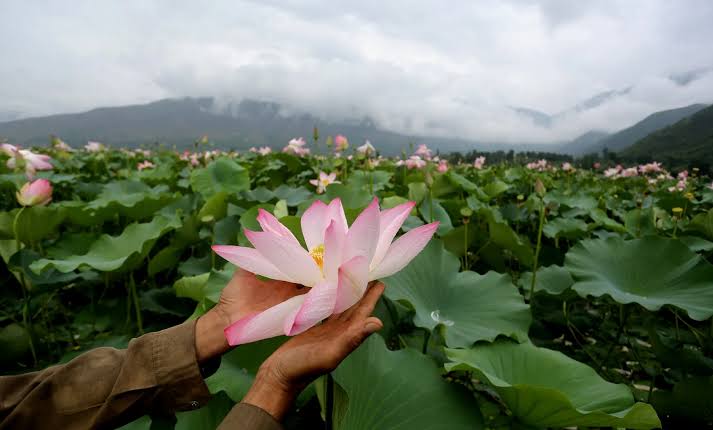
Bandipora, Jammu and Kashmir, May 24
In a remarkable sign of environmental recovery, pink lotus flowers have returned to Wular Lakein North Kashmir after remaining absent for more than three decades. The revival of the lake’siconic lotus beds has brought fresh hope to local communities and environmentalists alike.
The lotus flowers had disappeared after the devastating floods of 1992 covered large portions of thelakebed with thick layers of silt. The silting damaged the lake’s aquatic ecosystem and buriedthe roots of lotus plants beneath the surface, preventing their growth for years.
The disappearance severely affected residents living around the lake, many of whom depended onharvesting lotus stems, locally known as Nadru, for food and livelihood. Nadru is a popular ingredient in traditional Kashmiri cuisine and a major source of seasonal income for localfamilies.Over the years, the once-vibrant waters of the lake became barren, forcing many people to search for alternative work opportunities.The revival has been credited to extensive conservation and restoration efforts carried out bythe Wular Conservation and Management Authority.
The project focused on removing silt deposits, improving water quality, restoring wetlands, and clearing invasive weeds from the lake. Environmental experts believe the return of lotus flowers is an important indication that thelake’s ecosystem is gradually recovering. The lotus beds not only enhance the natural beauty of the lake but also support aquatic biodiversity by providing shelter and food for fish and otherspecies.Local residents have welcomed the revival with joy and optimism.
Many hope the return of Nadru cultivation will once again create employment opportunities and restore traditional economic activities linked to the lake.One of Asia’s largest freshwater lakes, Wular Lake plays avital role in flood control, fisheries, irrigation, and wildlife conservation in the KashmirValley.Officials say the successful restoration highlights the importance of long-term environmental conservation and community participation in protecting natural ecosystems.

