



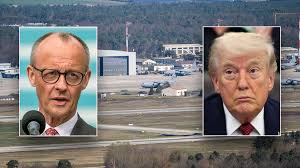
BERLIN – Relations between Washington and Berlin have hit a significant chill as the U.S. administration signals a possible reduction of military personnel stationed in Germany. The move comes amid a deepening diplomatic feud with Chancellor Friedrich Merz over defense spending and regional security priorities.
The Pentagon confirmed this week that it is “reviewing its global force posture,” a statement widely interpreted by analysts as a direct warning to the Merz government. Currently, the U.S. maintains approximately 35,000 active-duty troops in Germany, a presence that has served as a cornerstone of NATO’s European defense strategy since the end of the Cold War.
A Clash of Visions
The friction stems from Chancellor Merz’s recent push for “European Strategic Autonomy.” Since taking office, Merz has advocated for a more independent German foreign policy, occasionally diverging from Washington on trade regulations and the specific handling of Eastern European security.
Washington has grown increasingly frustrated with what it perceives as Berlin’s hesitation to meet specific NATO procurement targets. While Germany has increased its defense budget, U.S. officials argue that the “pace and direction” of the spending do not align with collective allied interests.
Strategic Implications
A withdrawal would represent a seismic shift in the transatlantic alliance. Key installations, such as Ramstein Air Base and the Landstuhl Regional Medical Center, are vital not just for German security, but for U.S. operations across Africa and the Middle East.
“The presence of U.S. forces is not a charitable contribution; it is a strategic partnership,” noted a senior defense official. “However, partnerships require a shared roadmap, and currently, the map provided by the Chancellery looks very different from our own.”
Berlin’s Response
In Berlin, the mood remains defiant but cautious. A spokesperson for Chancellor Merz stated that while Germany values the “historic bond” with the United States, the sovereignty of German defense policy is “not up for negotiation.”
As both nations dig in, European allies are watching nervously, fearing that a fractured U.S.-German relationship could embolden adversaries and weaken the stability of the Euro-Atlantic area. For now, the troops remain, but the certainty of their future has rarely been more fragile.