



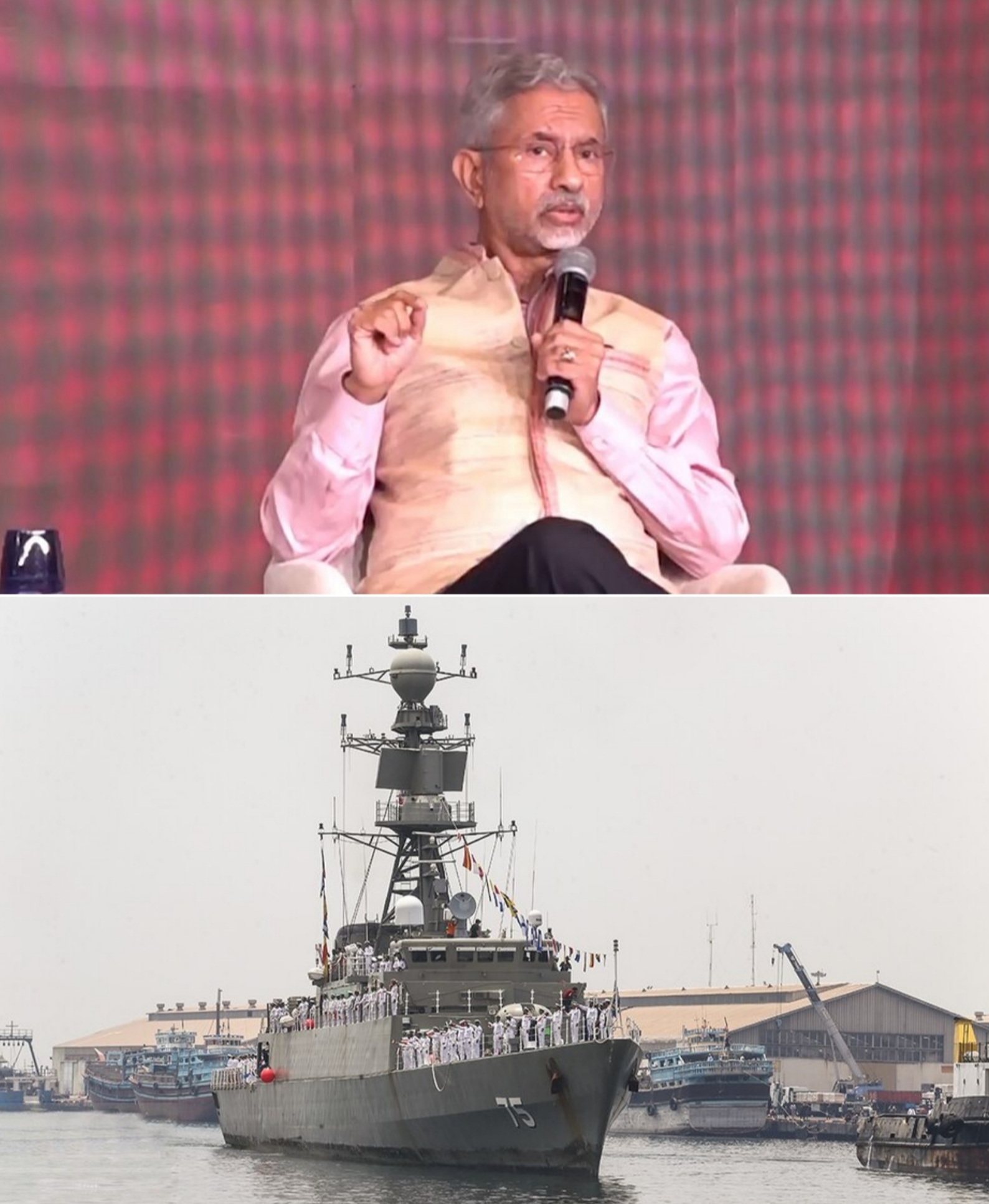
The sinking of the Iranian frigate IRIS Dena near Sri Lanka has quickly evolved from a naval tragedy into a diplomatic challenge for India, placing External Affairs Minister Subrahmanyam Jaishankar at the center of a growing debate over New Delhi’s regional role.
On March 4, an American submarine torpedoed and sank the Iranian warship in international waters close to Sri Lanka. The strike reportedly killed more than 80 sailors, with several others still missing. What has made the incident particularly sensitive for India is that the frigate had recently participated in naval exercises hosted by the Indian Navy before beginning its return journey through the Indian Ocean.
The timing has raised difficult questions in political and strategic circles. Critics argue that the attack, coming so soon after the vessel’s visit to India, highlights how conflicts between major powers are now playing out dangerously close to India’s maritime neighborhood. India’s initial silence after the incident drew criticism from opposition leaders and security analysts. Congress leader Rahul Gandhi said the crisis had effectively reached India’s backyard and questioned why the government had not responded sooner. Strategic affairs expert Brahma Chellaney also suggested that the episode revealed limits to India’s diplomatic influence in the region.
Jaishankar eventually addressed the issue during remarks at the Raisina Dialogue on March 7. Speaking about the changing security environment in the Indian Ocean, he emphasized that the region hosts naval forces from several global powers and cannot be seen as falling under the control of any single country. He also revealed that India had allowed another Iranian naval vessel to dock in Kochi on humanitarian grounds after the attack. The move appeared to signal that New Delhi is trying to maintain a careful balance as tensions grow between Iran and the United States.
India’s position is particularly delicate because it maintains strong strategic ties with Washington while also preserving long standing diplomatic and economic relations with Tehran. Former navy chief Arun Prakash warned that the incident raises serious strategic questions. If India had no prior information about the strike, he suggested, it could reflect gaps in communication within the US India partnership.
As international reactions continue, Jaishankar now faces the challenge of navigating one of the most sensitive moments in India’s recent foreign policy, with a distant conflict suddenly unfolding close to home.

