



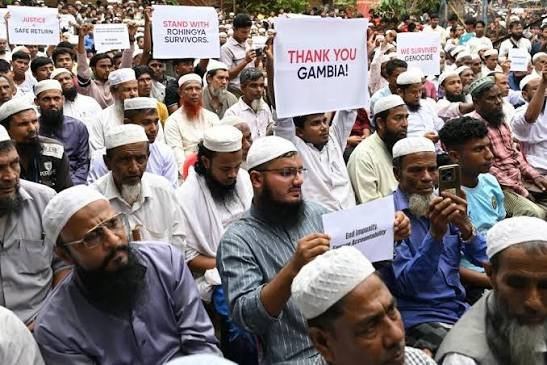
The International Court of Justice’s findings that Myanmar committed genocide against Rohingyas marks a watershed in international justice. It establishes the culpability of a grave crime.
Nearly a decade ago, the Myanmar military killed more than 10,000 Rohingyas men, women and children and forced millions into exile. The ICJ verdict holds Myanmar guilty of genocide.
The ICJ ruling vindicates what the human rights groups have been alleging about the crimes that unfolded against the Rohingyas in 2016 and 2017. This community faced continued persecution in Myanmar.
There was subsequent denial and destruction of evidence. It compounded the original crime.
Among other things, the ICJ has ordered repatriation for the Rohingyas. The decision has brought hope and a sense of justice among the Rohingya refugees in Bangladesh and elsewhere.
But it is far from clear whether and how the ruling will be executed. The ICJ does not have any enforcement capabilities.
Myanmar can be pressured to respect the verdict if the judgement is placed before the United Nations Security Council. And the UNSC.has to act on it.
Myanmar is going through a turmoil of conflict. The battle zone includes Rakhine province that the Rohingyas come from.
This is a pointer that the prospects of a safe return soon to their home are thin. In that case it would boil down to justice eluding the Rohingyas.
Yet the verdict cannot be dismissed. For it is an assurance that international law still stands by the most vulnerable people on earth.
It offers a sobering message too. It comes at a time when the most powerful nations believe that they can act with impunity.
The implications of the verdict are many. This is the first time the ICJ has held a nation state responsible for genocide.
It must not be lost sight of that genocide is one of the toughest crimes to prove. It has now a template to follow whether Israel committed genocide in Gaza.
The case against Myanmar was brought by Gambia. South Africa brought the one against Israel.
Neither nation was directly impacted by bloodshed. But the ICJ has held that it is the responsibility of all nations to uphold the genocide convention.
The verdict raises the uncomfortable question about the meaning of justice for victims. Reparations, accountability and guarantes against repititions are indispensible.
But Rohingyas need more than assurances against past sufferings. They need citizenship, security and freedom from persecution.
The ICJ has delivered a historic judgement. It depends on governments whether it will be a historic achievement.
If the gravest crimes go unacknowledged, the future of the humankind is dark. The verdict shows for once that the weak has been heard.
Justice cannot just end with a verdict. It must begin there.

