



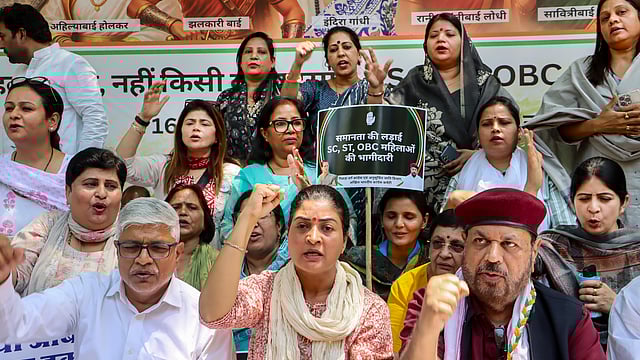
In a significant legislative setback, the Indian government failed to pass the Constitution (131st Amendment) Bill, 2026, in the Lok Sabha on Friday, 17 April 2026, after it fell short of the mandatory two-thirds majority. The bill, part of a controversial package including the Delimitation Bill, 2026, sought to fast-track the implementation of 33% reservation for women in legislatures by 2029. Despite securing 298 votes in favour against 230 opposed, the motion required 352 votes to amend the Constitution, leading to its defeat following a marathon debate in a special three-day session. Opposition parties, while supporting women’s reservation in principle, united to block the measure, accusing the government of using the quota as a “human shield” to push through a massive expansion of parliamentary seats that could disadvantage southern states.
The legislative package proposed a radical overhaul of India’s electoral map, intending to increase the number of Lok Sabha seats from 543 to as many as 850. This expansion was designed to “operationalise” the Nari Shakti Vandan Adhiniyam—the 2023 law guaranteeing women’s reservation—by creating enough new seats to accommodate female candidates without displacing existing male legislators. Crucially, the bills aimed to delink the reservation from the yet-to-be-completed 2027 Census, instead allowing for delimitation based on 2011 data.
The opposition’s resistance centered on this linkage to delimitation. Leaders from the INDIA bloc, including Rahul Gandhi and Mallikarjun Kharge, argued that the redraw would disproportionately favour northern states with higher population growth, thereby penalising southern states that successfully implemented population control. Critics described the move as a “backdoor” attempt to alter the federal balance and electoral structure under the guise of women’s empowerment.
Following the defeat, the government and opposition traded barbs, with Home Minister Amit Shah stating that the “women of this country will not forgive” the obstruction. Conversely, opposition leaders challenged the government to reintroduce the original 2023 bill as a standalone measure on Monday, promising their full support if it were delinked from the delimitation row.

