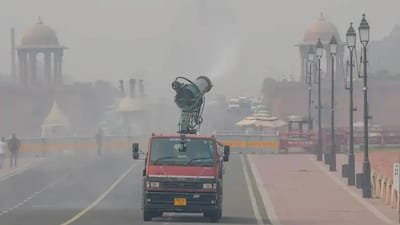
PABITRA BANERJEE :Delhi-NCR has been placed under stricter pollution control measures, with the Commission for Air Quality Management (CAQM) invoking Stage III of the Graded Response Action Plan (GRAP) across the region with immediate effect. The decision comes less than two days before Diwali, as Delhi’s average Air Quality Index (AQI) reached 382 on Friday, November 6. The deteriorating air quality, creeping dangerously close to the ‘Severe’ category threshold of 400, prompted the CAQM’s Sub-Committee to enforce these emergency precautionary measures to prevent a further hazardous spike in atmospheric toxicity across the National Capital Region. Under Stage III restrictions, all non-essential construction and demolition activities across Delhi-NCR are strictly prohibited. Prohibitions extend to earthwork, excavation, masonry, road construction, tile cutting, painting, and major welding operations. Furthermore, the transportation and handling of dust-generating materials such as sand, cement, fly ash, and crushed stone have been halted. However, exemptions remain in place for critical public infrastructure projects, including railways, metro networks, defense facilities, hospitals, and national highway construction. Strict vehicular regulations have also been reinstated to curtail mobile emissions. The operation of BS-III petrol and BS-IV diesel light motor vehicles (four-wheelers) is banned on roads throughout Delhi and neighboring NCR districts. Additionally, inter-state diesel buses not complying with BS-VI standards are barred from entering the capital. Industrial curbs have been stepped up, forcing stone crushers, mining activities, and non-compliant hot-mix plants and brick kilns to shut down immediately. To control roadside dust accumulation, civic agencies have been instructed to step up mechanical sweeping and intensive water sprinkling across major traffic corridors. State authorities in Delhi-NCR may also consider shifting physical classes for primary school children to online modes and implementing a 50% work-from-home mandate for public and private offices.

Delhi’s air quality worsens: put under strict restrictions in Diwali week
Delhi-NCR enters Stage III pollution emergency as pre-Diwali AQI hits 382, shutting down construction and restricting older vehicles.