



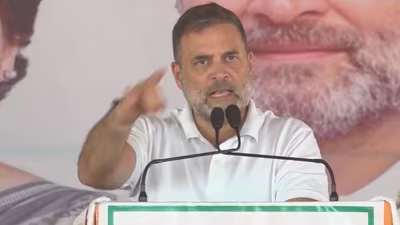
Leader of Opposition in the Lok Sabha, Rahul Gandhi, on Tuesday (May 19) launched a sharp attack on the Centre’s economic policies, warning that India could soon face a major financial crisis that would hit ordinary citizens the hardest.
Speaking during his visit to Raebareli, his parliamentary constituency in Uttar Pradesh, the senior Congress leader alleged that the current economic framework created under Prime Minister Narendra Modi was designed to favour a handful of large corporate groups while leaving farmers, workers, youth and small businesses vulnerable to an impending economic shock.
Rahul Gandhi targets Centre over economic policies
Addressing the media, Rahul Gandhi claimed the country was heading toward what he described as an “economic storm”, arguing that the present financial structure would eventually collapse under its own weight.
“For several days now, I have been saying that the economic structure Modi ji has altered is heading towards a major crisis. The structure built in favour of big industrialists will not survive permanently. When it collapses, ordinary citizens will suffer the most,” Gandhi said.
He alleged that while wealthy industrialists and political leaders would remain protected, the real burden would fall on common people, particularly in Uttar Pradesh.
Criticism over PM Modi’s austerity appeal
Rahul Gandhi also criticised the Prime Minister over recent appeals asking citizens to reduce unnecessary foreign travel and spending amid rising global economic uncertainty linked to the ongoing West Asia crisis. The Congress leader accused the government of failing to address deeper structural economic problems while placing the responsibility of adjustment on citizens.
“Instead of taking concrete action, Narendra Modi is advising people not to travel abroad while he himself continues travelling across the world,” Gandhi remarked.
Congress attacks fuel price hike
Congress president Mallikarjun Kharge also intensified the opposition’s attack on the government over the recent increase in petrol and diesel prices.
Calling the current situation a “government-made crisis”, Kharge accused the Centre of passing the burden of rising costs onto ordinary citizens while allegedly protecting corporate interests.
“Just days after the previous revision, petrol and diesel prices have been increased again. The common man is being forced to pay the price for policy failures,” Kharge said.
He further alleged that the government’s economic approach disproportionately benefited large business groups while consumers continued facing rising inflationary pressures.
Fuel prices continue to rise
The political attacks come amid sustained volatility in global energy markets following the escalating West Asia conflict, which has disrupted oil supply chains and pushed crude oil prices sharply higher.
In Delhi, petrol prices rose from Rs 97.77 to Rs 98.64 per litre, while diesel prices increased from Rs 90.67 to Rs 91.58 per litre after the latest revision.
The increase has triggered concerns over broader inflation, with economists warning that higher fuel costs could gradually impact transportation, food prices, logistics, e-commerce deliveries and household budgets.
India’s oil import burden under pressure
India, which imports a significant portion of its crude oil requirements, is also expected to face growing external pressure if global oil prices remain elevated for an extended period. According to a recent report by CRISIL, India’s oil trade deficit could widen sharply in FY27 due to rising crude prices, weaker petroleum exports and continued dependence on imported energy.
With geopolitical tensions in West Asia showing little sign of easing, concerns are growing over inflation, foreign exchange pressures and the broader impact on India’s economic stability in the months ahead.

