



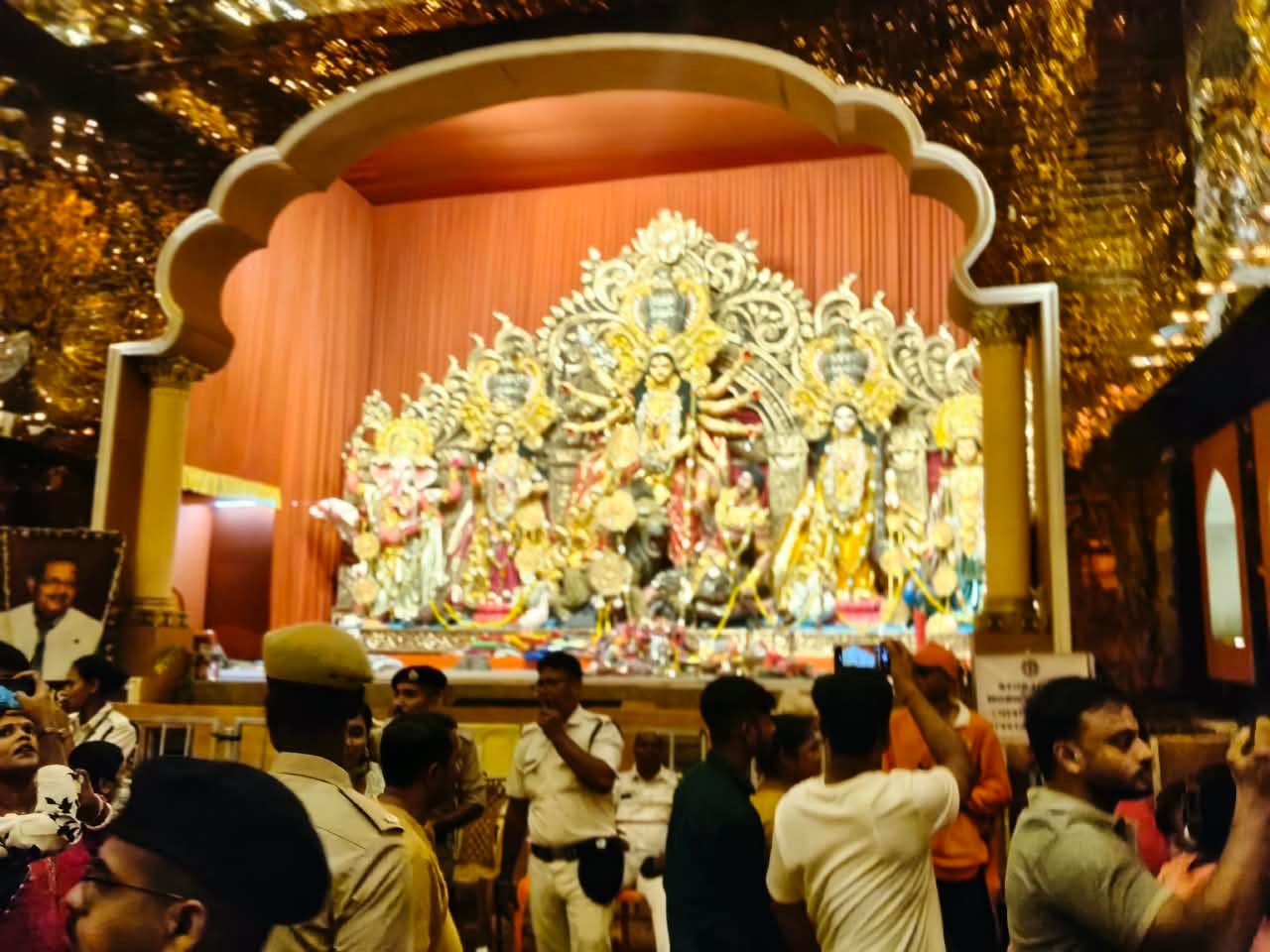
Kolkata, October 21: The West Bengal government on Wednesday issued stringent revised directives governing the immersion (visarjan) of Durga Puja idols across the state, introducing identity checks for idol bearers and roping in the National Disaster Response Force (NDRF) to oversee major riverfront ghats along the Hooghly.
The security overhaul follows the tragic stampede at north Kolkata’s Chorbagan Sarbojanin Durga Puja pandal earlier this festive week, which claimed the lives of 19 people and left scores injured.
Reviewing the immersion preparedness alongside Kolkata Police Commissioner Manoj Verma and senior administrative officials on Vijaya Dashami, Chief Minister Suvendu Adhikari announced a marked departure from previous administrative guidelines, linking ritual handling directly to scripture and religious custom.
New Immersion Directives: Identity Checks and Ritual Restrictions
Addressing reporters after an administrative review meeting at Nabanna, Chief Minister Adhikari stated that while idol immersion remains a public festival, its core religious sanctum must be safeguarded.Under the new operational instructions conveyed to Kolkata Police and district magistrates:
Identification of Idol Handlers: The state has directed police commissioners to maintain explicit registries and identity verifications of all labourers, porters, and volunteers engaged in physically carrying the idols from transit trailers into the river.
Ritual Criterion: The Chief Minister mandated that only followers of Sanatan Dharma will be permitted to touch and handle the consecrated idols during the immersion rituals in the Hooghly.”I have instructed the Commissioner of Police to keep the identification of those who will be involved in carrying the idols into the Hooghly river.
Those who follow Sanatan Dharma will touch the idols. There is no communal matter in it,” Adhikari asserted. “To maintain the purity of the immersion, we have to follow traditions, scriptures, and rules that have been observed for thousands of years. This is a festival, but primarily it is a religious programme.”
Multi-Layered Security Dragnet Across Kolkata Ghats
In addition to ritual restrictions, waterfront security across the Kolkata metropolitan area has been fortified on an unprecedented scale:
NDRF & River Police Deployment: Personnel from the National Disaster Response Force (NDRF), alongside state Disaster Management teams and Kolkata River Police speedboats, have taken position across major immersion points, including Baje Kadamtala Ghat, Nimtala Ghat, Judges Ghat, and Gwalior Ghat.Ghat Demarcation & Crane Operations: Heavy-duty hydraulic cranes have been stationed at prime ghats to retrieve wooden frames immediately after immersion, preventing environmental siltation and eliminating dangerous crowd congestion on slipways. Dedicated drop zones have been separated from public viewing enclosures.
Border & District Watch: In North 24 Parganas, specialized surveillance and drone monitoring have been deployed along the Ichamati river in Taki, where cross-border immersion traditions draw massive crowds along the India-Bangladesh border.
Chorbagan Stampede Aftermath: Compensation and Crowd RegulationThe administrative clampdown comes against the grim backdrop of the crowd surge at the Chorbagan puja pandal in north Kolkata, where thousands of revellers packed narrow arterial lanes on Ashtami evening, leading to a catastrophic crush that killed 19 people.Ex-Gratia Relief: The state government reaffirmed financial compensation of ₹25 lakh for the next of kin of each deceased victim, alongside ₹5 lakh for those critically injured.Stricter Procession Windows: To prevent similar bottlenecks on city streets, Kolkata Police have enforced strict transit corridors and hourly time-slots for immersion processions moving from major community pandals toward the riverfront, deploying additional Rapid Action Force (RAF) companies across north and central Kolkata thoroughfares.With Vijaya Dashami observances underway and immersions scheduled to continue in phases, authorities have placed hospitals, municipal emergency cells, and civic volunteer networks on round-the-clock alert to avert any further untoward incidents.

