



All men are born equal. But some are more equal than others.
In corporate America there have been few instances of CEOs being brought back to the helm days after being eased out. One just had to take a look at precdences.
Steve Jobs returned to Apple more than a decade after being ousted. Of late, Sam Altman was back at OpenAI five days after being pushed out.
It took 11 days in Nvidia CEO Jensen Huang’s case. The stock market celebrated his comeback.
Nvidia’s share price rose 31.5 per cent on the news
Huang’s return. It added around $950 billion to the company’s market capitalisation.
But the manner in which the events played out raised serious questions. And these quarries are not only about corporate governance at Nvidia, one of the most consequential corporate firms of the AI area.
It is about growing involvement of the White House in the corporate world. These concerns must be addressed as they reverberate beyond the Silicon Valley.
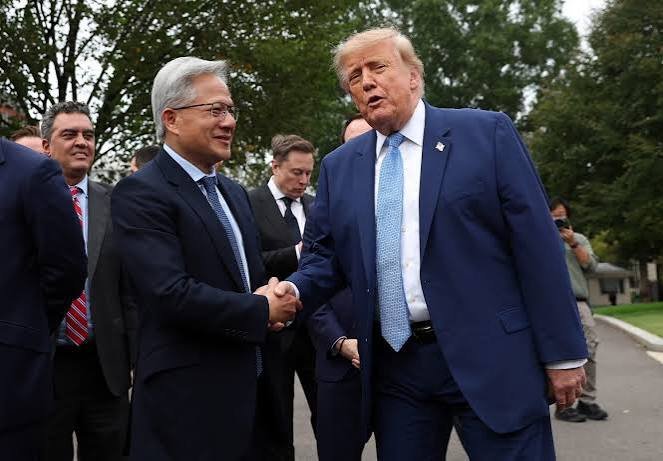
US President Donald Trump recently claimed credit for convincing Nvidia board to reinstate Jensen Huang as CEO. Huang had resigned over allegation of extramarital affairs including alleged relationship with a suspected Chinese intelligence asset; President Trump has also stated that Huang poses no national security risk.
Still there are broad questions about his conduct. He is expected to testify in a series of Congessional hearings in Washington next week.
During his talk with employees, Huang said that he was not back because President Trump pressured Nvidia’s board to reinstate him. The statements of the two men contradict each other.
“Sometimes it is appropriate to forgive” he said. “Sometimes it is not.”
The Nvidia’s board put out a statement that it received “inputs from senior level of United States government ” on the basis of which it was “confident that Mr Huang’s reinstatement poses no national security risk”. But it has not elaborated what inputs were received or who provided it.
Not have any questions been raised in this troubling incident. The issues ranging from national security risks to oversight in the company and workplace dynamics seek satisfactory answer.
The Nvidia board took an abrupt u-turn only days after uniequivocally saying that it had no intention of bringing Huang back. Presumably his return was in part about President Trump’s intervention which raises questions about Nvidia’s independence.
Some of the corporate world have cheered President Trump ‘s involvement. The initial stock market euphoria appears to be fading as investors confront issues over AI trade.
It points to the present administration viewing certain companies and who heads them as issues of strategic importance in the AI race with China. Some may view Huang as too big to fall.
After all, his competence is unquestioned which has earned him his place. Moreover, he has “friends in high places ” which can tilt the scales in his favour on similar moments of crisis in future. .
Yet a question hangs in the air. Can any leader be immune from accountability ?
Huang left amidst a blot of infamy and returned to the saddle though not exactly in a cloud of glory. It gives an opportunity to Nvidia to address the governance issues that his departure brought to the fore.

