



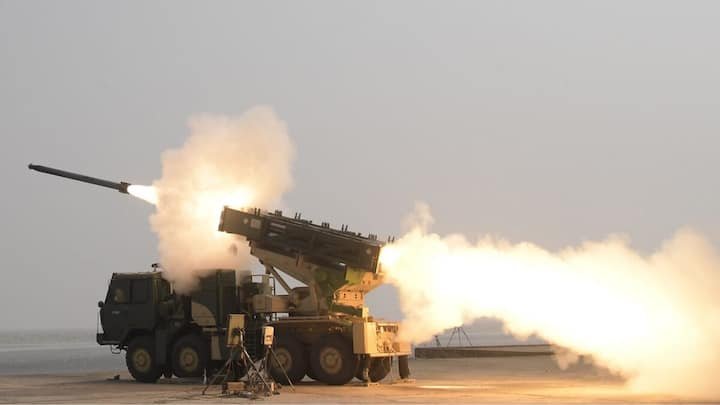
New Delhi / Tokyo, November 25, 2026: In a historic milestone for Indo-Pacific defense cooperation, India has agreed to grant Japan’s Self-Defense Forces (JSDF) access to its premier missile testing facility—the Defence Research and Development Organisation’s (DRDO) Integrated Test Range (ITR) at Chandipur off the Odisha coast—marking the first time New Delhi has opened the strategic installation to a foreign nation.
The breakthrough follows the signing of a landmark Letter of Intent (LoI) during the recent India–Japan 2+2 Foreign and Defence Ministerial Dialogue in Tokyo, co-chaired by Indian Defence Minister Rajnath Singh and External Affairs Minister S. Jaishankar alongside their Japanese counterparts, Shinjiro Koizumi and Toshimitsu Motegi. Beyond live-fire missile trials set to begin next year, the two nations are exploring deep technological co-development in hypersonic weapons, unmanned systems, and naval platforms.
Why Japan Needs India’s Maritime Testing Corridor
As Japan transitions from its post-World War II exclusively defensive posture toward acquiring long-range stand-off “counterstrike” capabilities, Tokyo has faced an acute geographical hurdle: a lack of vast, unobstructed domestic maritime firing corridors capable of safely testing weapons with ranges exceeding 1,000 kilometers.
- Testing the Type-25 Anti-Ship Missile: Following an assessment visit to Indian ranges by a Japanese military delegation led by Ground Self-Defense Force Chief of Staff Masayoshi Arai in October, Tokyo is preparing to conduct live-fire training with its upgraded Type-25 surface-to-ship missile—a next-generation stand-off weapon boasting an estimated range of roughly 1,000 km—as well as small attack drones.
- Future Range Expansion: Alongside Chandipur’s advanced radar, telemetry, and electro-optical tracking infrastructure, New Delhi is also considering granting Japan access to two upcoming state-of-the-art testing facilities in West Bengal and Andhra Pradesh. Calling the pact “a major step strategically,” Japanese Defense Minister Shinjiro Koizumi confirmed that JSDF personnel will utilize Indian firing ranges for the first time in 2027.
Hypersonics, Naval Shipbuilding, and Co-Production
Opening India’s eastern test ranges forms part of a broader push to elevate bilateral defense-industrial ties as the two democracies prepare to mark 75 years of diplomatic relations in 2027:
- Hypersonics & Niche Technologies: Both defense establishments are exploring joint research, technical know-how sharing, and co-development in next-generation missile programs, including hypersonic glide and cruise systems, alongside unmanned aerial and underwater platforms.
- Warships & Naval Equipment: During his Tokyo visit, Defence Minister Rajnath Singh inspected Japan’s upgraded Mogami-class stealth frigate, as New Delhi and Tokyo explore joint warship building and early implementation of the UNICORN (Unified Complex Radio Antenna) naval stealth mast co-production agreement.
Strategic Signal in the Indo-Pacific
Military analysts view the arrangement as a significant operational upgrade to the India–Japan Special Strategic and Global Partnership—building on bilateral drills such as Dharma Guardian, JIMEX, Shinyuu Maitri, and Veer Guardian 26. By integrating testing infrastructure and exploring co-development of high-speed strike systems, New Delhi and Tokyo are signaling deeper strategic convergence to uphold a free, open, and rule-based Indo-Pacific amid growing regional security challenges.

