



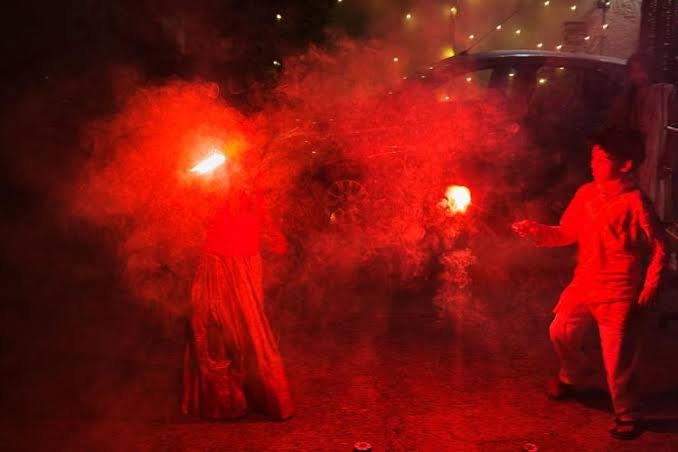
New Delhi, November 9, 2026: A dense blanket of toxic smog engulfed India’s capital region on Monday morning, as widespread Diwali firecracker bursting collided with stagnant winter weather and seasonal farm fires, sending air pollution levels spiraling into the “severe” category across the metropolis.
Despite legal curbs and judicial restrictions on fireworks, millions of residents celebrated the festival of lights late into Sunday night with pyrotechnics, releasing heavy volumes of smoke and fine particulate matter ($PM_{2.5}$ and $PM_{10}$) into the atmosphere. By Monday morning, monitoring stations across New Delhi recorded the Air Quality Index (AQI) surging well past the 350 mark in multiple residential and industrial pockets—levels deemed hazardous to human health and far exceeding World Health Organization (WHO) daily exposure thresholds.
Visibility plunged sharply across the National Capital Region (NCR), casting a gray pall over iconic landmarks, including the India Gate, and reducing morning traffic on major arterial expressways to a crawl.
A Convergence of Seasonal Triggers: Trapped Under an Inversion Lid
The post-Diwali spike has intensified New Delhi’s chronic winter air pollution crisis, which annually transforms the urban sprawl of more than 30 million people into one of the world’s most polluted zones:
- Stagnant Meteorological Conditions: Cooler autumn temperatures, calm surface winds, and thermal inversion have formed an atmospheric lid over the Indo-Gangetic plains, preventing vehicular emissions, firecracker particulates, and dust from dispersing.
- Crop Residue Burning: The firecracker fallout coincided with peak post-harvest stubble burning across neighboring agrarian belts in Punjab, Haryana, and western Uttar Pradesh, where smoke from agricultural fires regularly drifts southeast into the capital bowl.
- Urban Baseline Load: The seasonal pollutants accumulated on top of Delhi’s high baseline emissions from heavy vehicular transit, unchecked construction dust, and thermal power generation.
Public Health Alarms and ‘Knee-Jerk’ Policy Critiques
Health experts warned that the sudden surge in microscopic pollutants poses severe risks to vulnerable demographics, triggering sharp spikes in respiratory distress, asthma attacks, bronchitis, and cardiovascular strain among children, senior citizens, and patients with pre-existing conditions.
Environmentalists and public health advocates criticized the recurring governance cycle, arguing that periodic administrative interventions fail to address the systemic root causes:
- Temporary Measures Fall Short: While the local administration invoked anti-pollution measures—including bans on diesel generator sets, restrictions on non-essential construction work, and mechanized water sprinkling—these actions have routinely failed to insulate the capital from severe seasonal spikes.
- Call for Structural Reforms: Public health analysts noted that enforcement of firecracker bans remains largely symbolic without continuous regional coordination. Shweta Narayan, a public health expert at the Global Climate and Health Alliance, characterized official responses as reactive and temporary, emphasizing that interventions historically occur only when administrative authorities are pushed into a corner by public outcry.
- Broader Economic and Ecological Costs: Atmospheric scientists warned that sustained, heavy haze layers diminish direct solar irradiance, negatively affecting solar energy generation and regional agricultural productivity alongside escalating the national healthcare burden.

