



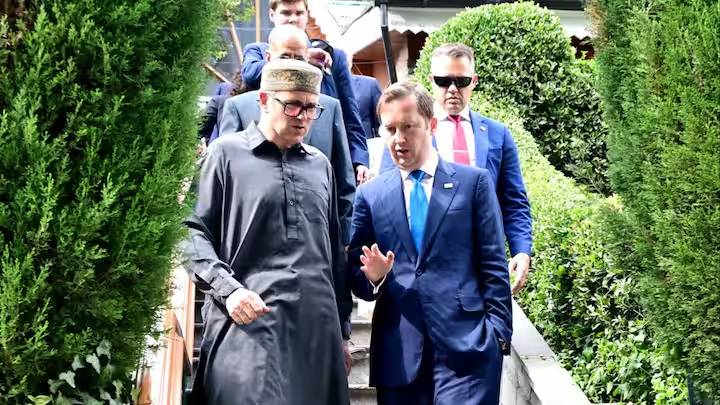
U.S. Ambassador to India Sergio Gor’s first visit to Jammu and Kashmir has triggered a significant diplomatic and political reaction after he described the Union Territory as an “important part of India.” Gor made the remarks during his visit to Srinagar on Wednesday, where he met Jammu and Kashmir Chief Minister Omar Abdullah and discussed India-U.S. relations and possible areas of cooperation.
Gor, who is also U.S. President Donald Trump’s Special Envoy for South and Central Asian Affairs, arrived in Jammu and Kashmir as part of a two-day visit that also includes Ladakh. His visit is particularly significant as it comes amid continuing sensitivities surrounding the region and India-Pakistan relations.
Speaking after his meeting with Omar Abdullah, Gor expressed his appreciation for the region and its natural beauty. He said it was his first visit to Jammu and Kashmir and described the territory as an important part of India. The statement was widely viewed as notable because of the long-standing international sensitivity surrounding the Kashmir issue.
The U.S. ambassador also spoke about the security situation in Jammu and Kashmir. He said the Central government and the Union Territory administration had taken significant steps to improve security. Gor indicated that Washington would review its existing travel advisory for the region, suggesting that the current warning could be downgraded if the improved security situation continues.
For Jammu and Kashmir’s tourism sector, the possibility of a revised U.S. travel advisory could be important. The region has long depended heavily on tourism, and international travel warnings can influence the decisions of foreign visitors. Gor said that many American citizens would be interested in visiting Kashmir because of its beauty, strengthening the possibility of greater American tourist interest if travel restrictions are eased.
Omar Abdullah described his meeting with Gor as positive. According to the Chief Minister, the discussions focused on India-U.S. relations, Jammu and Kashmir, and areas where the United States could engage with the Union Territory in the future. The meeting therefore went beyond symbolism and touched upon possible future cooperation.
However, Gor’s remarks quickly drew a strong reaction from Pakistan. Islamabad summoned the U.S. Charge d’Affaires and lodged a formal protest, arguing that the ambassador’s statement contradicted what Pakistan described as the traditional U.S. position on the Kashmir dispute. Pakistan’s Foreign Ministry said the remarks were inconsistent with its interpretation of international law and previous U.S. positions.
The controversy highlights how even a brief diplomatic statement about Kashmir can have consequences beyond the immediate visit. For India, Gor’s comments were seen as a significant affirmation of the country’s position, while Pakistan viewed them as a departure from Washington’s earlier approach.
Gor’s Jammu and Kashmir visit is therefore important on several fronts. It combines diplomacy, security, tourism and regional geopolitics at a time when India-U.S. relations continue to evolve. While the United States has not formally announced a change in its travel advisory yet, Gor’s comments suggest that Washington is reassessing how it views the security situation in Jammu and Kashmir.
The visit has also placed Kashmir once again at the centre of international diplomatic attention, with Gor’s remarks likely to remain a talking point in India-Pakistan relations in the days ahead.

