



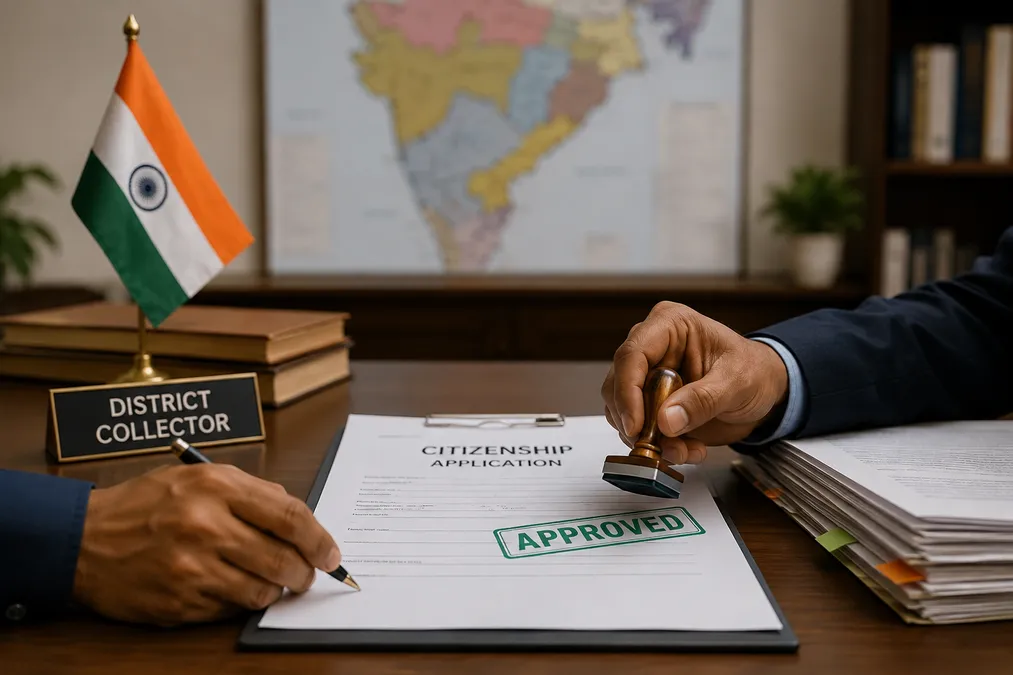
The Central government has given district collectors in eight regions the power to grant Indian citizenship to eligible people living in their areas. The announcement was made by the Union Home Ministry on Wednesday through the Citizenship (Third Amendment) Rules, 2026.
The new rules apply to applicants living in Gujarat, Rajasthan, Punjab, West Bengal, Assam and Tripura, as well as the Union Territories of Jammu and Kashmir and Ladakh. However, tribal areas in Assam and Tripura have been excluded from the new rules.
Under the new system, district collectors will act as the competent authority for citizenship applications made through registration or naturalisation. They will receive, check and decide on applications submitted electronically.
Earlier, these powers were given to Empowered Committees, Designated Officers and District Level Committees.
Under the new rules, district collectors will take over these responsibilities. All applications that are currently pending with these committees in the specified regions will be transferred to the concerned collectors.
After an application is submitted, the system will provide an automatic acknowledgement. The collector will then check the applicant’s documents and conduct any necessary inquiry. The collector will also ensure that the applicant meets the requirements under the Citizenship Act.
If the collector approves that the applicant is eligible and is a “fit and proper person”, they can directly grant Indian citizenship. Before citizenship is granted, the applicant must take the oath of allegiance as required under the law.
The new rules also make it compulsory for applicants to appear in person during the process. If an applicant does not appear to sign the application and take the oath, even after being given reasonable opportunities, the collector can reject the application.
In conclusion, the Centre’s new rules give district collectors in eight regions greater authority to process and grant Indian citizenship to eligible applicants. The move replaces earlier committees and is aimed at making the citizenship process more direct and efficient. However, applicants will still have to meet all legal requirements, submit valid documents, appear in person and take the required oath before citizenship can be granted.

