



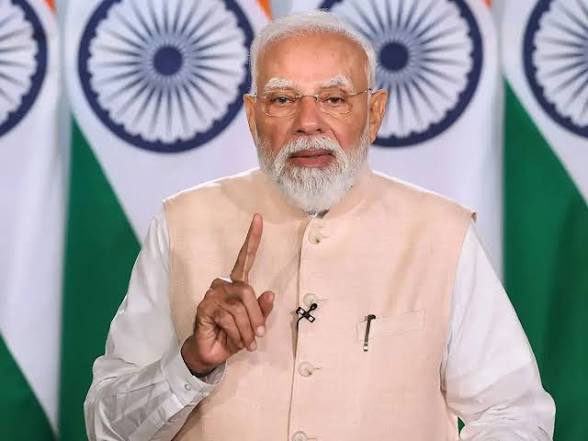
NEW DELHI — In a major push toward localized economic tracking, Prime Minister Narendra Modi directed all states to generate Gross Domestic Product (GDP) estimates at the district level. Chairing the 11th Governing Council meeting of NITI Aayog at the Rashtrapati Bhavan, the Prime Minister emphasized that micro-level data is essential to effectively target and address development bottlenecks at the grassroots.
The day-long conclave, centered around the theme ‘Inclusive Human Development for Viksit Bharat @2047’, marked a historic milestone with the participation of Chief Ministers from all 28 states. PM Modi reiterated that India’s macro-growth depends entirely on the collective progression of its states, urging them to aggressively court foreign direct investment (FDI) and simplify the ease of doing business.
Beyond localized financial metrics, the discussions heavily focused on maximizing India’s unique demographic advantages and securing sustainable energy pipelines. Highlighting that nearly 70 crore citizens are under the age of 25, the Prime Minister noted: “Creating the right ecosystem for our youth through quality education, demand-driven skilling, and employment opportunities must remain a priority.
Empowered youth will be the driving force behind our journey.” To support this vision, the Council mapped out detailed strategies for technical skilling in emerging fields like artificial intelligence (AI), green energy, and data centers. Agriculture and energy independence also topped the collaborative agenda. Leaders extensively debated scaling up decentralized infrastructure, pushing for aggressive rooftop solar deployment across residential and government properties to alleviate state power subsidy burdens.
Amid looming concerns regarding potential El Niño weather disruptions, PM Modi urged the states to heavily incentivize water conservation, organic practices, and natural farming methods to shield the agrarian economy.
By shifting the policy lens to sub-regional tracking through district GDPs and strengthening the One District One Product (ODOP) strategy, the government aims to transform local economies into export-oriented powerhouses, laying a data-driven foundation for a developed nation.