


Ashok Sengupta
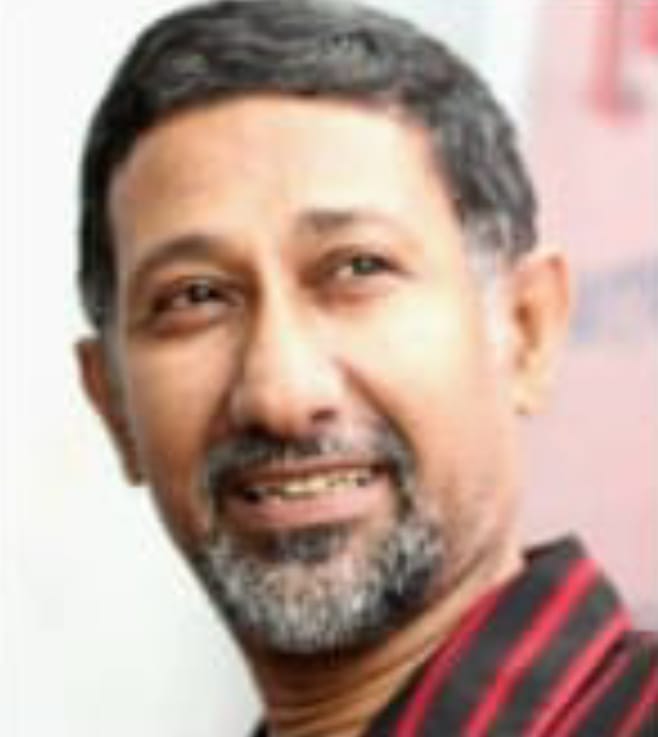
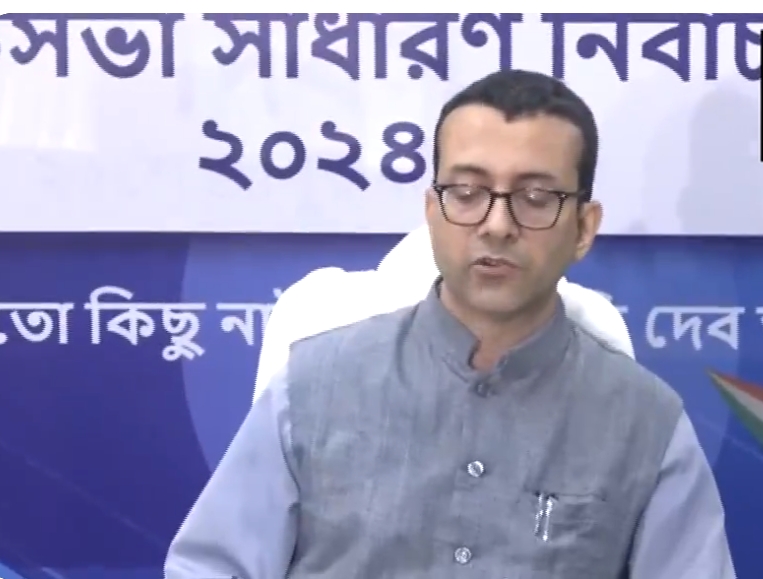
The elections are over, and now the state awaits the formation of a new cabinet. While many are calling the Election Commission or Chief Election Commissioner Gyanesh Kumar the “man of the match,” much of the responsibility of implementing decisions amid immense pressure was handled behind the scenes by West Bengal’s Additional Chief Electoral Officer, Arindam Niyogi. He spoke to Newscope Bangla Editor Ashok Sengupta.
Question 1: You have come through a major test. You successfully handled an extremely difficult and sensitive responsibility. How does it feel?
Answer: In our service life, especially in matters related to elections, we have faced such tests many times before. Until now, I considered the 1997 Panchayat General Election, which I handled as a Block Development Officer, to be the toughest election assignment of my career. At that time, vote counting used to take place at the polling stations themselves, and the entire process continued for nearly three days and nights. This election comes very close to that experience.
There is no doubt that this was an extremely difficult responsibility, but I had the support of three highly experienced officers above me. First, Manoj Kumar Agarwal, IAS, the Chief Electoral Officer. Then Subrata Gupta and Nandkishore Mishra, both Special Observers appointed by the Election Commission. Their guidance made even this difficult task manageable.
Question 2: How do you feel after the completion of the election process?
Answer: In one word, I feel satisfied and fulfilled. We had two primary objectives. First, to ensure that every voter could exercise their franchise. This election recorded a voter turnout of 93.05%, which is unprecedented. Second, we wanted people to vote without fear. The fact that we were able to create a fearless voting environment is our greatest success.
Question 3: When did you join government service? Have you ever faced pressure like the last six months?
Answer: I joined government service in 1995. If you are asking specifically about election-related pressure, then after 1995, the only comparable experience was the 2011 Assembly Election, when I was the Sub-Divisional Officer and Returning Officer of Arambagh subdivision.
Question 4: What was your routine like on the day of counting? And what are your plans now?
Answer: May 4 was the counting day. On that day, the CEO office does not have too much direct work. We monitored television coverage and supervised how Returning Officers were uploading round-wise results onto the Election Commission’s ENCORE software.
Counting began first with postal ballots. Then, from 8:30 am onward, EVM counting started. Within the first one or two rounds, it became clear that people had been able to vote fearlessly, and that gave us a different kind of satisfaction.
Our main work in the statutory cell begins after counting concludes. A large number of reports and statements have to be sent to the Election Commission. From evening until late at night, we remained extremely busy. Even yesterday and today, numerous reports have been submitted, so the workload continues throughout the day.
Question 5: What has been the most memorable moment of the last six months?
Answer: Elections take place every few years, but the most memorable experience this time was the SIR process and the way it unfolded in West Bengal and across the country. Such a situation had never occurred before. The day the Supreme Court ruled that judicial officers would complete the remaining work related to SIR was truly an unprecedented and memorable moment for me.
Question 6: Did you ever feel monotonous or exhausted during this period?
Answer: I joined the Election Department in March 2021, just one and a half months before the Assembly elections. There has been absolutely no scope for monotony. New directives, new kinds of responsibilities, and changing work patterns keep emerging constantly. SIR itself was a completely new experience. After the judicial officers’ verdict, the tribunal process brought in another entirely new set of instructions and responsibilities. And now we are preparing for the re-election in the Falta Assembly constituency on May 21. So there is simply no room for monotony.
Question 7: What was your happiest moment and your saddest moment during the last six months?
Answer: As I mentioned earlier, my happiest moment came after 10 am on May 4. As for the saddest moment, I cannot really identify one. In a position like ours, every difficult moment becomes a stepping stone toward success if we manage to move forward and complete our responsibilities properly.