



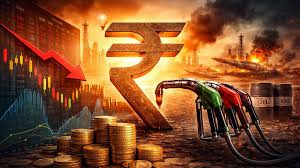
The Indian rupee plunged to a historic intraday low of 95.34 against the US dollar on Thursday, April 30, 2026, as surging global crude oil prices and a mass sell-off in domestic stocks created a “double whammy” for the Indian economy. While the currency managed to recover slightly to close at 94.90 following aggressive intervention by the Reserve Bank of India (RBI), the breach of the psychologically significant 95-level has sent shockwaves through the financial markets.
The primary driver for this crash is the explosive rise in crude oil prices, with Brent crude soaring to a four-year high of $126 per barrel. This spike is directly linked to escalating tensions in the Middle East, specifically the fear of a prolonged blockade in the Strait of Hormuz, a critical route for India’s energy supplies. As India imports nearly 85% of its oil, every dollar increase in price adds billions to the national import bill, forcing banks and companies to sell rupees to buy the dollars needed for these payments. This sudden demand for the greenback, combined with foreign investors pulling out over ₹2,400 crore from Indian stocks in a single day, has left the rupee struggling to find support.
Financial analysts warn that the pressure on the rupee is likely to continue as long as the conflict in West Asia remains unresolved. The RBI has been working overtime to manage the volatility, using its foreign exchange reserves to prevent a “free fall” beyond the 95-mark. However, with the US Federal Reserve maintaining a hawkish stance and domestic inflation risks rising alongside fuel costs, experts suggest the rupee could weaken further toward the 96–97 range by the end of the year. For the average Indian citizen, this currency drop means costlier imports, higher petrol prices, and a potential rise in the cost of everything from electronics to essential groceries.

