


Britain, Canada and Australia have made an announcement of their official recognition of Palestine as an independent state and this has rocked the world politics and evoked serious feelings among people on both sides. The announcements were a moment of hope something Palestinians rarely experience since the decades of their struggle to be acknowledged were ending with a corner being turned. To Israel, it was considered to be a great betrayal of close allies and even PM Benjamin Netanyahu made very strong statements saying that there would be no Palestinian state west of the Jordan River.
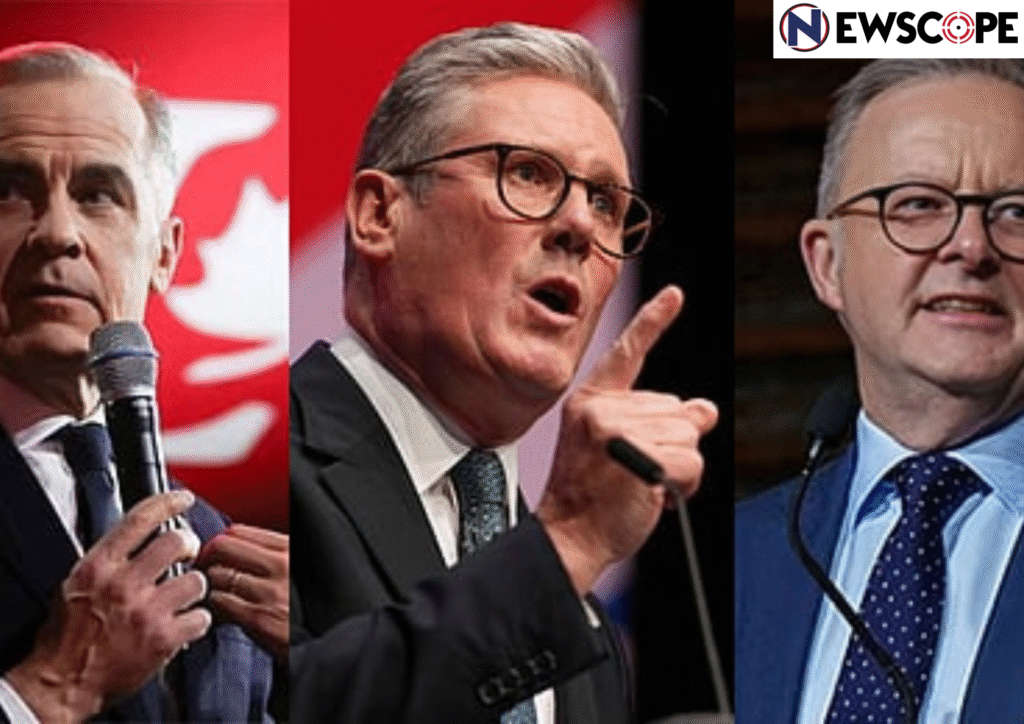
British Prime Minister Keir Starmer made a desperate plea in London. He claimed that the move was aimed at restoring the hope of peace between the Palestinians as well as the Israelis and the two-state solution. He never hesitated to criticize the military action of Israel in Gaza by saying the destruction and the loss of life were completely unacceptable. His lyrics were the thoughts of most people in the world during the war: they were tired of all the bloodshed and forced to find a way out.
Canadian Prime Minister Mark Carney would make a similar tone but introduce conditions in Ottawa. He pointed out that the granting of Palestine was no reward to terror but a move to peace. He explained that in the case of Canada, there should be a future Palestinian state founded on democracy and accountability and the exclusion of Hamas in the government. His speech was full of empathy to average Palestinians and care of the security in the area.
Australian Prime Minister Anthony Albanese gave the recognition directly reliant on human loss, based in Canberra. He cited the loss of aid workers including Australians and journalists who were murdered in Gaza. According to him, Australia could not afford to keep silence as civilians kept being affected. Nevertheless, similar to Canada, he demanded that Hamas needs to disarm and relinquish any leadership position.
The reaction was harsh and unbending in Israel. Based on the fatal Hamas attacks of October 2023, Netanyahu accused the three countries of promoting terrorism. His message was stinging: to those in charge he was saying: you are handing terrorism a massive reward. To him and his government the move was an assault on the existence of Israel and not a move towards peace. Other ministers even made a further call of annexation of additional Palestinian territory, which can create a further escalation of the conflict.
To Palestinians, it was a historic moment. President Mahmoud Abbas received the move as a significant and required step towards a just and durable peace. It was an irreversible step that brought her people closer to its sovereignty, Foreign Minister Varsen Aghabekian Shahin called it, although it would not stop the violence in the moment. To common Palestinians in Gaza and West Bank, it was a ray of hope in the midst of debris and sorrow.
The reactions continued to come the world over. Russia was the first to reiterate its support to a two-state solution. But there was one voice which was notably missing; China. Beijing, which is usually fast in issuing comments on high-priority conflicts globally has not said anything publicly. Analysts think that this may be a planned move, a means not to pick sides too early. The silence in the international relations, however, can be as potent as speech and the next move taken by China may be gigantic.
The fact that the recognition of Palestine was done by three of the key allies of Israel is not just a diplomatic change but an event in which millions of lives were touched. Families seek refuge amidst unceasing bombardment in Gaza. In Israel, the citizens are fearing that their security is being stolen. And the leaders of the world have time to watch what they say, every word will be a source of hope or rage. The question that remains is whether this wave of awareness will help the world move to a peace, or will cause an already vulnerable region to be further divided.

