



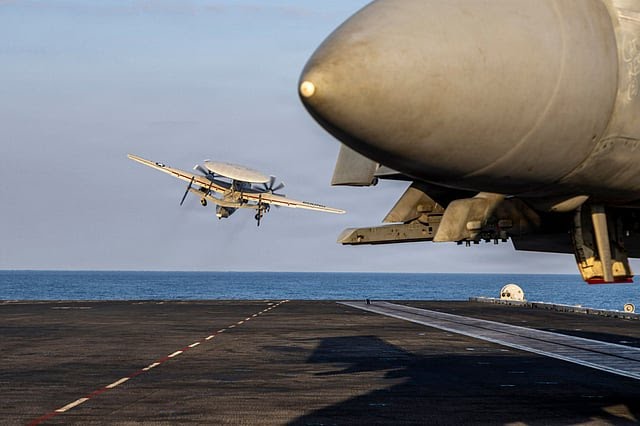
The United States has moved the USS Abraham Lincoln carrier strike group and a specialized bomber task force into the Middle East, citing high-level intelligence regarding potential Iranian threats against American interests.
This military surge, ordered by the White House, marks a significant escalation in the “maximum pressure” campaign intended to force Tehran back to the negotiating table.
Pentagon officials confirmed that the deployment includes Patriot missile batteries and additional naval assets, effectively placing U.S. forces on a high-alert footing within striking distance of Iranian territory.
President Donald Trump has maintained a dual-track approach, warning that any provocation would result in the “official end of Iran” while simultaneously stating he is open to a new diplomatic deal.
This aggressive posturing aims to curb Iran’s nuclear ambitions and its influence across the region.
However, the Iranian leadership, led by Ayatollah Ali Khamenei, has dismissed the U.S. naval movements as psychological warfare. Tehran has responded by threatening to roll back its own commitments to international nuclear limits, further narrowing the path for a diplomatic resolution.
The concentration of military hardware in the narrow Strait of Hormuz has raised immediate concerns among global security analysts regarding a potential “accidental” war.
With both U.S. assets and Iranian Revolutionary Guard vessels operating in close proximity, a single tactical error or a misinterpreted signal could trigger a full-scale kinetic conflict.
While neither side has formally declared an intent to start a war, the current state of high-alert readiness means that the margin for error is virtually non-existent.
The international community continues to monitor the region as the standoff shifts from economic sanctions to a direct military confrontation.

