



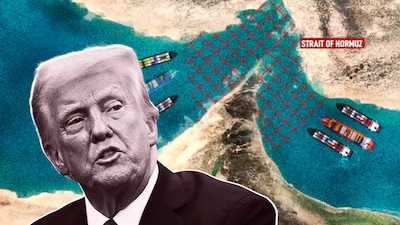
The standoff in the Middle East has reached a tipping point as U.S. President Donald Trump issued a final, chilling warning to the Iranian government.
Speaking from the White House late Sunday, April 5, 2026, the President reinforced his 48-hour deadline for Iran to fully reopen the Strait of Hormuz.
In a statement that sent shockwaves through global capitals, Trump declared there were only “48 hours before hell will rain down” on Iran’s critical infrastructure if the strategic waterway remains blocked or threatened.
This ultimatum marks the most severe escalation since the conflict began over a month ago, placing the world’s energy supply on a hair-trigger.At the heart of this confrontation is the Strait of Hormuz, a narrow passage through which 20% of the world’s oil and gas flows.
Following weeks of maritime skirmishes and Iranian threats to “choke” global energy markets, the President has pivoted from targeted military strikes to a “total infrastructure” threat.
The U.S. administration has warned that it will “obliterate” Iran’s power plants and fuel refineries—starting with the largest facilities—if shipping lanes are not cleared immediately.
This “blackout strategy” is designed to force Tehran’s hand by threatening to leave the entire country without electricity or fuel within days.The global reaction to this “48-hour countdown” has been one of extreme alarm.
While some domestic supporters view the move as a necessary show of strength to lower soaring fuel prices, international leaders have called for urgent restraint. UN Secretary-General Antonio Guterres warned that the world is “staring down the barrel of a wider war,” while countries like India have expressed deep concern over the safety of their merchant vessels in the Gulf.
As the clock ticks toward Tuesday night, the international community is watching to see if Tehran will blink or if the region will descend into an unprecedented level of aerial warfare.

