



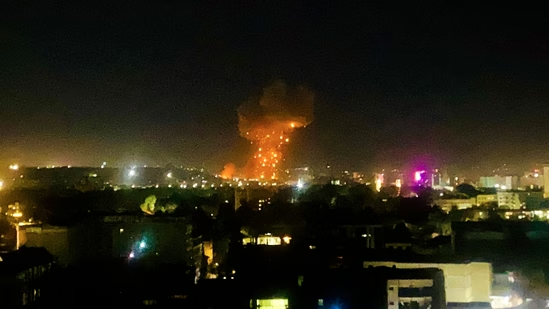
A devastating airstrike launched by the Pakistan military struck a drug rehabilitation hospital in the Afghan capital, Kabul, late Monday night, March 16, 2026.
According to the Taliban government’s health ministry, the attack has claimed at least 400 lives and left another 250 people injured.
The “Omid Addiction Treatment Hospital,” a 2,000-bed facility, was largely destroyed in the raid, which occurred around 9:00 PM local time while many residents were out breaking their daily Ramadan fast.
Visuals from the scene showed the hospital engulfed in flames as rescue teams worked through the night to recover bodies from the rubble.
The Taliban government has fiercely condemned the strike, with spokesman Zabihullah Mujahid labeling it a “crime against humanity” and a blatant violation of Afghanistan’s airspace.
The strike is part of a rapidly escalating “open war” between the two neighbors, which has intensified over the last three weeks. Pakistan has accused the Taliban of harboring militants who carry out cross-border attacks, while Afghanistan has retaliated against Pakistani military targets.
Afghan cricket legend Rashid Khan was among the first to voice national outrage, calling the targeting of medical infrastructure during the holy month of Ramadan “sickening” and a war crime.Pakistan’s Ministry of Information has officially rejected the claim that a hospital was targeted, calling the allegations “false and misleading.” Islamabad maintains that its airstrikes were “precise and carefully undertaken” to hit only military installations and terrorist support infrastructure.
However, the scale of civilian casualties reported by Kabul has drawn international concern, with UN human rights experts calling for an immediate de-escalation. As the death toll continues to rise, the humanitarian crisis in Kabul is deepening, and the risk of a full-scale regional conflict looms larger than ever.
The strike on the Omid Hospital represents a dark milestone in the deteriorating relationship between Islamabad and Kabul.
With both sides now engaged in what has been described as “open war,” the distinction between military targets and civilian infrastructure is dangerously blurring.
Unless international mediators can intervene to secure a ceasefire, the cycle of retaliation—fueled by deep-seated distrust and mounting casualties—threatens to destabilize the entire region for years to come.

