



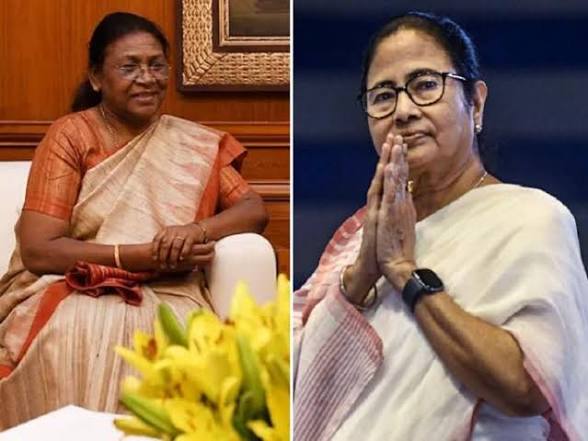
A major political controversy has erupted in West Bengal following President Droupadi Murmu’s visit to North Bengal for the 9th International Santal Conference on March 7, 2026.
The row was sparked by a last-minute change of venue for the event, shifting it from a spacious site in Bidhannagar to a more remote and cramped location in Gossainpur.
President Murmu publicly expressed her disappointment, stating that the original venue could have easily accommodated five lakh people, whereas the new location made it difficult for members of the Santal community to attend.
She further noted the absence of Chief Minister Mamata Banerjee and other state ministers during her visit, questioning whether “Mamata didi” was upset with her and calling her “younger sister” while addressing the crowd.The situation quickly escalated as Prime Minister Narendra Modi and other BJP leaders condemned the state government’s actions, describing them as “shameful and unprecedented.”
PM Modi accused the Trinamool Congress (TMC) of “crossing all limits” and insulting the President, who herself hails from the tribal community.
The Centre has since sought a detailed report from the West Bengal Chief Secretary by Sunday evening, citing alleged protocol violations, including the lack of a senior state representative to receive the President at the airport and reported logistical failures like a lack of water in the President’s washroom.
Chief Minister Mamata Banerjee has hit back strongly, denying any protocol breach and accusing the BJP of using the President’s office for political gain ahead of the state assembly elections. She clarified that the event was organized by a private body and that her office was not part of the official lineup or dais plan.
Banerjee further questioned the President’s silence on atrocities against tribals in BJP-ruled states like Manipur and Madhya Pradesh, advising her not to “indulge in politics.”
As both sides exchange sharp rebukes, the incident has highlighted deepening constitutional and political divisions in the state.

