



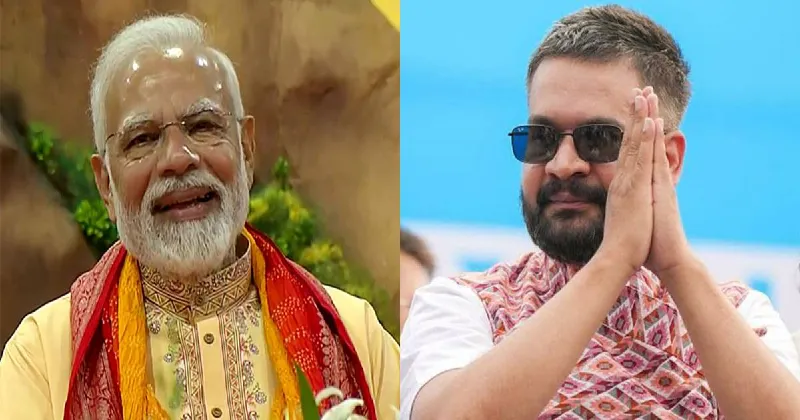
In a statement that has stirred controversy in both Nepal and India, Nepal’s Prime Minister Balendra Shah said that territorial encroachment along the India-Nepal border is “not one-sided” and that both countries have occupied land claimed by the other. Speaking in Nepal’s Parliament, Shah said that after assuming office, he learned that Nepal had also encroached on Indian territory in several places and called for bilateral talks to address the issue.
The Prime Minister emphasized dialogue and diplomacy as the way forward and suggested involving historians, surveyors, and experts to help resolve long-standing border disputes. He also said Nepal had held discussions with the United Kingdom and China regarding border-related concerns, remarks that drew attention in New Delhi.
The comments come amid renewed tensions over the disputed Lipulekh-Kalapani-Limpiyadhura region. Earlier this month, Nepal objected to India’s use of the Lipulekh Pass route for the Kailash Mansarovar Yatra, while India rejected Kathmandu’s territorial claims, describing them as unsupported by historical evidence.
Shah’s remarks triggered strong reactions within Nepal. Opposition lawmakers questioned the basis of his statement and demanded clarification on where Nepal had allegedly encroached on Indian land. Several border experts also challenged the claim, arguing that Nepal has not occupied Indian territory in the manner suggested by the Prime Minister.
As criticism mounted, Nepal’s Foreign Ministry issued a clarification, saying the Prime Minister’s comments referred mainly to “cross-border occupation” and land-use issues in border regions rather than a formal change in Nepal’s position on disputed territories. The ministry stressed that Kathmandu’s longstanding claims over Lipulekh, Kalapani, and Limpiyadhura remain unchanged.
The episode has renewed debate over one of South Asia’s most sensitive border disputes and highlighted the diplomatic challenges facing relations between Nepal and India.