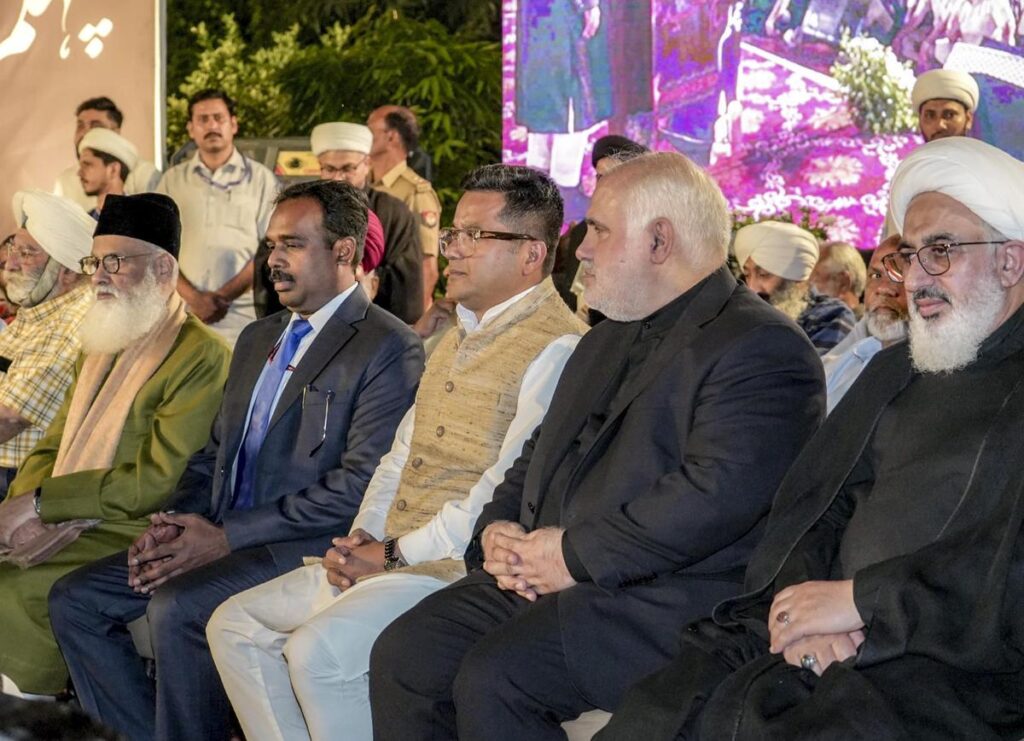
New Delhi witnessed the presence of several prominent political leaders and ministers at a memorial event marking the 40th day after the killing of Iran’s Supreme Leader, Ayatollah Ali Khamenei. The ceremony, also known as Chehelum, was organised by the Iranian Embassy and held at the Iran Culture House in the national capital.
Minister of State for External Affairs Pabitra Margherita represented the Government of India at the event. He was joined by senior political figures such as former Union Minister Mukhtar Abbas Naqvi and senior Congress leader Salman Khurshid. Diplomats, religious leaders, and members of different communities also attended the gathering, reflecting the significance of the occasion.
The leaders expressed condolences and paid tribute to Khamenei, highlighting his influence in global politics and Iran’s internal affairs. Speakers at the event emphasized the long-standing cultural and diplomatic ties between India and Iran. The presence of leaders from multiple political parties showcased a united gesture of respect and solidarity.
The 40th-day ritual holds deep importance in Shia Islamic tradition, symbolising remembrance and mourning for the deceased. The ceremony included prayers, speeches, and discussions on Khamenei’s legacy and the impact of his death on regional and global politics.
Khamenei’s killing earlier this year reportedly took place during a US-Israel military operation, which significantly escalated tensions in the Middle East. The incident triggered widespread reactions and led to concerns about stability I region. Since then, several countries have be osely monitoring the evolving geopolitical situation.
India’s participation in the memorial event is seen as a diplomatic move aimed at maintaining balanced relations with Iran while navigating complex global dynamics. Observers believe that such engagements underline India’s commitment to dialogue, cultural respect, and international cooperation.
The event concluded with a message of peace and the need for stability in the Middle East, as global leaders continue to watch developments in the region closely.