



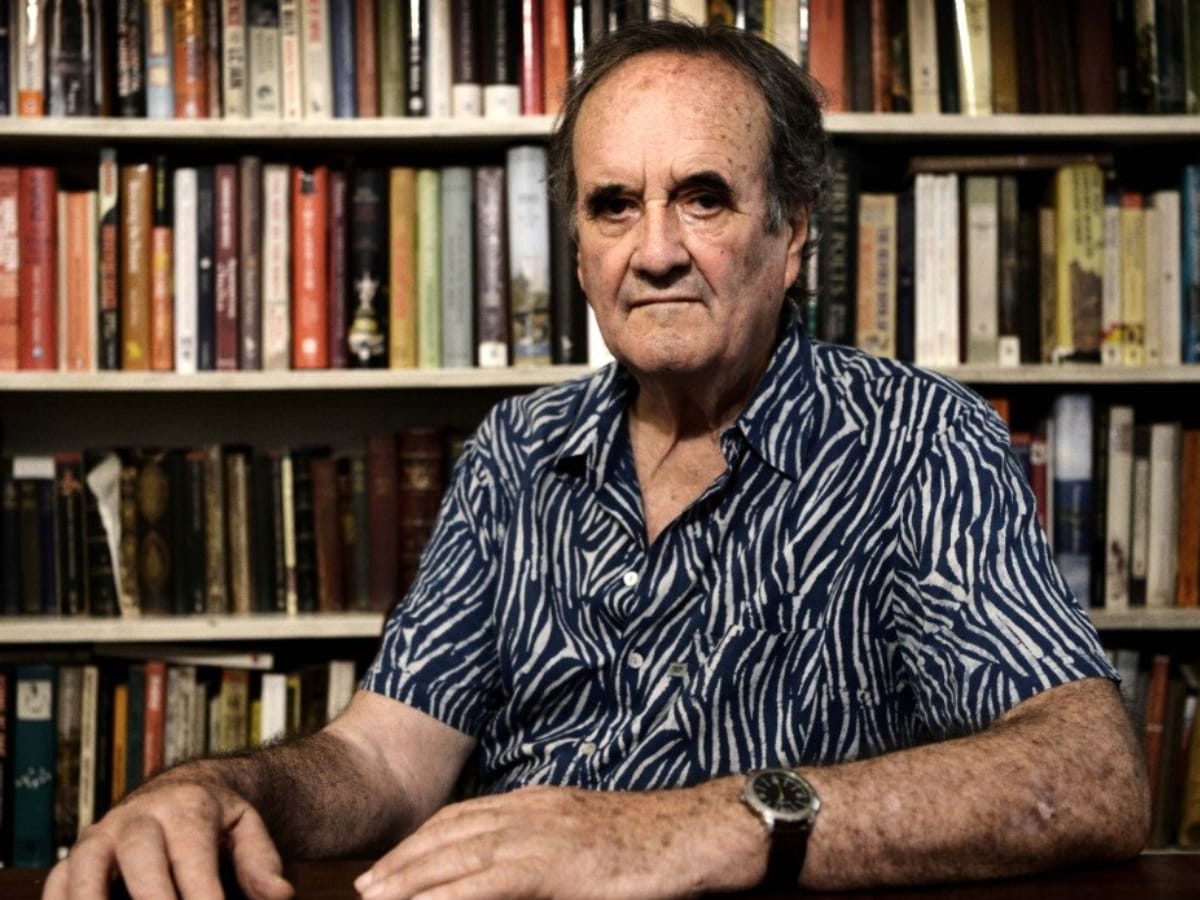
William Mark Tully, who passed away recently had become more of an institution than an individual scribe. Credibility was the middle name of the man who reported momentous events from India for the BBC.
Be it the war of liberation giving birth to Bangladesh or the infamous Emergency which forced him to leave Indian shores for a short while or the assassination of Indira Gandhi and of course the demolition of Babri Masjid, Tully was there at the spot. His voice came loud , clear and credible and people in the heartlands of India and far beyond lent an attentive ear.
To add Tully’s name to a news report was to bestow credibility to it. The foreign correspondent whose was the most trusted voice from India had to pay the price of fame almost with his life.
Once during the coverage of demolition of Babri masjid he was attacked by Hindutva activists. Ironically, he took shelter in a temple and was rescued by fellow scribes and authorities.
He had a deep understanding of India. Such was his empathy with the people that his coverage of a popular mood was invariably accurate.
Tully had strong Indian roots being born in pre-independence Calcutta to a well to do English family. His father was a boxwalla and in keeping with the custom of the day, he was sent to a boarding school to Darjeeling.
Tully’s stay in the “queen of the hill stations” was cut short when left for England for further studies. He studied theology in Cambridge but did not have the makings of a priest.
Sent by BBC to India in the mid ’60s, Tully started his career in journalism with a flourish. His fellow professionals ascribe his success to his non-judgemental attitude towards India.
Another engaging trait of Tully was an ability to take things in his student. Once a deputy Prime Minister of India who happened to be a peasant leader dropped in for breakfast.
He maintained a deadpan face after the leader quickly excused himself on learning that the parathas offered to him were not fried in ghee, Tully recalled in his book No Full Stops in India. Indian food habits were not ridiculous to him though he may have had a hearty laugh later.
But this is an instance how Tully stayed connected with the leaders and the masses. Small wonder, this innate ability to run shoulders endeared him to one and all.
Inarguably this was how Tully developed his network of news sources. It helped him to up his ante to the direction of the wind blowing at the time.
But there was more to his methods of news gathering than human contact. Never having indulged in arm chair reporting, he rushed from Mussoirie to follow up after BBC scooped Indira Gandhi’s assassination before government agencies had scooped the incident that changed Indian politics.
There is no denying that Tully had his way with words. His coverage of Operation Blue Star, Bhopal gas tragedy and Rajiv Gandhi’s. assassination to name few speak volumes of this ability.
He spoke with restraint and coherence, a soft rhythmic lilt marking his delivery. It seemed the voice of Indian history.

