


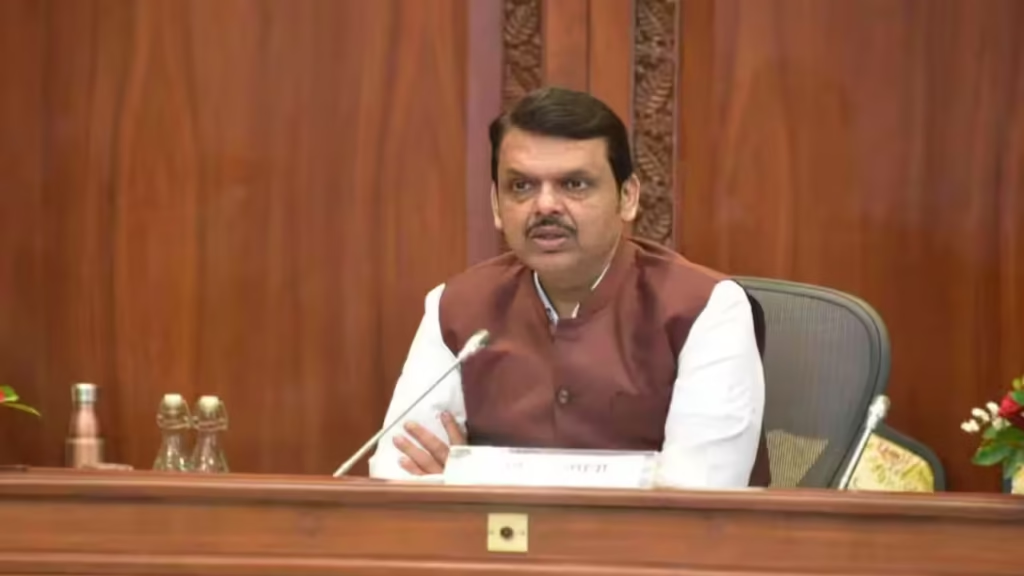
The Maharashtra government has introduced new rules that give Chief Minister Devendra Fadnavis greater power over decision taken by ministers.
Under the new Maharashtra Government Rules of Business, 2026, the Chief Minister can cancel or change a decision made by any minister if he believes it is in the public interest. However, he must give proper reasons for his decision in writing.
The new rules were announced by the General Administrator Department on August 14. They have replaced the rules that were used since 1975.
The change in rule came after a 2023 Bombay High Court judgment. The court had rules that the Chief Minister did not have the power to change or review a minister’s decision under the old rules.
The case involved the Chandrapur District Central Cooperation Minister had allowed the bank to begin recruitment for vacant post. Later, then Chief Minister Eknath Shinde stopped the recruitment.
The Bombay High Court canceled Shinde’s order, stating that Chief Minister did not have such supervisory power under the rules.
The new rules now clearly give the Chief Minister this authority, except in judicial matter.
The revised rules give the Chief Minister several other powers. He can ask any department for documents, and secondary must provide them. He can also ask important matters discussed by the Cabinet.
The rules also allow the Cabinet to take some decisions without holding a physical meeting. A proposal can be sent to all the ministers for the views and if all Minister agrees and if the CM feels a meeting in unnecessary, the decision can be taken through circulation.
In any urgent cases, if a minister does not respond within the given time, their silence might be treated as acceptance.
In conclusion, the new Maharashtra government rules have significantly increased the Chief Minister’s authority over decisions taken by individual ministers. While the government says the changes are meant to improve administration and protect public interest, they have also raised political questions, especially because of reported differences within the Mahayuti alliance. The new rules are therefore likely to strengthen the CM’s role in decision-making while bringing greater central control over the functioning of state departments.

