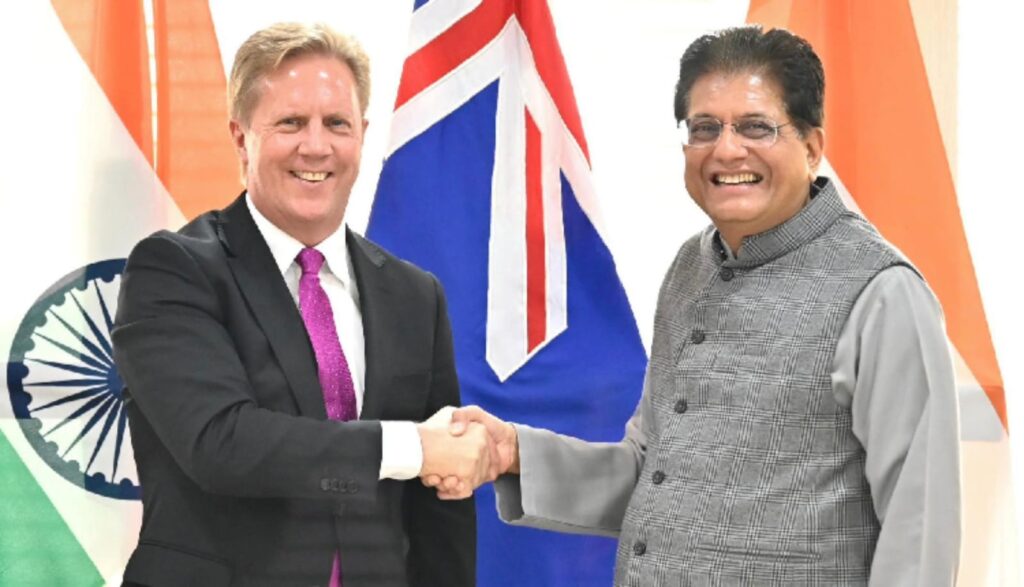
India and New Zealand are set to sign a landmark Free Trade Agreement (FTA) on April 27, 2026, marking a major step forward in strengthening bilateral economic ties. The agreement, described as a once-in-a-generation” deal, aims to significantly boost trade, investment, and employment opportunities between the two nations.
The FTA is expected to provide duty-free access to thousands of goods, with over 8,000 Indian products gaining easier entry into the New Zealand market. In return, New Zealand exports-especially in agriculture, forestry, and dairy-related sectors-will receive substantial tariff reductions or elimination.
A key highlight of the agreement is a proposed $20 billion investment commitment by New Zealand in India over the next 15 years, which is likely to boost infrastructure, manufacturing, and job creation.
The deal also focuses on mobility and employment opportunities, with provisions for around 5,000 temporary work visas annually for Indian professionals, along with working holiday visas for youth. This is expected to benefit students, skilled workers, and service-sector professionals.
Negotiations for the agreement were revived in March 2025 after a decade-long pause and concluded within the same year, reflecting a renewed commitment to economic cooperation in the Indo-Pacific region.
Experts believe the FTA will help double bilateral trade to around $5 billion within five years, while also diversifying India’s export markets and enhancing supply chain resilience.
While the agreement has received broad political support in New Zealand, some debates and controversies have also emerged, highlighting its strategic and economic importance.
Overall, the India-New Zealand FTA represents a significant milestone in India’s expanding global trade network and is expected to unlock new opportunities for businesses, workers, and investors in both countries.