



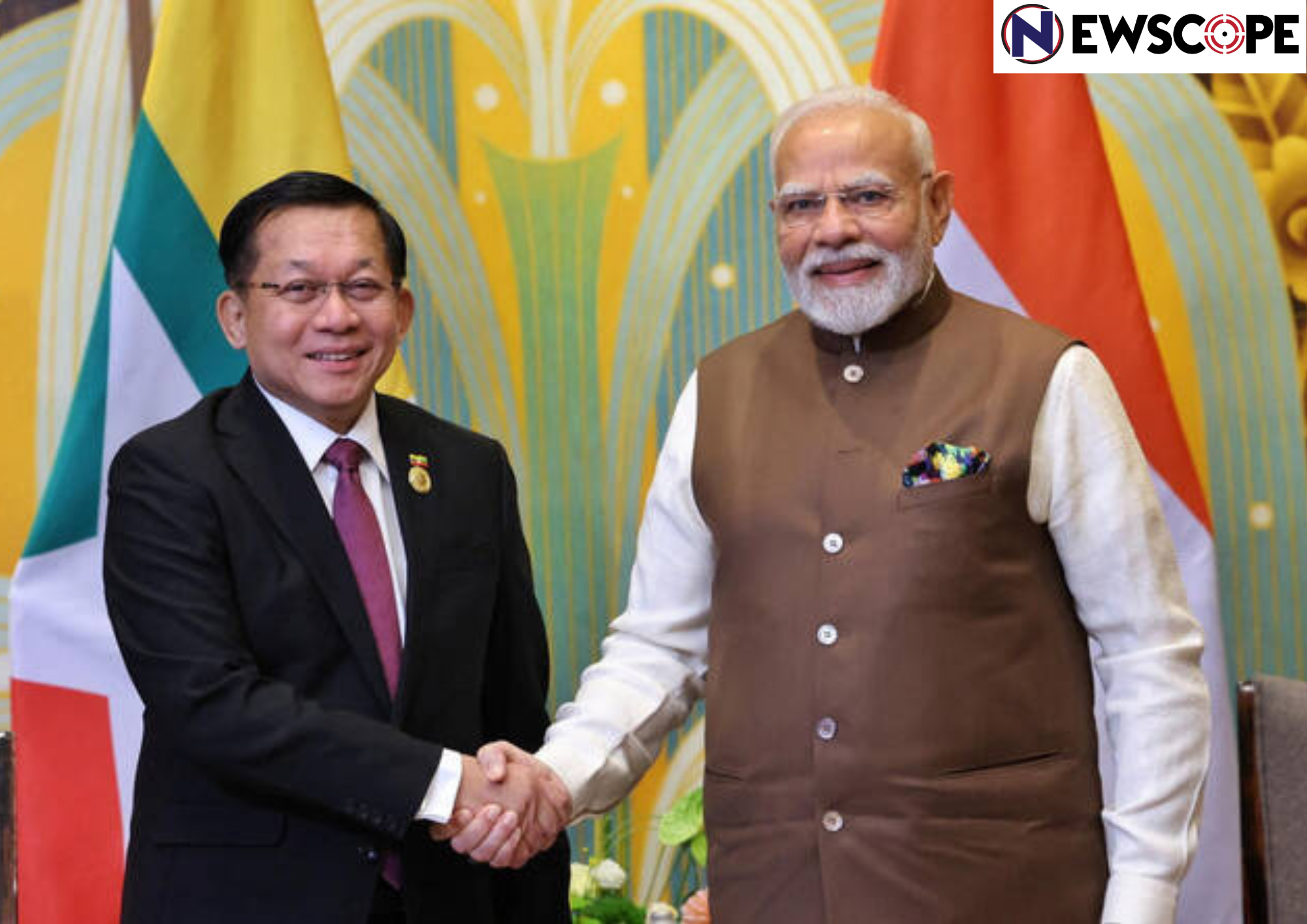
On the sidelines of Shanghai Cooperation Organisation (SCO) summit, Indian Prime Minister Modi met Mayanmar’s Military chief Senior General Min Aung Haling.
In the meeting India has expressed its support and hopes for fair and inclusive electoral process including all stakeholders in Myanmar and has indicated to send a team to monitor the elections.
The move is seen by some as New Delhi signalling support for the military junta’s election plan, which is set to begin in December 2025.
Much of the international community has already derided Myanmar’s 2025 elections, the first since the 2021 coup that ousted the government of Aung San Suu Kyi, as a sham. Critics say the vote is aimed at providing a constitutional cover for military rule, not at representing the will of the people.
Opposition groups have been banned from running or are boycotting, leaving scant opportunity for real competition.
The elections take place as Myanmar is mired in civil war, with the army controlling just under a fifth of the country and making large-scale voting unfeasible.
Critics say the junta has tailored the electoral system to ensure it remains in power.
India’s stance on Myanmar highlights the delicate balance of its “Neighbourhood First” policy.
India, unlike many Western countries that broke off ties with Myanmar’s junta following the 2021 coup, continues to engage even as it continues to press for a peaceful and inclusive political resolution.
Myanmar has very long and porous borders with India’s northeast, which make border management and security key. These were at the heart of discussions that took place between Prime Minister Narendra Modi and Myanmar’s army chief Min Aung Hlaing.
At the same time, India is proceeding with connectivity projects such as the Kaladan Multi-Modal Transit Transport Project, that can unlock trade routes and bring India closer to Southeast Asia.
India is trying to maintain its presence to protect its security and expand its regional relationships, all while pushing back against China’s power in the region — and doing its best to straddle the line between the imperatives of national strategy and the country’s own democratic image.

