



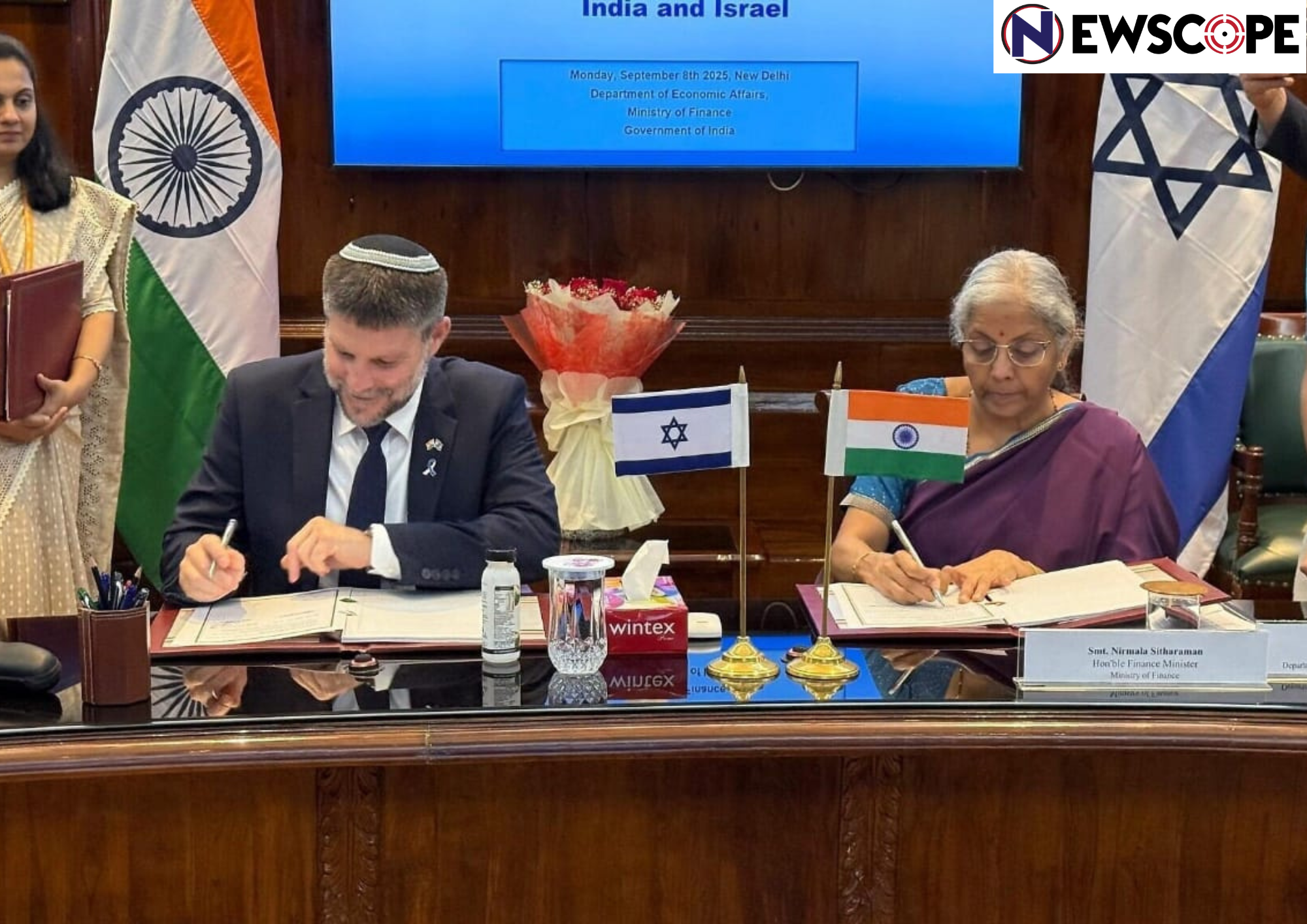
New Delhi, Sept 9 — In a spacious hall in New Delhi, pens glided over paper and hands were tightly clasped as India and Israel celebrated a new phase in their economic narrative. Finance Minister Nirmala Sitharaman and her Israeli counterpart Bezalel Smotrich moved closer to sign the Bilateral Investment Treaty (BIT) — an agreement designed to encourage companies on both sides to explore opportunities beyond their borders.
To the officials attending, it represented more than merely a standard ceremony. It marked the peak of weeks of discussions and the potential for upcoming expansion. The Finance Ministry revealed the signing through a succinct post on X, yet the atmosphere indicated a deeper significance: a partnership intended for the long term.
The agreement itself acts as a protection. It assures investors they will receive equitable treatment, that their funds won’t disappear due to bureaucratic obstacles or unjust confiscations, and that an impartial arbitration mechanism will intervene in case of conflicts. “The agreement ensures basic standards of care and safety,” the Press Information Bureau clarified, describing it as a move that would foster “confidence and reliability.”
Sitharaman, maintaining her characteristic composure, highlighted common goals in “cybersecurity, defense, innovation, and advanced technology.” During his inaugural official visit to India, Smotrich described the agreement as “a significant strategic move for our shared vision,” stating to his audience that it represented the mutual desire for growth and prosperity from both countries.
The figures reveal part of the narrative: bilateral trade approaches $4 billion, whereas total investments approximate $800 million. Both administrations think those numbers are just the start. With the BIT established, they anticipate that investors will encounter fewer barriers and greater incentives to form partnerships.
Smotrich’s three-day trip includes stops in Mumbai and Gujarat’s GIFT City, where he will engage with business leaders and promote discussions on fintech, finance, and future collaboration. Beneath the diplomatic smiles exists a broader objective — establishing the foundation for a Free Trade Agreement that might strengthen the relationship even more.
In recent years, India and Israel have developed a stronger relationship, marked by numerous ministerial visits and increasing cooperation in defense, agriculture, and technology. The handshake on Monday in New Delhi may appear to be just another official photo, but for those observing the relationship between the two countries, it represents the construction of a bridge — one that could facilitate trade, investment, and innovation for many years ahead.

