



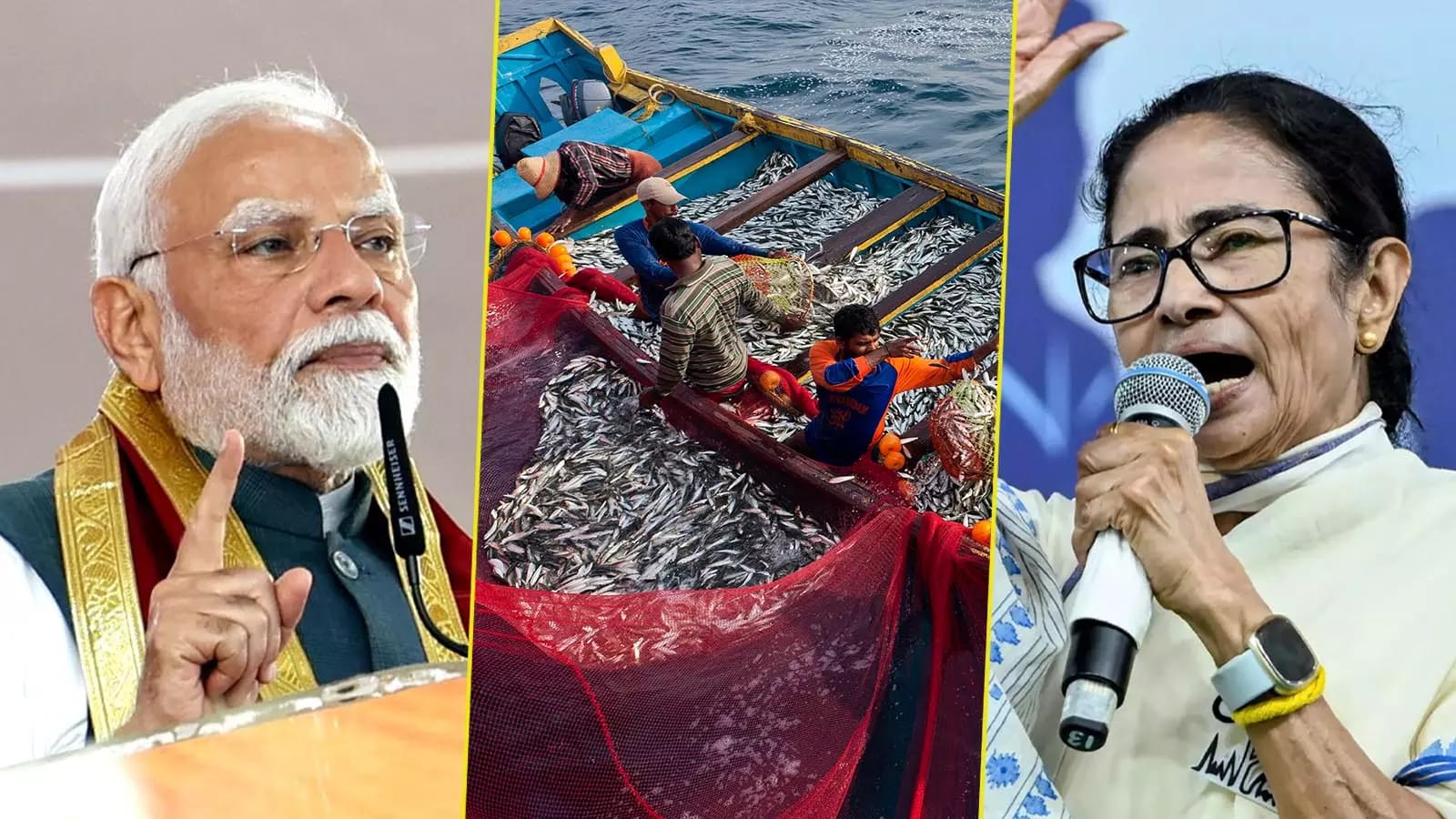
A political controversy erupted in West Bengal after a remark by Prime Minister Narendra Modi over Chief Minister Mamata Banerjee eating fish during a religious period triggered a sharp exchange between the Bharatiya Janata Party (BJP) and the Trinamool Congress (TMC).The row began when a video of Mamata Banerjee cooking and consuming fish went viral on social media. Addressing a public rally, Narendra Modi criticized the Chief Minister, alleging that the act was done deliberately during a sacred period observed by many Hindus, and termed it an attempt at “appeasement politics.” He further claimed that such actions hurt religious sentiments.
Responding strongly, Mamata Banerjee dismissed the allegations, stating that food choices are a matter of personal freedom. She accused the BJP of trying to impose cultural norms on Bengal and asserted that fish is an integral part of Bengali identity and tradition. “No one can dictate what people should eat,” she said at a rally, framing the issue as an attack on regional culture.The controversy quickly escalated, with leaders from both parties engaging in a war of words. While BJP leaders backed Modi’s stance, emphasizing respect for religious practices, TMC leaders accused the BJP of politicizing food habits to polarize voters ahead of elections.
Political analysts note that the issue reflects a broader trend of cultural and identity politics shaping electoral discourse. In West Bengal, where fish is a staple and holds cultural significance, the debate has struck a chord with voters.Social media platforms have been flooded with reactions, memes, and debates, further amplifying the issue. Public opinion remains divided, with some viewing the remarks as insensitive to Bengali culture, while others see them as a legitimate concern over religious observances.As the political temperature rises in the state, the “fish row” has added a new dimension to the ongoing electoral battle, highlighting the intersection of culture, religion, and politics in contemporary India.

