



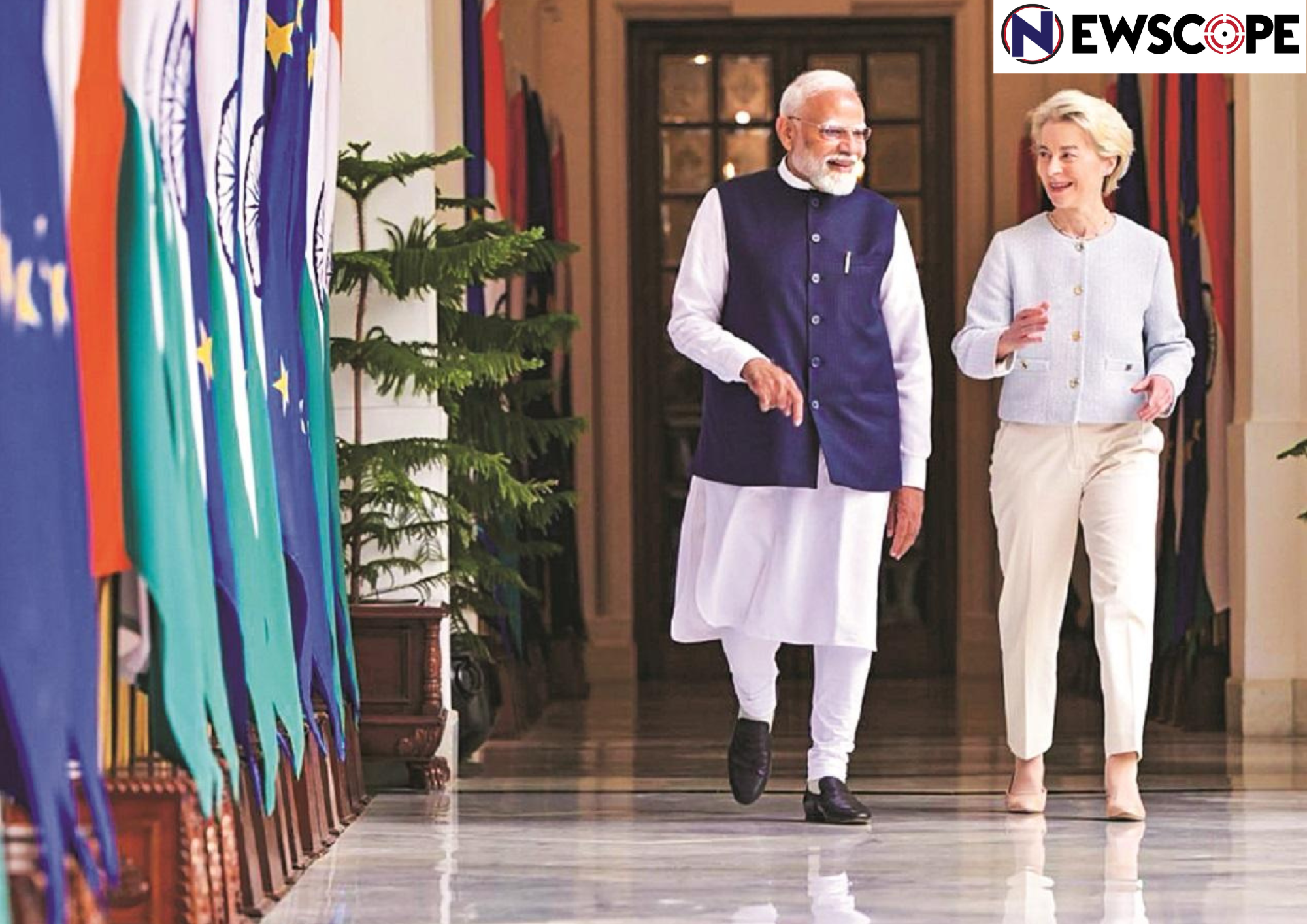
Amid a renewed effort to strengthen ties, the European Union (EU) and India are increasing high-level talks to finalize a strategic agenda and a long-awaited Free Trade Agreement (FTA). The 13th round of FTA negotiations is currently taking place in New Delhi. European trade and agriculture commissioners Maroš Šefčovič and Christophe Hansen are visiting to add urgency to the discussions. Both sides feel confident they can make significant progress and are aiming to wrap up the agreement by the end of the year. They expect the FTA to be formally signed at the next India-EU summit in early 2026. This follows a recent phone call where Indian Prime Minister Narendra Modi and top EU leaders Antonio Costa and Ursula von der Leyen reaffirmed their commitment to the deal.
The EU’s push for the FTA aims to diversify supply chains and address global trade uncertainties. While half of the 24 chapters of the FTA have been completed, some difficult issues remain, including market access for products like automobiles and alcohol, along with the EU’s Carbon Border Adjustment Mechanism (CBAM).
Security cooperation is also a major focus. A counterterrorism dialogue is scheduled for this week in Brussels, where India is expected to address the Pakistan-based terrorist group The Resistance Front (TRF) in connection with the Pahalgam attack. Additionally, the EU’s Political and Security Committee (PSC), which includes ambassadors from all 27 member states, will make its first visit to India this week for strategic discussions on defense and security.
These high-level meetings and visits include plans for a future Trade and Technology Council (TTC) session and the EU Indo-Pacific ministerial. All these efforts are intended to prepare for the next India-EU summit. The summit will establish a new joint strategic agenda, strengthening the partnership in areas like technology, mobility, and defense. The EU is set to present its vision for this new strategic agenda on September 17.

