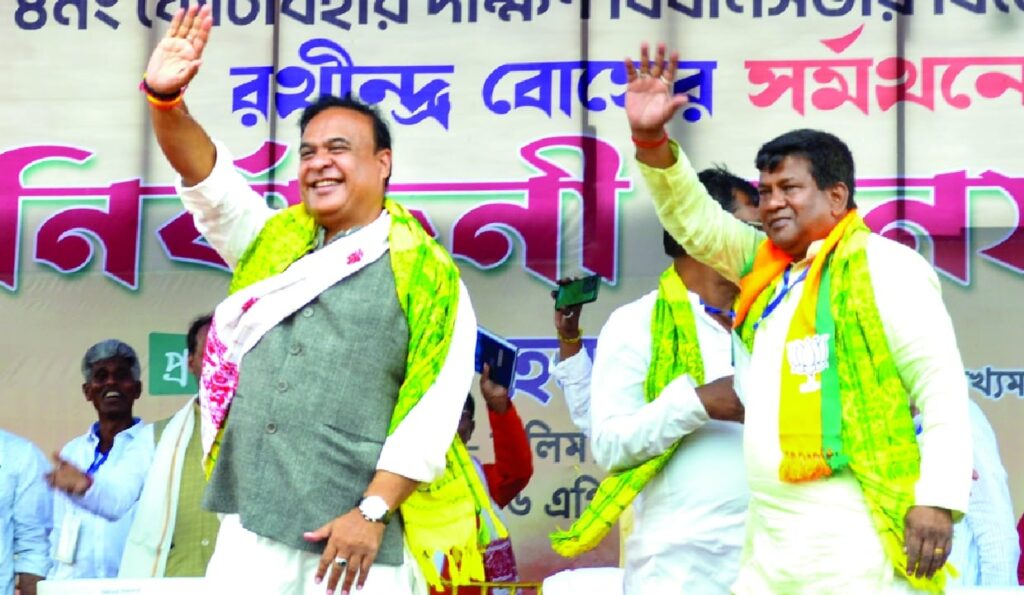
Amid the ongoing campaign for the 2026 West Bengal
Legislative Assembly election, Assam Chief Minister Himanta Biswa Sarma said that the BJP would ban the beef trade in West Bengal if it comes to power in the state. He also accused Chief Minister Mamata Banerjee of “misleading people” regarding food habits.
Speaking at an election rally in Cooch Behar, Sarma clarified that the BJP does not intend to restrict consumption of fish or meat, which are staples of Bengali cuisine. He alleged that Mamata Banerjee was spreading fear by claiming that a BJP government would ban non-vegetarian food in the state.
Sarma pointed to BJP-ruled states like Assam, stating that people there freely consume fish, mutton, and chicken without restrictions. He challenged Banerjee’s claims, asking why she was creating confusion among voters about dietary freedom.
However, Sarma made it clear that beef trade and cattle smuggling would be stopped under a BJP government. He alleged that the ruling Trinamool Congress (TMC) benefits from cattle smuggling to Bangladesh and vowed s action against it if the BJP is elected.
The remarks come amid a larger political debate in Bengal, where food habits-especially fish and meat consumption-have become a key campaign issue. Mamata Banerjee has repeatedly warned that BJP policies could threaten Bengal’s cultural identity and dietary choices, while BJP leaders have dismissed these claims as misinformation.
Sarma also linked the issue to border security, reiterating BJP’s stance on stopping illegal immigration and tightening controls along the Bangladesh border. His comments are part of a broader campaign strategy targeting governance, culture, and security ahead of the polls.
With elections approaching, the debate over food practices, identity, and governance continues to intensify, becoming a central theme in Bengal’s political discourse.