



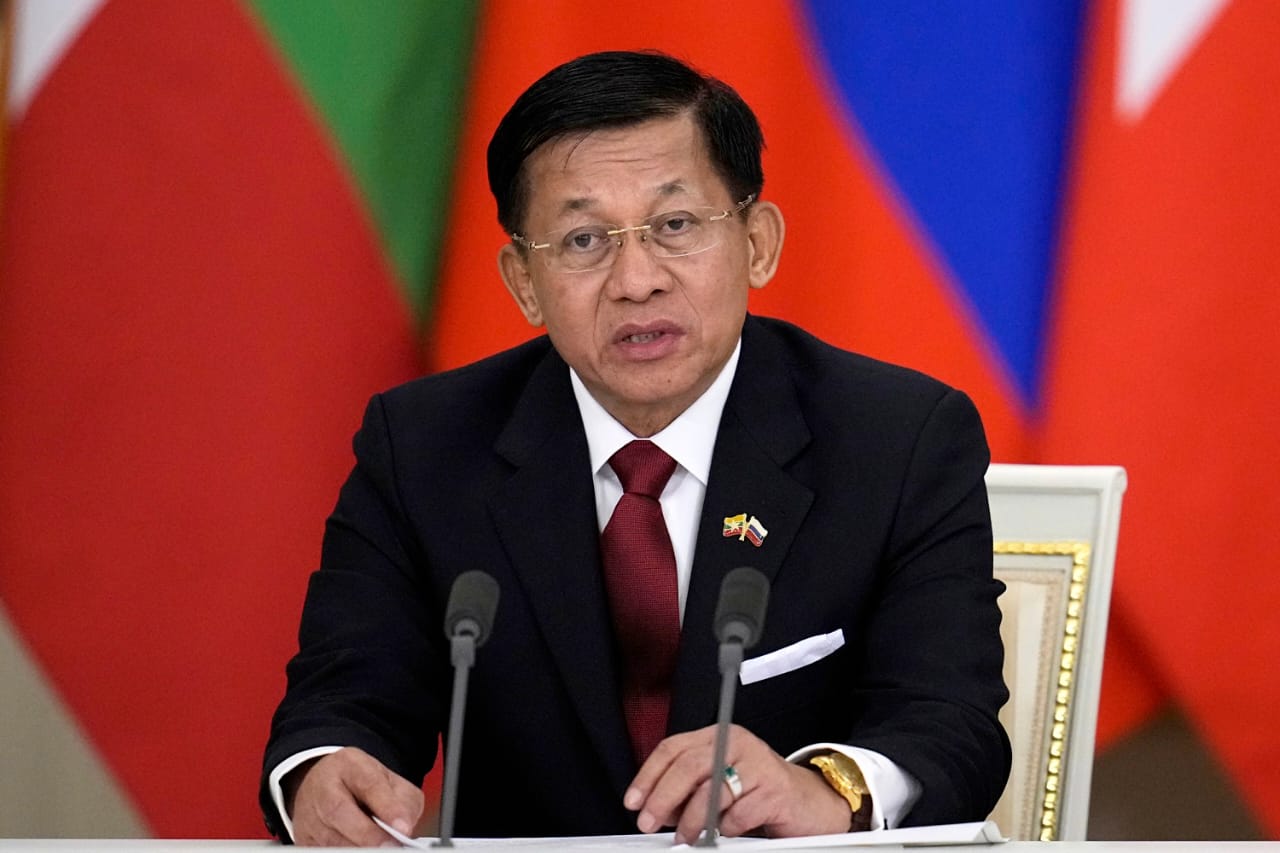
General Min Aung Hlaing had been made the President of Myanmar. This is a refinement and not a transition in the politics of the troubled country.
The uniform has just been replaced by civvies. But
the authority the previous ensemble remains unchanged
.
At a first glance, it appears to be a part of the constitutional process. But in effect, it is a part of the formalisation of power already seized in the 2021 coup in the country.
Myanmar, for the past five years have witnessed mass arrests and aerial bombing. This is part of the governance by force to which it has been subject to..
A grinding civil war has fractured the. country ‘s territorial and civil cohesion. Yet coercion
has its limits.
It isolated regimes internationally, hardens
domestic resistance and erodes administrative functionality. The shift towards.a civilian facade is not at all ideological but merely a tactical move..
The recent election was conducted excluding key opposition forces. Vast conflict zones were .effectively disenfranchised.
It was less an exercise in representation than in calibration..It allowed the army junta an opportunity to measure loyalty, distribute patronage and construct a legislature that mirrored it’s chain of command..
The outcome of the presidential election was. never in doubt given the overwhelming control in parliament. The vote did not matter much but the veneer it provided did more.
Power did. not retreat. It reconfigured in keeping with a familiar pattern in modern authoritarianism.
By stepping into civilian office, General Hlaing is trying to convert de facto control into fe jure legitimacy.-both at home and abroad..
Sanctions and diplomatic isolation have imposed costs but they have not dislodged the regime.A nominally civilian government, however stage managed, has its advantages.
.It creates openings for engagements and economic negotiations and for the quiet normalisation of an abnormal order..Yet this transition carries its own risks.
The constitution require that the general now the President relinquish the direct command of the armed force. It introduced a potential fracture within the military hierarchy
.
Internal rivalries may sharpen if senior commanders perceive a dilution of authority or concentration of power outside traditional structures. The creation of parallel advisory bodies suggests an awareness of this danger and an attempt to preempt it.
Implications for the people of Myanmar are stark The architecture of repression remains intact; it is merely repackaged.
Meanwhile, armed resistance groups control significant areas,
millions are displaced and political prisoners
continue to fill detention centres. There has been a change in title but not policy.
The system of governance now in place is designed to endure and not reform. Myanmar is in no way moving from military rule to democracy..

