



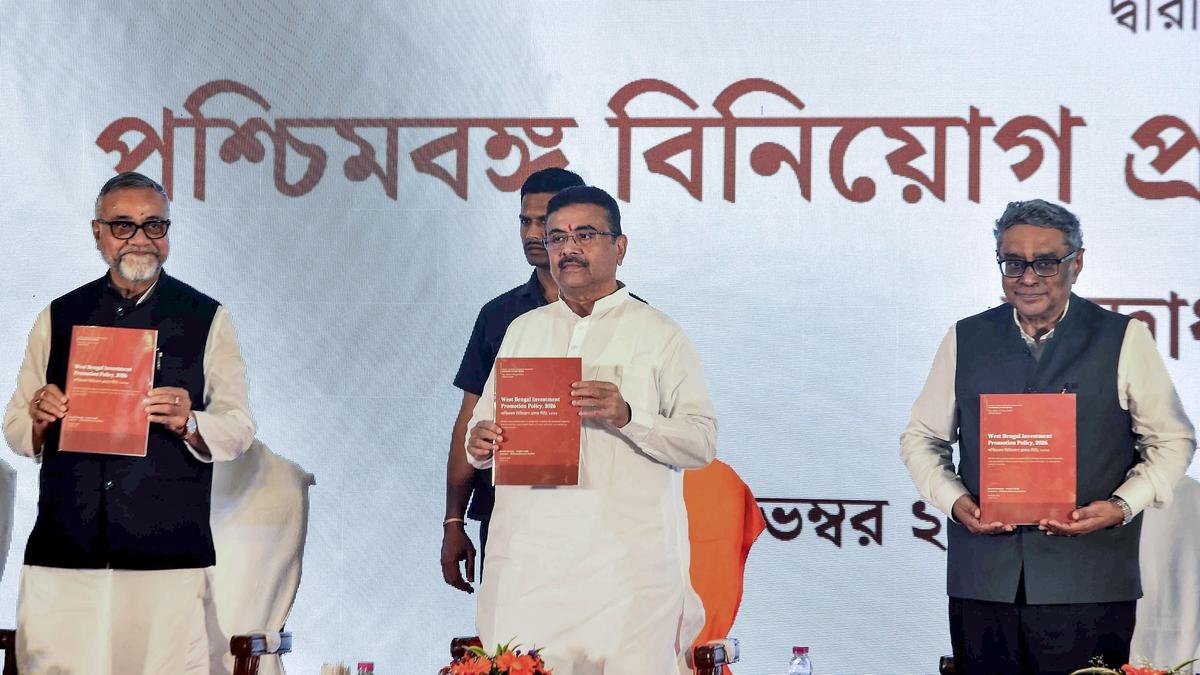
Unveiled recently, the West Bengal Investment Promotion Policy, 2026 addressed some key issues while overlooking the problem of availability of land in the state. Land is a key driver of industry.
That is why Bengal will need more than fiscal incentives to turn the tide after years of economic stagnation. Land continues to be the political hot potatoe in the state.
Availability of land to set up industries continues to be a stumbling block for three successive regimes. The Left Front government headed by Buddhadeb Bhattacharjee stumbled to arrange land for industry.
It shot itself in the foot twice at Nandigram and Singur making the way for Trinamool Congress regime. This dispensation was so chary at the misadventures of its predecessor that it steered clear of the issue.
This led to a situation in which West Bengal has no takers among the captains of industry who are only too aware of the problem. Pious intents cannot camouflage ground realities.
Of course, it did not prevent the top notch industrialists from trooping into the annual business conclaves and mouth platitudes about the improved business environment of the state. But months after their departure the state did not find itself to be a major business destination.
Land is scarce in West Bengal. Apprehensive of an upsurge of resentment which the state witnessed post Singur and Nandigram, the government of the day is unwilling to convert agricultural land into industrial plots. The next best alternative is using the land of closed Public Sector Units(PSU)s in the state.
This plan of action is not a pipe dream as it has found mention in state finance minister, Swapan Dasgupta’s budget speech. He said that the government would “endeavour to develop a comprehensive land bank by identifying and reclaiming industrial land lying unutilized with public sector undertakings and other government entities “
This is not a road less travelled as the Left Front government in 2004 engaged Webcon to study unused industrial land. Of these plots, 11,000 are found to be located in Jalpaiguri while there are 8,000 such plots in Darjeeling usually inside tea gardens. Much of the rest has been encroached upon.
Coming to power in 2011, the Trinamool Congress government gave it another try. PwC was engaged by the TMC government.
It identified 20,000 acres of unused land spread across more than 300 sick PSUs. But none of these parcels of land exceeded exceeded 500 acres.
Most of these units were closer to 100 acres. This made them too fragmented and not big enough to attract big ticket investment.
Big investments need plots sized about 700 to 800 acres. Had the identified plots been contagious, they would have been ideal for big industrial units but being fragmented they did not make the grade.
The 2013 count is outdated now. The number of unused plots is higher now as more industrial units have downed shutters.
With an eye on job creation, the TMC dispensation amended West Bengal Land Reforms Act 1955 to let owners of closed factories lease their plots to new investors. It targetted 11,000 acres including some 1000 acre plots.
Even after this policy announcement, there were no investors coming forward. The Land and Land Reforms department found that almost all the closed units were under Board of Industrial and Financial Reconstruction (BIFR).
It barred them from leasing the land. The others were in no better position having mortgaged their land to banks.
The investors have the choice to pick states within the country to set up their new units. West Bengal will need more than fiscal incentives to turn the tide after years of stagnation.
The state is poised for a new direction. To achieve this end, it cannot sit upon the land question for long.

