



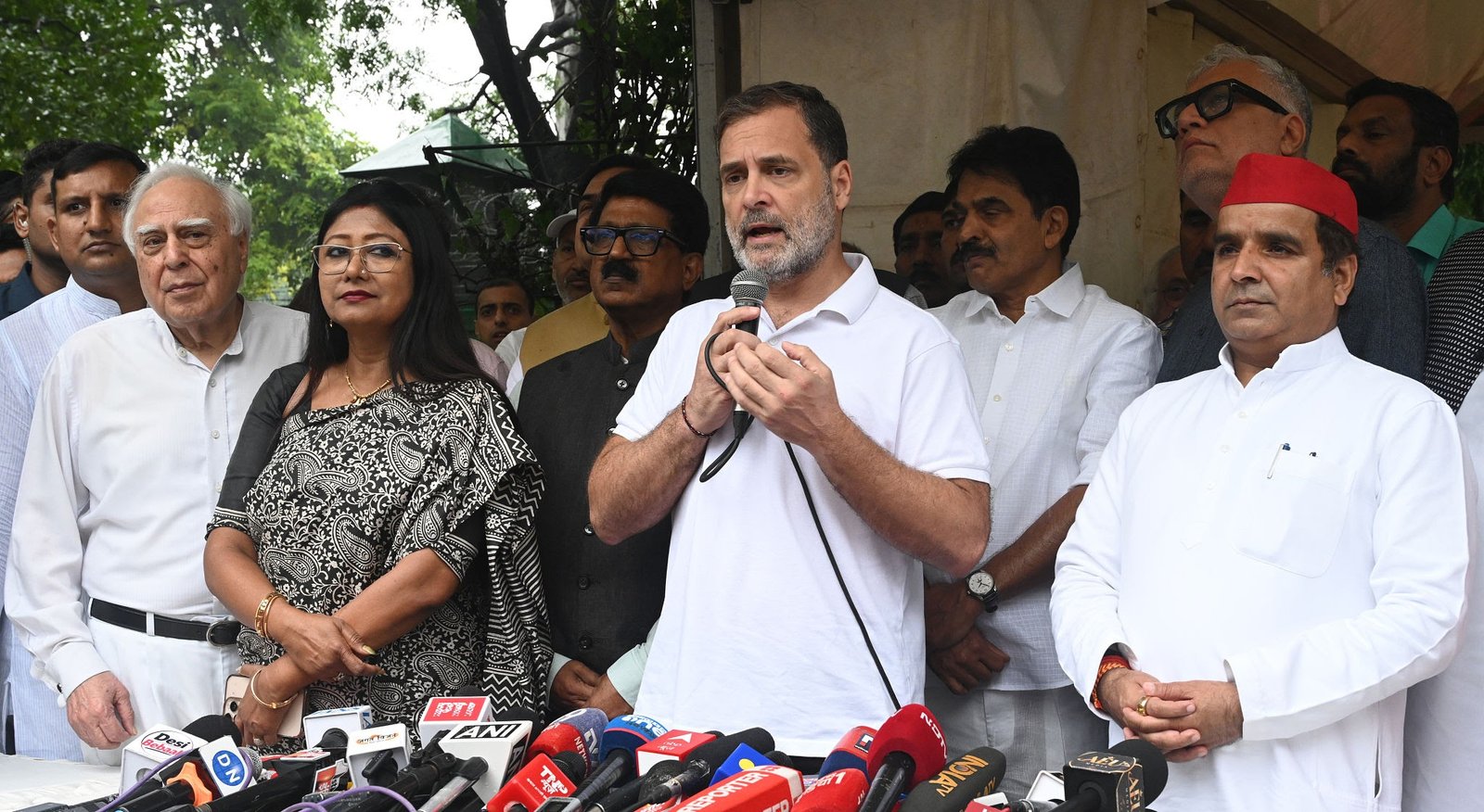
New Delhi, October 31, 2026: In an unprecedented symbolic challenge to India’s constitutional poll watchdog, the opposition INDIA bloc on Saturday convened a “public impeachment” trial of Chief Election Commissioner (CEC) Gyanesh Kumar at the residence of Congress President Mallikarjun Kharge. The mock proceedings, presided over by former Lok Sabha Speaker Meira Kumar, saw opposition leaders accuse the Election Commission of India (ECI) of functioning as a partisan arm of the ruling government and systematically subverting the democratic franchise.
The event—which had been postponed from Friday due to unseasonal rain in the capital—serves as the curtain-raiser for a massive nationwide agitation and the proposed “Chalo Dilli” march to Ramlila Maidan, intended to push electoral integrity to the forefront of national discourse.
Top opposition figures, including Congress Parliamentary Party chairperson Sonia Gandhi, Congress President Mallikarjun Kharge, Leader of Opposition in the Lok Sabha Rahul Gandhi, Samajwadi Party MP Dharmendra Yadav, and JMM MP Mahua Maji, took part in the proceedings alongside representatives across allied parties.
Meira Kumar Presides: Charges of Institutional Capture and Disenfranchisement
Modeled as a mock parliamentary trial, the assembly charged the Chief Election Commissioner with failing to uphold constitutional neutrality under Article 324.
- Allegations of Partisan Functioning: Opening the session, Congress President Mallikarjun Kharge alleged that the Election Commission had repeatedly ignored complaints regarding voter list discrepancies, arbitrary deletion of minority and marginalized voters, and selective application of the Model Code of Conduct.
- Presiding Officer’s Censure: Former Lok Sabha Speaker Meira Kumar, conducting the symbolic hearing, highlighted that independent institutions derive their legitimacy solely from public trust. The panel heard symbolic testimonies detailing grievances around electronic voting machine (EVM) protocols, voter roll deletions, and election scheduling.
- Collective Motion: The INDIA bloc passed a symbolic “public impeachment resolution” against the CEC, declaring that public confidence in the electoral commission’s neutrality had eroded.
‘A Battle to Defend the Vote’: Rahul Gandhi Sounds Clarion Call for Ramlila Rally
Addressing reporters following the proceedings, Leader of Opposition Rahul Gandhi stated that the symbolic trial reflects widespread public indignation over what he termed the disenfranchisement of millions of citizens:
“There is widespread anger and emotional pain over the deliberate disenfranchisement of voters. We are all standing together because we are defending the Constitution, we are defending the idea of India, and we are defending the vote—which is the democratic voice of every single Indian,” Gandhi said.
Pointing to the upcoming mobilization, Gandhi warned that administrative efforts to suppress dissent would backfire:
“Now you watch what happens at Ramlila Maidan. You watch how many people come, and you watch how many people they manage to stop. Then you will understand what is happening across the country. There are no multiple protests—this is one unified movement. The entire Opposition stands united.”
Countdown to ‘Chalo Dilli’ March and Political Pushback
The symbolic trial marks a sharp escalation in the INDIA bloc’s direct confrontation strategy ahead of state assembly contests.
With regional cadres mobilizing for the “Chalo Dilli” demonstration scheduled for Sunday, November 1, security has been stepped up across the borders of Delhi, central government corridors, and the perimeter around the Election Commission headquarters.
The ruling Bharatiya Janata Party dismissed the opposition’s exercise as a desperate stunt designed to explain away recurring electoral defeats. BJP spokespersons characterized the mock impeachment as an unconstitutional assault on autonomous institutions, arguing that the Congress and its allies are seeking to undermine faith in democratic processes ahead of upcoming elections.

